


Engineered Thermal Aiming for Degraded Visual Environments
Acquiring targets through dense fog, thermal clutter, smoke, and zero-ambient-light scenarios presents an insurmountable obstacle for standard daylight optics. A modern thermal riflescope resolves this operational challenge by detecting long-wave infrared radiation directly, translating minute temperature variances into clear, high-contrast imagery regardless of atmospheric conditions. Built on a familiar cylindrical riflescope form factor, systems like the QM650L from the Eaglet VIEWER series allow field operators, wildlife managers, and security professionals to maintain standard shooting ergonomics and conventional ring-mounting workflows while leveraging electro-optical target detection.
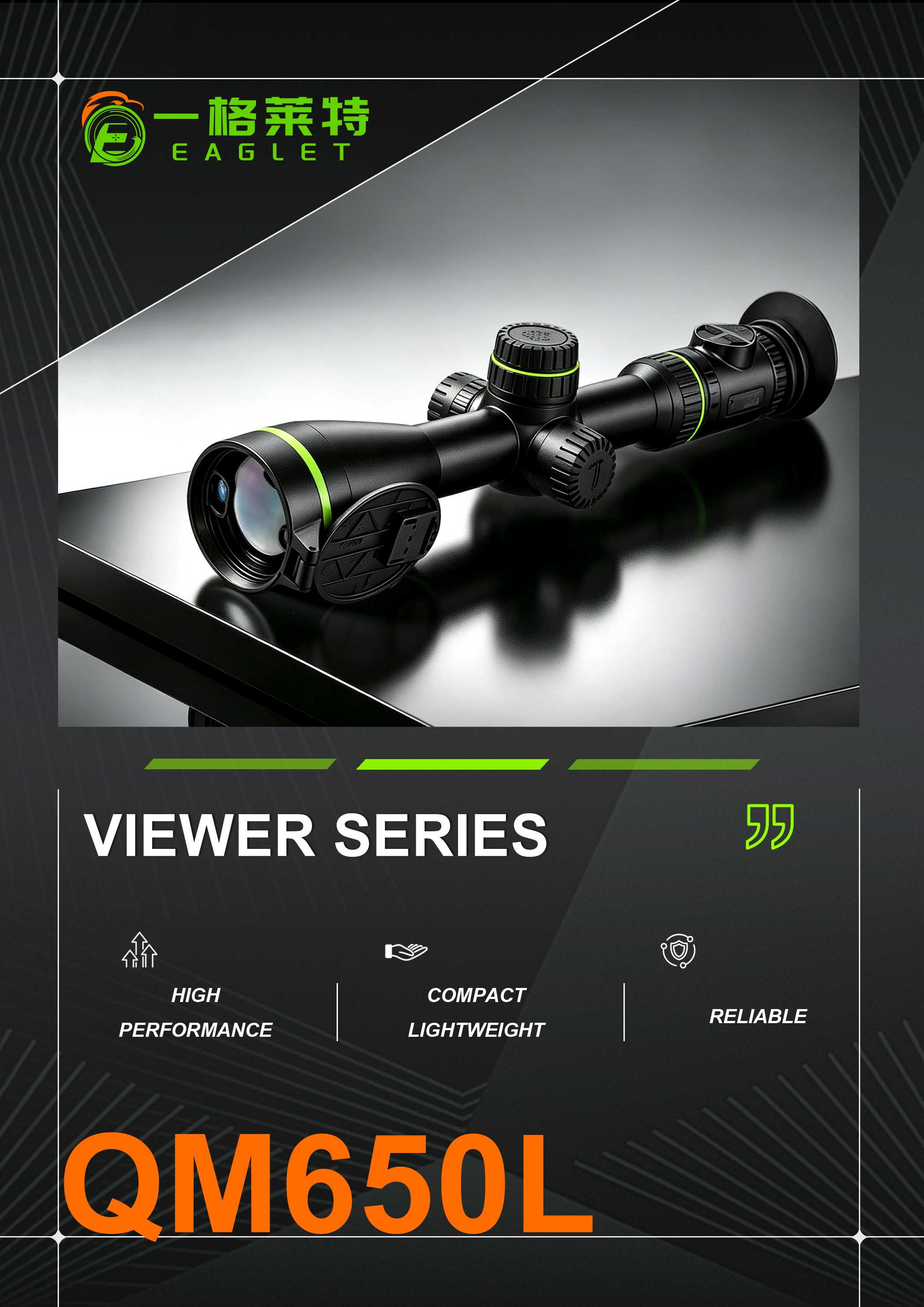
Physical Architecture and Visible Design Elements
Unlike box-style optoelectronic devices that demand proprietary mounting brackets, this thermal imaging scope uses a one-piece main tube profile. This traditional design facilitates direct installation using standard 30 mm or specialized scope rings, simplifying system integration across existing firearm and airgun platforms.
The structural layout includes several distinct operational sections:
- Objective Housing: Features a wide-aperture front bell fitted with a captive, hinged flip-open lens cap. The cap stays tethered during movement, protecting internal optical elements from abrasion, moisture, and debris without risk of field loss.
- Adjustment Turrets: A central three-knob turret cluster provides tactile feedback. The top elevation knob incorporates deep perimeter knurling for positive indexing with gloved hands. The right-hand windage turret features directional indexing markers, while the opposing lateral turret is positioned to control focus, side parallax, or display parameters.
- Ocular and Interface Array: Terminating at a flexible rubber eyecup to manage eye relief and block stray light, the ocular assembly integrates a knurled diopter adjustment ring alongside top-mounted digital control pushbuttons for menu selection and system power.
- Aesthetic Identification: Distinct bright green accent rings highlight the objective bell, top turret junction, and ocular bell, serving as visual platform identifiers across the series.
Materials and Surface Treatment
Thermal instruments deployed in field conditions require structural stiffness to sustain mechanical recoil shock and rough handling. The outer chassis is constructed from high-grade aluminum alloy bar stock, shaped via multi-axis CNC machining into a monolithic main tube to minimize joint fatigue and prevent optical misalignment.
The entire exterior exhibits a non-reflective, matte black surface finish consistent with industrial hard-anodizing standards. This electrochemical conversion coating enhances surface hardness, resists scratch degradation, and suppresses optical reflections that could compromise field concealment. Molded sub-assemblies—such as the tethered flip cap, button covers, and recoil-cushioning eyecup—use durable engineering polymers and synthetic elastomers resistant to environmental UV exposure and chemical solvents.
Electro-Optical Integration and Manufacturing Process
The production of a high-performance thermal scope requires cleanroom assembly environments to integrate sensitive internal components:
- Chassis Machining & Finishing: Turning and milling of the aluminum tube ensure strict concentricity along the optical centerline, followed by surface prep, anodizing, and laser engraving of indexing values.
- Sensor & Optical Core Alignment: Uncooled microbolometer sensor engines and microdisplays (typically OLED or high-resolution AMOLED) are mechanically positioned and calibrated to prevent reticle shift across thermal cycles.
- Sealing and Atmospheric Purge: The assembly incorporates high-grade O-ring seals at all mating joints, lens seats, and turret spindles. Internal cavities are purged of moisture and filled with inert gas (such as dry nitrogen or argon) to eliminate internal condensation and fogging during abrupt temperature drops.
- Compliance Integration: As indicated by molded regulatory indicators on system hardware, devices in this category adhere to CE, RoHS, and WEEE environmental and electronic compliance frameworks.
Application Scenarios
Deploying a dedicated thermal riflescope extends operational capabilities across multiple commercial, sporting, and institutional sectors:
- Night Predator and Feral Pest Management: Essential for agricultural conservation and nocturnal pest eradication, allowing positive target identification through crop cover and shadows.
- Perimeter Surveillance and Law Enforcement: Enabling law enforcement officers and security personnel to locate hidden intruders or fugitive heat signatures through brush and camouflage without using active visible lighting.
- Wildlife Surveying and Tracking: Facilitates accurate, non-invasive nocturnal counts of animal populations in forested terrain.
Quality Control and Optical Verification
Reliability hinges on rigorous testing protocols applied during and after production. Core quality checkpoints include:
- Boresight Retention and Recoil Shock Resistance: Mounted units undergo drop-table shock testing replicating high-caliber rifle recoil impulses to verify that zero retention and internal collimation remain intact.
- Environmental Immersion & Temperature Testing: Thermal cycling across extreme temperature gradients evaluates chassis expansion tolerances, seal integrity, and sensor drift.
- Optical Axis Collimation: Digital reticle centering and sensor alignment are mapped against laser collimation jigs to guarantee consistent point-of-impact repeatability across the zoom spectrum.
Customization Guidance for OEM/ODM Buyers
Procurement teams seeking customized configurations of the QM650L platform or broader Eaglet VIEWER series can adapt multiple design parameters to match target regional markets:
- Core & Lens Configuration: Options for differing detector resolutions (e.g., 384×288 or 640×512 configurations), pixel pitch variations, and specific focal lengths based on required detection ranges.
- Firmware & Reticle Profiles: Custom multi-reticle profiles, onboard ballistic calculator software, user interface localization, and custom splash screens.
- External Styling & Branding: Modification of accent bands, custom laser-engraved serial codes, private-label packaging, and specialized matte finish coatings.
Key Buyer Evaluation Factors
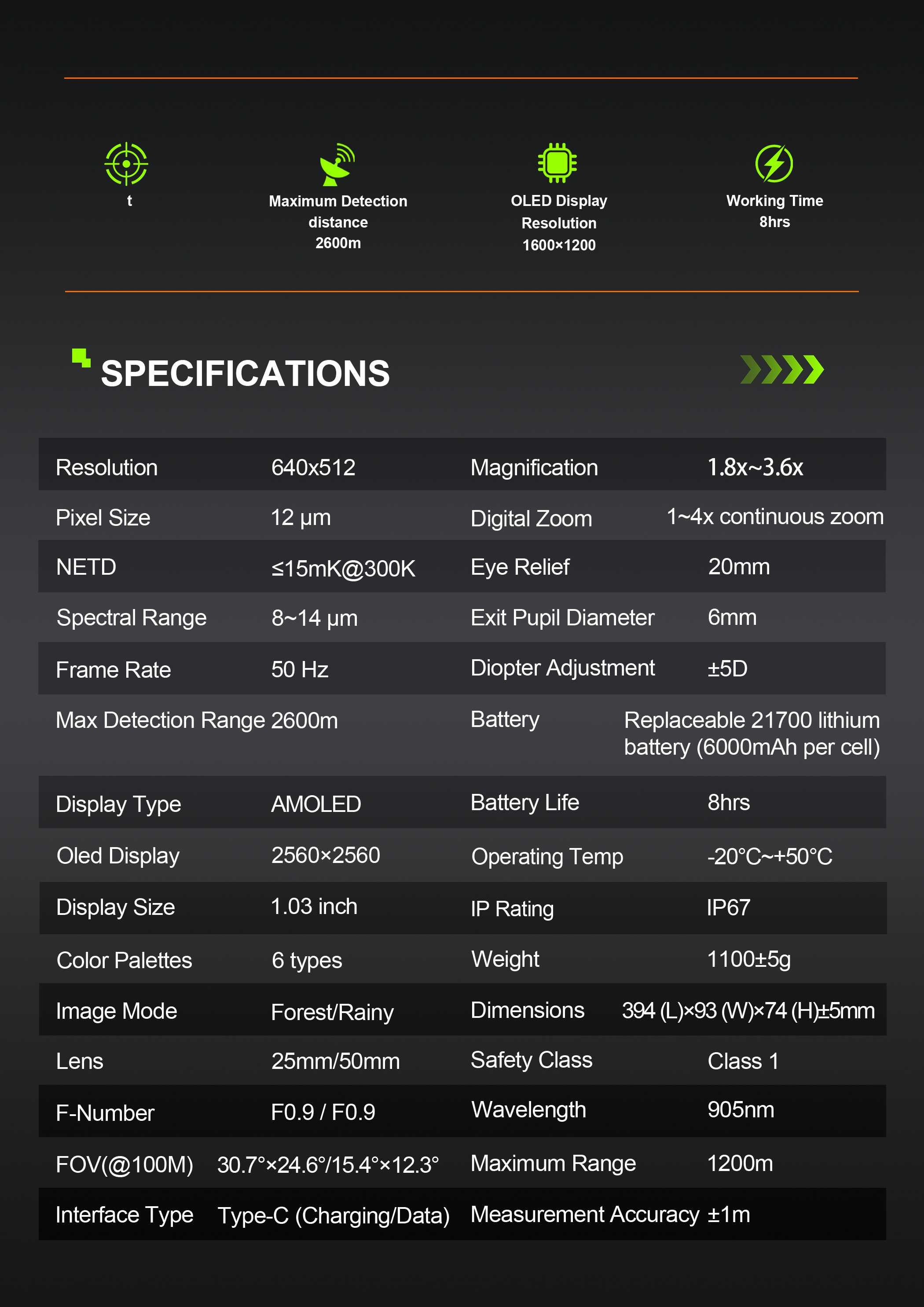
When sourcing a thermal scope for retail or commercial distribution, purchasing directors should evaluate several baseline criteria. Tube diameter dictates ring mounting versatility, while objective focal length directly affects baseline optical magnification and field of view. Buyers must confirm sensor NETD sensitivity ratings to ensure reliable performance in low-contrast conditions, evaluate internal battery runtime alongside external USB power input options, and review official caliber recoil certifications to ensure alignment with target shooting platforms.
Request Specifications and Distribution Details
Contact our technical sales team to request verified configuration data, optical schematics, minimum order quantities (MOQ), and sample evaluation units for this thermal riflescope series.