
MENU

Besoin d'aide ?
Hong Kong address: UNIT C1, 6/F, KAISER ESTATE PHASE 1
41 MAN YUE STREET, HUNG HOM, KOWLOON, HONG KONG
Téléphone: +8615323851929
Courriel: sales@eagletir.com
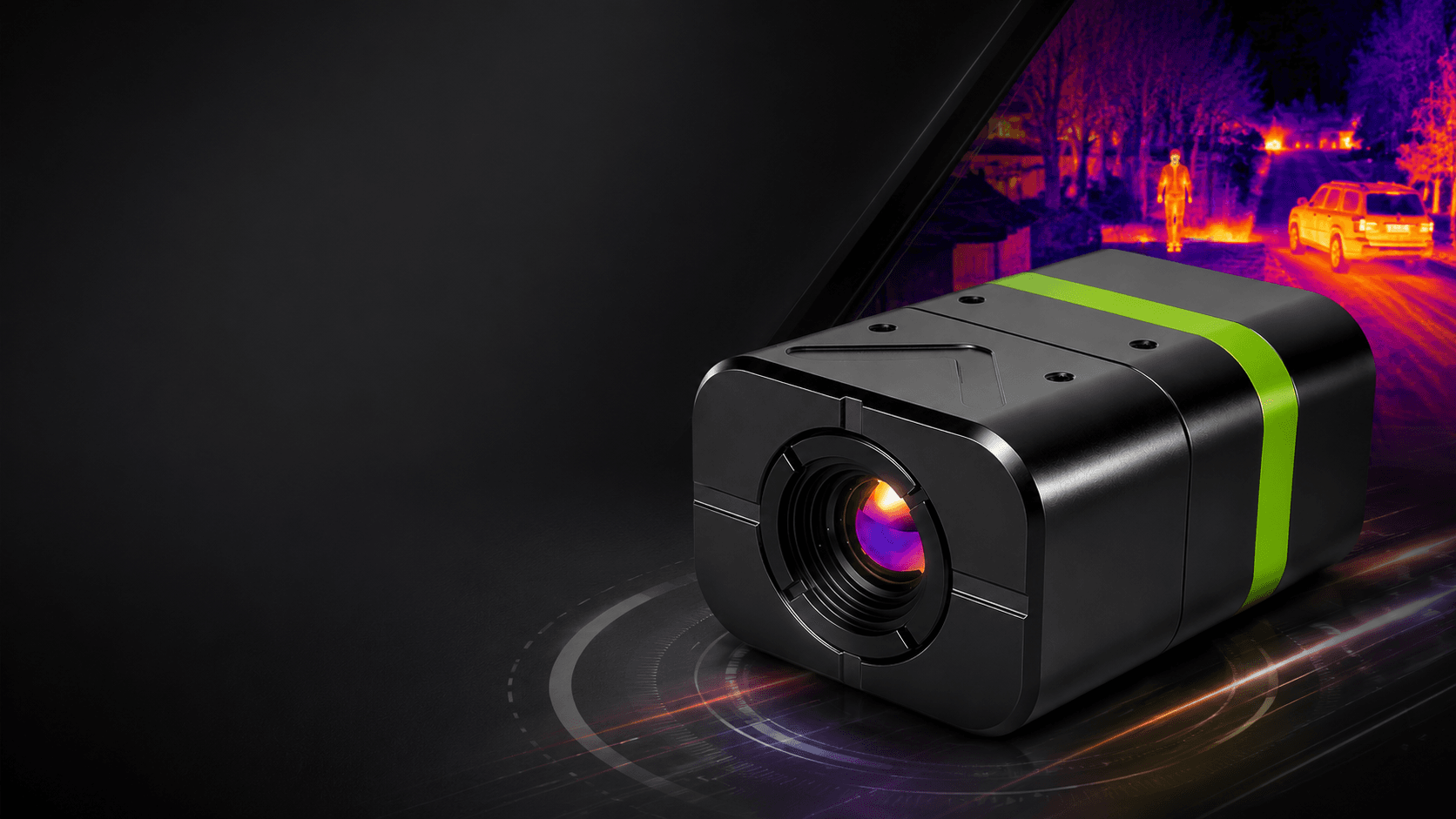
Des cœurs d'imagerie thermique aux systèmes infrarouges complets, EAGLET propose des solutions d'imagerie thermique haute performance pour l'inspection industrielle, la sécurité, les systèmes autonomes et l'observation extérieure.
Des modules thermiques compacts aux systèmes d'observation multispectraux, nos gammes de produits offrent une base solide pour les applications de vision intelligente.
Modules infrarouges compacts non refroidis, conçus pour l'intégration système, l'inspection industrielle, la sécurité et les plateformes autonomes.
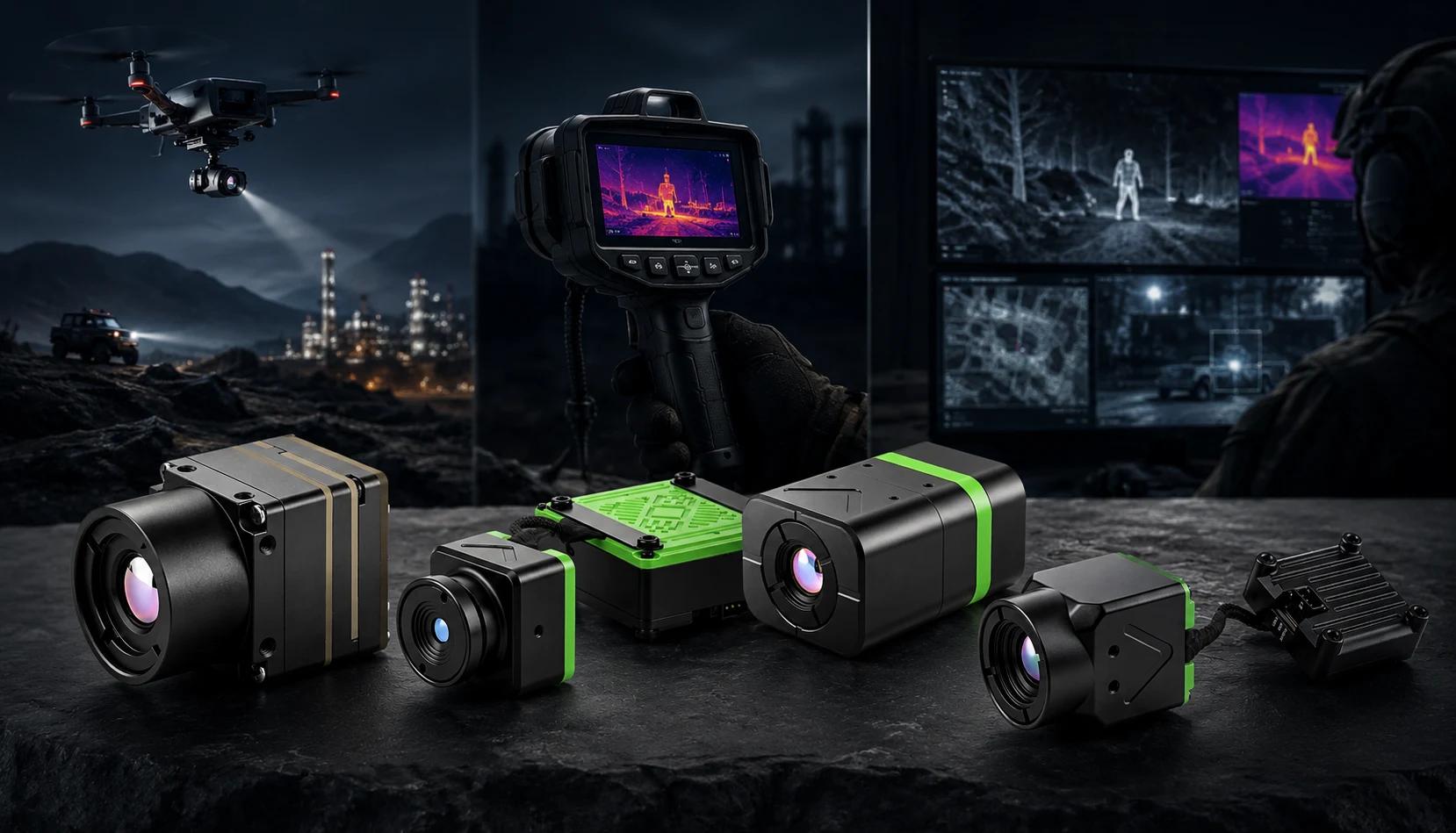
Chaque spécification est optimisée pour un déploiement en conditions réelles, des paramètres de base à la plateforme de référence EAGLET complète.
Spécifications sélectionnées pour différentes familles de produits. Veuillez confirmer le modèle exact pour obtenir les valeurs finales.
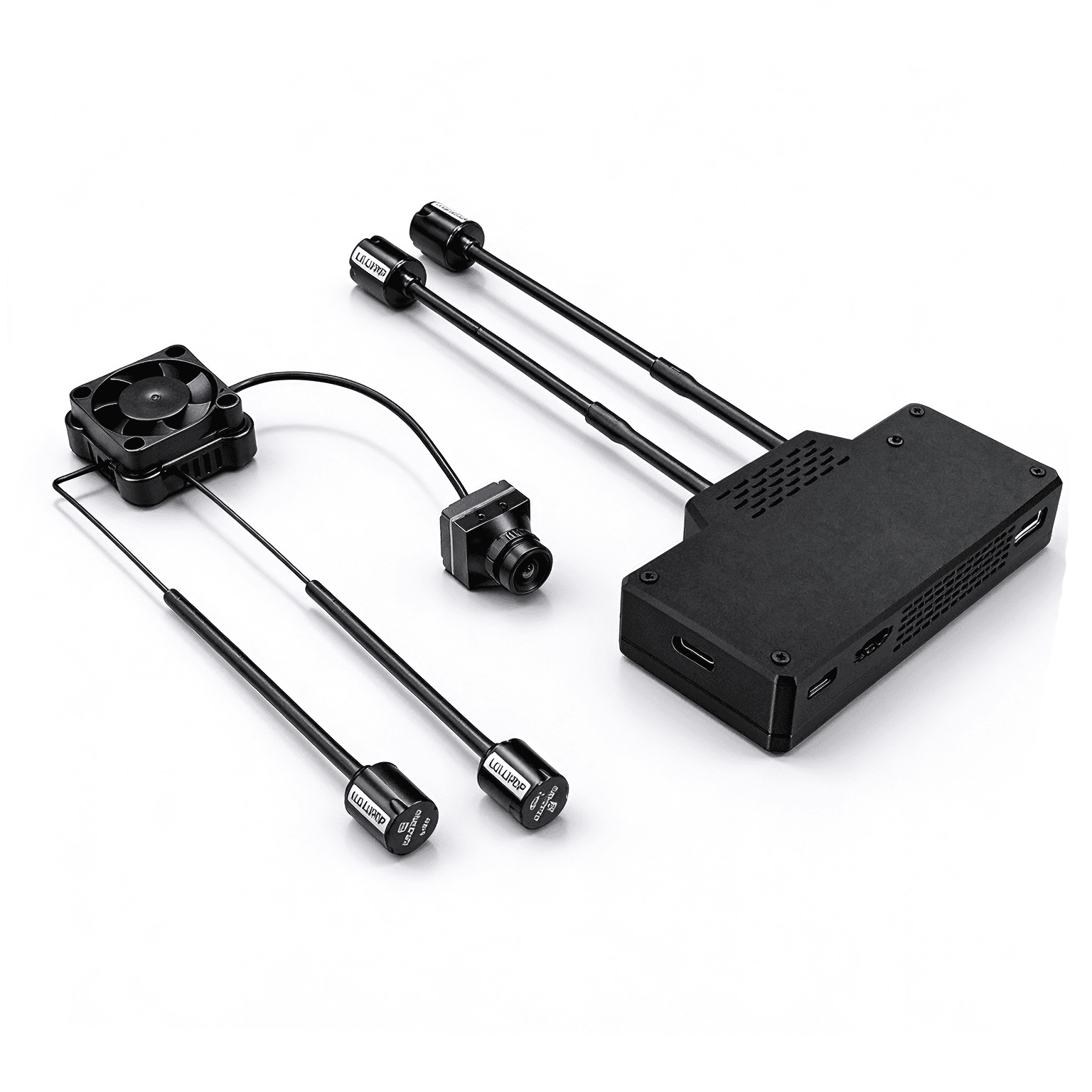
Overview of Long-Range Video Link Systems Integrating a reliable Long Range Digital FPV Video Transmission System addresses critical operational hurdles faced by drone builders and robotics integrators, specifically video feed degradation, control signal dropouts, and thermal throttling during sustained flights. Field operations require dependable real-time visual situational awareness over extended operating perimeters. By decoupling the camera module, processing transmitter, active cooling hardware, and antenna assembly into an interconnected system architecture, engineers obtain the flexibility needed to install robust digital links across diverse industrial airframes and remote robotic chassis.Industrial drone platforms increasingly demand high-throughput data streams capable of handling varied camera payloads. Whether deployed as a dedicated 1080P 60fps Low Latency FPV VTX package for fast-moving platforms or adapted as a specialized UAV Thermal Imaging FPV Link for infrastructure monitoring, modular hardware allows engineering teams to tailor connectivity without redesigning the entire internal layout of the airframe. Hardware Architecture and Modular Configuration The system assembly centers on a ruggedized central transceiver unit accompanied by discrete operational modules designed for distributed physical installation across an airframe: Processing and Transceiver Housing The primary transceiver features a compact, rectangular enclosure with top-access service fasteners. The body integrates dedicated ventilation channels across the top and side profiles to assist heat dissipation during continuous high-data throughput. Multi-port connectivity along the external edges accommodates high-definition video feeds, digital signal interfaces, and system power inputs. Optics and Sensor Interface The independent camera assembly utilizes a compact rectangular body equipped with a threaded-barrel lens mount. Because the optical module is physically isolated from the primary transceiver, it can be mounted directly onto vibration-isolated gimbals or nose mounts while routing ribbon or coax cables back to the central unit. This architecture supports configurations such as a Dual Light Drone VTX Receiver Kit, where operators balance primary piloting views alongside thermal or secondary visual inspection feeds. Active Thermal Management Module High-output digital radio frequency transmitters generate concentrated thermal loads within enclosed UAV hulls. To counteract heat build-up without requiring excessive external airflow, this platform incorporates an auxiliary square axial fan assembly mounted within a protective shroud. Connected via dedicated lead wires, the fan delivers targeted positive air movement directly across the chassis ventilation slots. Antenna Array The transceiver is equipped with multiple external cylindrical antennas connected through coaxial lead lines. Utilizing external antenna leads rather than fixed internal patch antennas allows structural engineers to position RF radiators away from carbon fiber frame elements, battery packs, and high-current motor ESC lines, mitigating RF shadowing and interference. Material Specifications and Enclosure Fabrication The central transceiver and camera housings feature a protective black matte finish, mitigating external reflection while promoting even thermal emissivity. Enclosure components demonstrate the structural characteristics of precision-machined aluminum or reinforced engineering polymers, assembled with mechanical fasteners that facilitate service access and board-level inspection. Recessed port openings and chassis ventilation slots protect internal printed circuit assemblies against physical side impacts while preserving passive cross-flow ventilation.Coaxial antenna leads are reinforced with strain-relief sleeves at the connector joints, ensuring resilience against mechanical vibration and aerodynamic flutter encountered during continuous high-speed transit. System Integration Across Commercial UAV Applications Industrial payloads benefit directly from modular transceiver deployments. Key operating sectors include: Critical Infrastructure Inspection Power transmission corridors, bridge substructures, and industrial processing plants require operators to navigate close to structural obstacles while keeping ground stations positioned at safe clearance distances. The implementation of the LET401U Digital Video Transceiver module architecture within an airframe ensures real-time feedback with minimum display stutter, giving pilots the visual precision needed for close-proximity evaluation. Emergency Response and Public Safety Search-and-rescue teams often deploy a UAV Thermal Imaging FPV Link to detect heat signatures in search zones across challenging terrain. Maintaining a stable, digital video stream over long distances ensures remote command stations receive immediate visual verification to coordinate ground teams effectively. Industrial Aerial Survey and Precision Mapping For wide-area topological mapping, payload specialists often choose a Dual Light Drone VTX Receiver Kit configuration. Synchronized digital video channels allow the flight crew to monitor terrain clearance via the forward-facing digital link while secondary mapping payloads record spatial data without cross-channel interference. Manufacturing Quality and Assembly Verification Producing industrial-grade communication modules requires disciplined electronics assembly and quality control workflows: Surface Mount Assembly: Multi-layer transceiver boards undergo surface-mount placement with automated optical inspection to verify solder joint integrity across compact digital processing chips and RF power amplifiers. RF Bench Calibration: Each Long Range Digital FPV Video Transmission System must undergo spectrum analyzer validation to evaluate signal purity, harmonic suppression, and port output stability across its designated operating frequency bands. Thermal Stress Cycling: Assembled transceivers and active fan modules undergo burn-in cycles in temperature-controlled chambers to ensure stable frame rates and verify that thermal throttling thresholds perform correctly under sustained operation. Connector and Retention Testing: External interface receptacles, including HDMI-style digital ports and RF coaxial terminals, are evaluated for mechanical mating force and retention security against continuous airborne vibration. Technical Procurement and System Evaluation Factors System engineers evaluating transmission hardware for commercial airframes should review several architectural criteria: Mounting Space and Center of Gravity The total package footprint—including the transceiver block, fan unit, camera, and antenna lines—must fit within the designated payload bay without disrupting the airframe center of gravity. Confirm whether passive airflow inside your airframe is sufficient or if the auxiliary fan assembly must be permanently engaged. Power Budget and Voltage Regulation Digital transceivers and active cooling fans represent consistent power draws. Integrators should confirm whether the transceiver operates directly from raw flight pack voltages or requires dedicated step-down, filtered DC-DC regulator rails to prevent electrical noise induced by brushless drive motors from entering the video link. Input Protocols and Payload Matching Confirm compatibility between the camera feed and transceiver input interfaces. Projects standardizing on a 1080P 60fps Low Latency FPV VTX profile require matched camera sensors and low-latency display receivers to minimize end-to-end glass-to-glass latency. For specialized system integrations, verifying hardware compatibility with modules like the LET401U Digital Video Transceiver ensures consistent telemetry and control integration. Engineering Inquiries and Integration Support Our technical team assists UAV manufacturers, payload developers, and robotics integrators in selecting and integrating transmission assemblies tailored to specific airframe geometries and signal requirements. Contact our engineering department to discuss pinout configurations, antenna placement strategies, and sample units for airframe integration testing.
Voir le produit →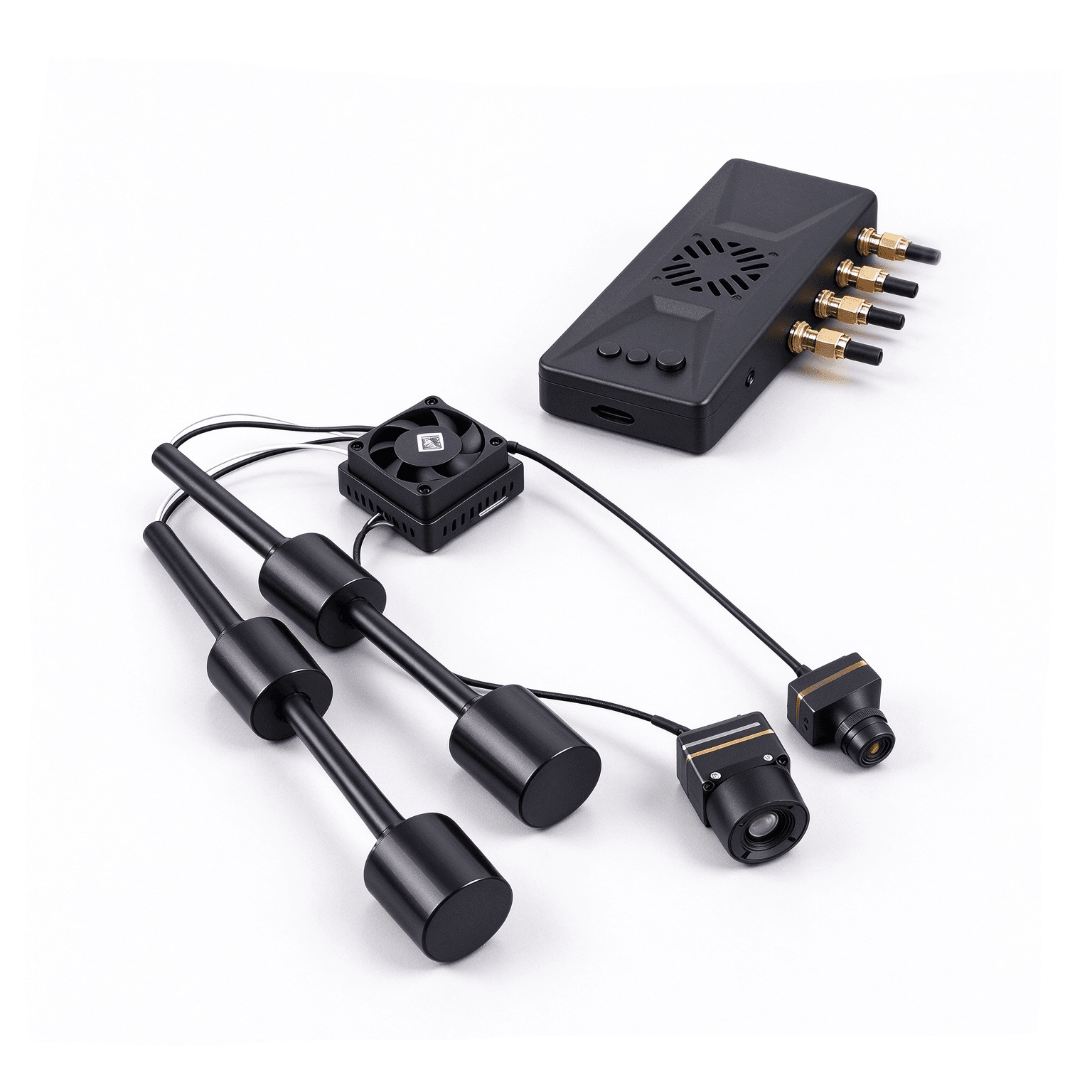
System Architecture and Operational Overview Modern unmanned aerial platforms and remote inspection vehicles require unified telemetry and visual feedback without the payload penalty of multiple discrete transmitters. The EAGLET LE1403M Dual Spectrum Drone Video Link addresses this integration bottleneck by centralizing multi-channel video ingestion, signal routing, and active thermal regulation into a synchronized hardware platform. Designed to eliminate the weight, electrical interference, and packaging clutter of running separate transmitter modules, this dual-light digital transmission system connects optical payloads directly to centralized encoding and RF processing electronics.Industrial drone integrators frequently confront strict Size, Weight, and Power (SWaP) constraints when deploying multi-sensor payloads for infrastructure monitoring or field observation. The LE1403M hardware package supports this operational requirement through a modular topology, combining a central processor enclosure, paired optical camera modules, multi-channel coaxial cabling, and targeted cooling components. Visible Hardware Layout and Component Breakdown Central Processing Unit and Physical Interfaces The primary electronics unit is housed in a compact, matte-black rectangular enclosure featuring a sloped upper surface engineered for directional airflow. Located along the primary connection panel are four gold-plated, threaded coaxial-style RF connectors designed for secure signal feed lines or antenna attachments. A dedicated USB-C interface is integrated on the perimeter for firmware management or local data handling, flanked by three physical push buttons and status indicators for operational toggles. Dual Optical Heads and Sensor Modules The package incorporates two separate compact camera modules encased in cylindrical and rectangular housings with gold accent bands. Each camera assembly includes visible optical glass lenses with fixed mechanical mountings. This layout facilitates deployment in dual-view scenarios, allowing integrators to route two distinct optical perspectives into a singular transmission pipeline. In multi-spectrum configurations such as a Thermal + Visible VTX integration, having isolated optical heads simplifies mechanical gimbal balancing and balance-point positioning on the airframe. Peripheral Elements and Secondary Modules The hardware set includes three elongated black cylindrical rods terminating in wider cylindrical bodies, which function as antenna assemblies, alignment probes, or mounting hardware depending on the end-user deployment configuration. In addition, an independent auxiliary axial cooling fan with dedicated lead wiring complements the enclosure's internal ventilation fan, providing dedicated thermal extraction for high-duty-cycle setups. Thermal Management and Enclosure Construction Sustained digital video encoding and high-frequency wireless transmission generate localized heat within compact enclosures. The LE1403M incorporates active dual-point heat management: an internal blower integrated behind a recessed top grille and a standalone square cooling-fan module with perimeter exhaust slots. This dual cooling configuration prevents thermal throttling during static ground testing or sustained hover profiles where natural prop-wash airflow is minimal.Housings throughout the assembly feature a uniform matte black finish, indicative of precision CNC-machined aluminum or high-density engineered polymers with surface treatment for wear resistance. Threaded metallic connector interfaces provide electromagnetic shielding and reliable mechanical retention under mechanical vibration and flight-induced structural resonance. Target Application Scenarios Deploying a Dual Spectrum Drone Video Link enables multi-feed situational awareness across demanding industrial environments: Powerline and Infrastructure Inspection Dual-sensor optical gimbals require concurrent feeds to cross-reference structural damage and hotspot anomalies. Incorporating a Low Latency Dual Light Data Link ensures ground operators receive coordinated, real-time positional and visual references without managing disparate radio links. Search and Rescue Operations Ground recovery teams operating in wilderness or disaster zones rely on dynamic situational monitoring. The system’s dual-channel camera layout supports split-perspective scanning, allowing operators to oversee broad navigational terrain while running focused optical inspection routines. Robotic Surveillance and Tactical Platforms Beyond aerial platforms, unmanned ground vehicles (UGVs) and portable ground monitoring stations utilize the modular camera heads and robust threaded RF connectors to maintain multi-angle visual surveillance through confined or obstacle-dense operational environments. Integration and Procurement Decision Factors Payload Weight and Center of Gravity Planning System designers must evaluate the combined mass of the central module, optical cables, coaxial runs, and auxiliary cooling fans. Because the optical heads are physically separated from the main processing unit, gimbal designers can optimize payload distribution and minimize motor torque requirements across rotational axes. Wiring Harness Routing and RF Isolation With four distinct RF-style coaxial connections and multiple digital video feeds, cable isolation is critical. High-frequency transmission paths must be routed away from GPS receivers, flight controller compass units, and power distribution boards to prevent near-field RF saturation. Incorporating the system as a Long Range FPV Transceiver setup requires clean impedance matching along all four signal channels. Telemetry and Protocol Coordination OEM integrators should verify physical link requirements, video output protocols, and voltage distribution specs against carrier-board schematics before final integration. For operations focused on UAV Thermal Imaging Transmission, validating connector pinouts and camera-to-transmitter communication standards is essential to maintain feed synchronization. Technical Inquiries and Custom Integration Contact our integration engineering department to review interface drawings, bracket mounting patterns, harness lengths, and system power requirements for the EAGLET LE1403M. We provide application-specific engineering support for commercial UAV programs, robotic vehicle builders, and industrial inspection system integrators requiring validated multi-channel imaging assemblies.
Voir le produit →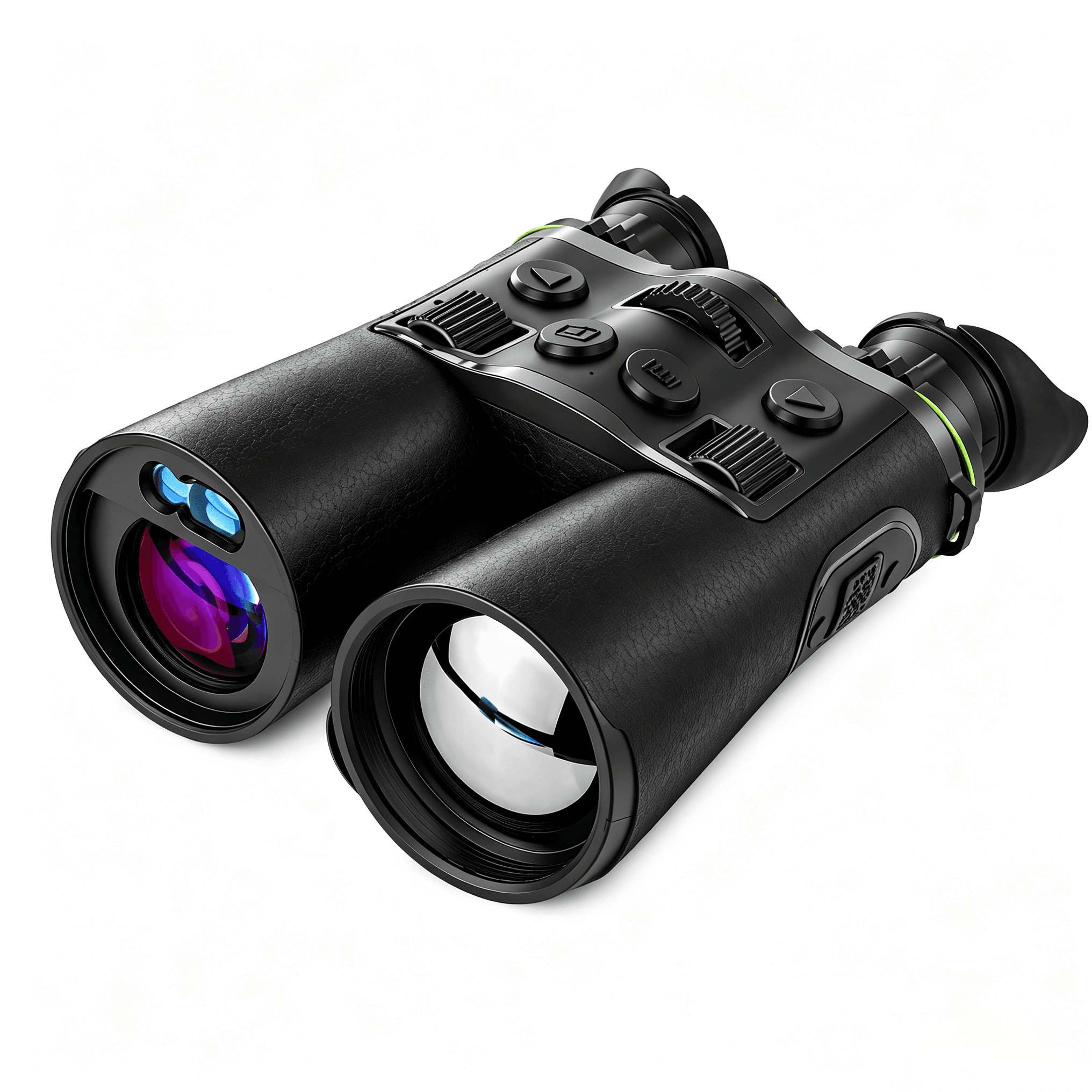
Dual-Channel Multispectral Fusion Binoculars for Precision Observation Field observation in challenging tactical, maritime, and conservation environments routinely strains conventional single-spectrum optics. Standard digital night vision requires ambient illumination or active infrared beams that wash out over reflective surfaces, while pure thermal imagers can miss critical structural lines, target identification cues, and physical barriers like glass. Equipping field teams with multispectral fusion binoculars addresses this operational blind spot by aligning long-wave infrared radiation with high-sensitivity optical channels inside a single handheld chassis. This combined architecture enables observers to detect subtle heat signatures against dense foliage and instantly verify target boundaries without swapping devices. Product Overview and Optical Architecture The unit features an asymmetric twin-barrel geometry mounted on a centralized bridge platform. Unlike conventional analog binoculars that transmit photons directly through optical prisms, this platform operates as an electro-optical digital sensor suite. Visual data captured across discrete spectral bands is processed digitally and rendered in real time through dual eyepiece viewfinders fitted with flexible rubber eyecups. The objective arrangement visually segregates the optical tasks across two dedicated optical barrels: Visible and Low-Light Digital Channel: One barrel utilizes an optical glass objective treated with broadband anti-reflective coatings. This channel collects ambient visible and near-infrared light to preserve true-to-life environmental contrast, background textures, and identifiable target markings. Thermal Infrared Channel: The companion barrel incorporates a dedicated thermal objective lens, typically manufactured from specialized infrared-transmitting materials such as diamond-turned germanium, optimized for detecting target thermal emissions regardless of zero-lux conditions. Integrated Auxiliary Sensor Suite: Positioned adjacent to the primary optics are secondary aperture windows configured to support active modules. When ordered as a thermal binocular with laser ranging, these apertures house the forward-facing laser emitter and receiver optics, delivering instant distance metrics to targets within the field of view. Key Capabilities and Operational Modes Operating as thermal & visible light binoculars, the internal processing engine allows users to cycle through multiple viewing palettes depending on atmospheric interference, background clutter, and ambient lighting. Spectral Fusion and Overlay Modes Operators can choose between standalone thermal imaging, high-resolution low-light imaging, or a fused composite image. In composite mode, the edge details and contrast from the visible sensor are layered onto the thermal heatmap, ensuring that wire fences, tree limbs, and identifying features remain sharp without masking hot target silhouettes. Target Identification and Spatial Ranging For operations requiring accurate geographic localization, the configuration serves as a thermal binocular with laser ranging to calculate precise target offsets. Firmware options also accommodate dynamic tracking routines found in hotspot tracking thermal binoculars, which automatically position crosshairs over the highest thermal delta visible in the frame to prevent fleeting targets from slipping into background noise. Electronic Recording and User Controls The bridge interface is designed around an array of sealed, tactile pushbuttons and knurled adjustment wheels, engineered for blind operation with gloved hands. A dedicated capture control labeled REC supports on-board visual recording. The digital viewing format provides high-eyepoint relief with individual diopter correction rings on each barrel to accommodate variable operator vision without image distortion. Materials, Housing, and Mechanical Construction Durability in harsh field conditions dictates every structural material selection: Armor Overmold: The outer chassis features a matte black, non-reflective protective overmold with stippled side panels to prevent slippage in wet or humid conditions. Internal Chassis: Beneath the rubber armor, the optomechanical assemblies are anchored to a rigid frame—typically lightweight cast aluminum or structural engineering polymer—to isolate optical alignment from field vibration and mechanical drops. Interface Sealing: All physical switches, rotatable diopter collars, battery latches, and port access covers incorporate elastomeric gaskets to minimize moisture and dust penetration. (Note: Specific ingress protection levels, such as IP66 or IP67 ratings, depend on the final assembly specifications requested by the procurement team.) Access Compartments: A secured side bay provides access for battery cells or connectivity ports, accompanied by a lateral textured grille protecting the internal acoustic components. Optoelectronic Manufacturing and Alignment Workflow Producing reliable night vision thermal binoculars requires rigorous assembly standards that bridge precision optical machining and surface-mount electronics assembly. 1. Optics Fabrication: Glass optical elements are ground, polished, and layered with anti-reflective coatings, while infrared lens elements undergo single-point diamond turning to achieve precise surface geometries. 2. Boresight Calibration: Because two disparate optical axes capture the same scene, physical and digital boresighting aligns the optical centers of both channels. Technicians calibrate optical convergence across working focal distances to eliminate digital parallax error during sensor fusion. 3. Module Hermetic Sealing: Optical chambers are assembled in dust-controlled cleanrooms, purged of ambient moisture, and backfilled with dry nitrogen to prevent internal fogging across wide thermal swings. 4. Burn-In and Calibration: Sensor cores undergo Non-Uniformity Correction (NUC) and thermal chamber testing to stabilize sensor response across industrial temperature variations. Application Scenarios The versatility of multispectral fusion binoculars makes them suited for several institutional and commercial applications: Search and Rescue Operations: Ground search crews can use hotspot tracking thermal binoculars to locate lost individuals through thick brush or smoke, switching to optical mode to assess terrain obstacles before navigating steep ravines. Perimeter and Border Monitoring: Static and mobile patrols deploy thermal & visible light binoculars to identify unauthorized intrusions across wide facility perimeters where thermal signatures reveal movement and optical feeds verify intent. Wildlife Surveys and Ecological Research: Biologists track nocturnal animal behavior without intrusive white light, recording thermal interactions directly to local storage for post-field evaluation. Maritime Night Navigation: Vessel operators scan waterways for unlit channel markers, floating debris, and small craft that blend into wave clutter under basic radar sweeps. Quality Control and Verification Testing Each production batch undergoes multi-stage functional and environmental verification before release: Optical Collimation and Focus Check: Eyepieces and objective focus mechanisms are evaluated on optical collimators to confirm smooth travel, zero backlash, and sharp focal planes. Parallax Alignment Audit: Digital fusion registration is verified against calibrated thermal and optical targets to guarantee overlay alignment. Thermal Core Sensitivity Audit: Core detector response is checked across standardized temperature targets to confirm signal clarity and eliminate dead pixel clusters. Laser Optical Centering: For units configured with laser rangefinder modules, laser projection axes are aligned to the display center reticle on specialized sensor test benches. OEM and Customization Guidance B2B distributors and enterprise clients can configure these electro-optical platforms according to regional regulatory constraints and operational mission profiles: Sensor Engine Options: Selection of thermal core resolution tiers, pixel pitch, and refresh rates depending on target classification requirements. Rangefinding Integration: Inclusion of 905 nm or eye-safe 1535 nm laser rangefinder modules matched to designated detection ranges. Firmware Customization: Tailored on-screen display (OSD) reticles, color palettes (White Hot, Black Hot, Ironbow, Visible Highlight), interface language localization, and specific standby battery-saving protocols. Housing Branding: Custom accent color rings (such as the standard green anodized trim), custom laser-etched serial numbering, and proprietary partner badging. Buyer Decision Factors When selecting multispectral equipment, procurement managers must evaluate several technical trade-offs: Sensor Complement Balance: Higher resolution thermal arrays yield longer detection ranges but require higher processing power and larger objective optics, affecting unit balance. Rangefinding Wavelength: Standard commercial rangefinding diodes offer cost efficiency, while specialized 1535 nm modules deliver covert operation and enhanced atmospheric penetration. Export Regulations: Electro-optical equipment containing high-performance uncooled or cooled thermal cores may be subject to regional export control classifications. Buyers should clarify local import compliance requirements early in the specification stage. Power Architecture: Evaluation of battery chemistry, whether field-swappable standard commercial cells or proprietary internal packs with external USB-C power bank pass-through, dictates field endurance. Inquire for Technical Specifications and Production Scheduling Our engineering team assists OEM partners and commercial optics distributors in defining optimal sensor integration, mechanical armor layouts, and custom firmware configurations. Contact our technical sales department to request optical interface control documents (ICDs), discuss minimum order quantities, or schedule a technical review for your customized night vision thermal binoculars project.
Voir le produit →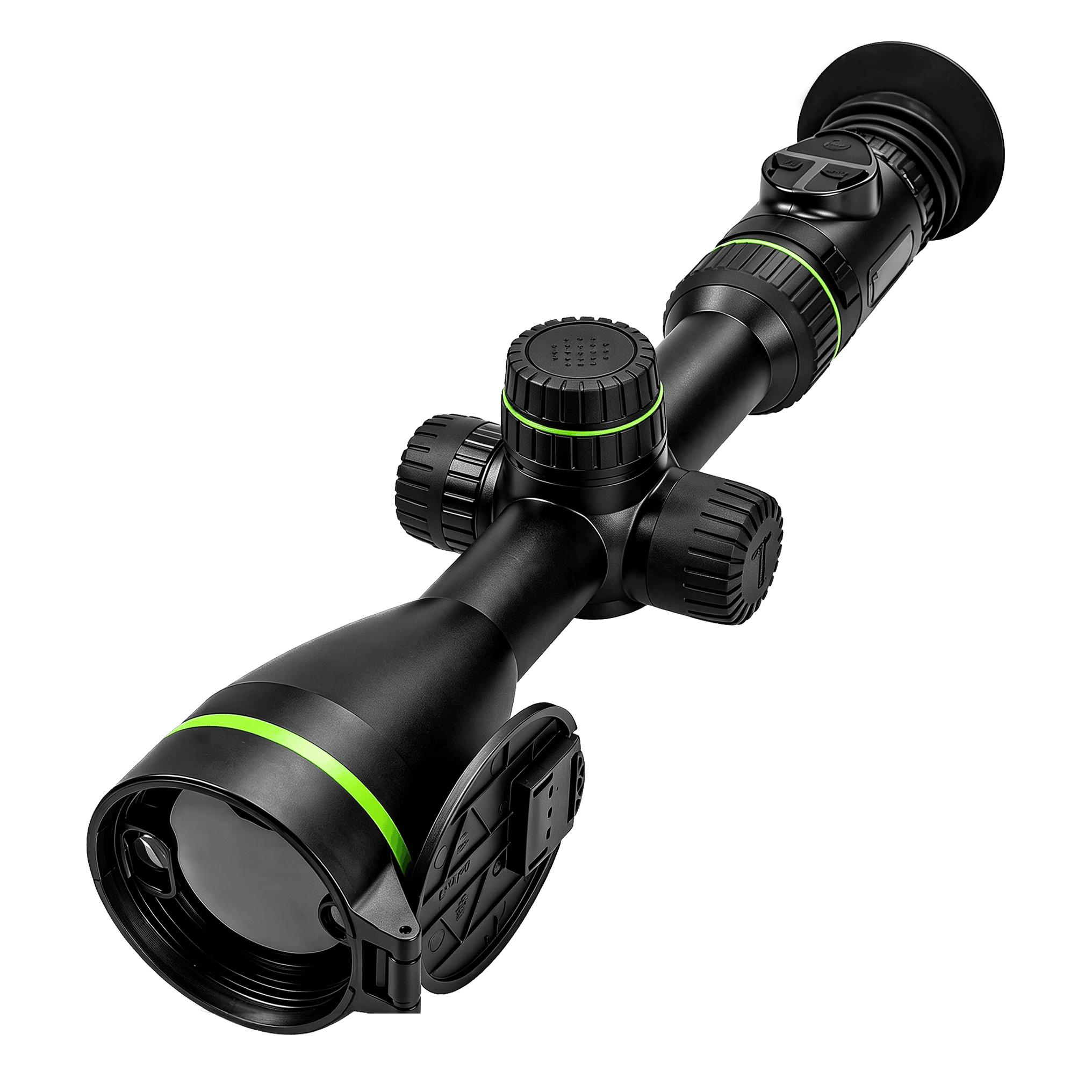
Engineered Thermal Aiming for Degraded Visual Environments Acquiring targets through dense fog, thermal clutter, smoke, and zero-ambient-light scenarios presents an insurmountable obstacle for standard daylight optics. A modern thermal riflescope resolves this operational challenge by detecting long-wave infrared radiation directly, translating minute temperature variances into clear, high-contrast imagery regardless of atmospheric conditions. Built on a familiar cylindrical riflescope form factor, systems like the QM650L from the Eaglet VIEWER series allow field operators, wildlife managers, and security professionals to maintain standard shooting ergonomics and conventional ring-mounting workflows while leveraging electro-optical target detection. Physical Architecture and Visible Design Elements Unlike box-style optoelectronic devices that demand proprietary mounting brackets, this thermal imaging scope uses a one-piece main tube profile. This traditional design facilitates direct installation using standard 30 mm or specialized scope rings, simplifying system integration across existing firearm and airgun platforms. The structural layout includes several distinct operational sections: Objective Housing: Features a wide-aperture front bell fitted with a captive, hinged flip-open lens cap. The cap stays tethered during movement, protecting internal optical elements from abrasion, moisture, and debris without risk of field loss. Adjustment Turrets: A central three-knob turret cluster provides tactile feedback. The top elevation knob incorporates deep perimeter knurling for positive indexing with gloved hands. The right-hand windage turret features directional indexing markers, while the opposing lateral turret is positioned to control focus, side parallax, or display parameters. Ocular and Interface Array: Terminating at a flexible rubber eyecup to manage eye relief and block stray light, the ocular assembly integrates a knurled diopter adjustment ring alongside top-mounted digital control pushbuttons for menu selection and system power. Aesthetic Identification: Distinct bright green accent rings highlight the objective bell, top turret junction, and ocular bell, serving as visual platform identifiers across the series. Materials and Surface Treatment Thermal instruments deployed in field conditions require structural stiffness to sustain mechanical recoil shock and rough handling. The outer chassis is constructed from high-grade aluminum alloy bar stock, shaped via multi-axis CNC machining into a monolithic main tube to minimize joint fatigue and prevent optical misalignment. The entire exterior exhibits a non-reflective, matte black surface finish consistent with industrial hard-anodizing standards. This electrochemical conversion coating enhances surface hardness, resists scratch degradation, and suppresses optical reflections that could compromise field concealment. Molded sub-assemblies—such as the tethered flip cap, button covers, and recoil-cushioning eyecup—use durable engineering polymers and synthetic elastomers resistant to environmental UV exposure and chemical solvents. Electro-Optical Integration and Manufacturing Process The production of a high-performance thermal scope requires cleanroom assembly environments to integrate sensitive internal components: Chassis Machining & Finishing: Turning and milling of the aluminum tube ensure strict concentricity along the optical centerline, followed by surface prep, anodizing, and laser engraving of indexing values. Sensor & Optical Core Alignment: Uncooled microbolometer sensor engines and microdisplays (typically OLED or high-resolution AMOLED) are mechanically positioned and calibrated to prevent reticle shift across thermal cycles. Sealing and Atmospheric Purge: The assembly incorporates high-grade O-ring seals at all mating joints, lens seats, and turret spindles. Internal cavities are purged of moisture and filled with inert gas (such as dry nitrogen or argon) to eliminate internal condensation and fogging during abrupt temperature drops. Compliance Integration: As indicated by molded regulatory indicators on system hardware, devices in this category adhere to CE, RoHS, and WEEE environmental and electronic compliance frameworks. Application Scenarios Deploying a dedicated thermal riflescope extends operational capabilities across multiple commercial, sporting, and institutional sectors: Night Predator and Feral Pest Management: Essential for agricultural conservation and nocturnal pest eradication, allowing positive target identification through crop cover and shadows. Perimeter Surveillance and Law Enforcement: Enabling law enforcement officers and security personnel to locate hidden intruders or fugitive heat signatures through brush and camouflage without using active visible lighting. Wildlife Surveying and Tracking: Facilitates accurate, non-invasive nocturnal counts of animal populations in forested terrain. Quality Control and Optical Verification Reliability hinges on rigorous testing protocols applied during and after production. Core quality checkpoints include: Boresight Retention and Recoil Shock Resistance: Mounted units undergo drop-table shock testing replicating high-caliber rifle recoil impulses to verify that zero retention and internal collimation remain intact. Environmental Immersion & Temperature Testing: Thermal cycling across extreme temperature gradients evaluates chassis expansion tolerances, seal integrity, and sensor drift. Optical Axis Collimation: Digital reticle centering and sensor alignment are mapped against laser collimation jigs to guarantee consistent point-of-impact repeatability across the zoom spectrum. Customization Guidance for OEM/ODM Buyers Procurement teams seeking customized configurations of the QM650L platform or broader Eaglet VIEWER series can adapt multiple design parameters to match target regional markets: Core & Lens Configuration: Options for differing detector resolutions (e.g., 384×288 or 640×512 configurations), pixel pitch variations, and specific focal lengths based on required detection ranges. Firmware & Reticle Profiles: Custom multi-reticle profiles, onboard ballistic calculator software, user interface localization, and custom splash screens. External Styling & Branding: Modification of accent bands, custom laser-engraved serial codes, private-label packaging, and specialized matte finish coatings. Key Buyer Evaluation Factors When sourcing a thermal scope for retail or commercial distribution, purchasing directors should evaluate several baseline criteria. Tube diameter dictates ring mounting versatility, while objective focal length directly affects baseline optical magnification and field of view. Buyers must confirm sensor NETD sensitivity ratings to ensure reliable performance in low-contrast conditions, evaluate internal battery runtime alongside external USB power input options, and review official caliber recoil certifications to ensure alignment with target shooting platforms. Request Specifications and Distribution Details Contact our technical sales team to request verified configuration data, optical schematics, minimum order quantities (MOQ), and sample evaluation units for this thermal riflescope series.
Voir le produit →Nous accompagnons nos clients depuis Sélection de modules d'imagerie thermique et intégration matérielle pour des systèmes de vision infrarouge personnalisés.
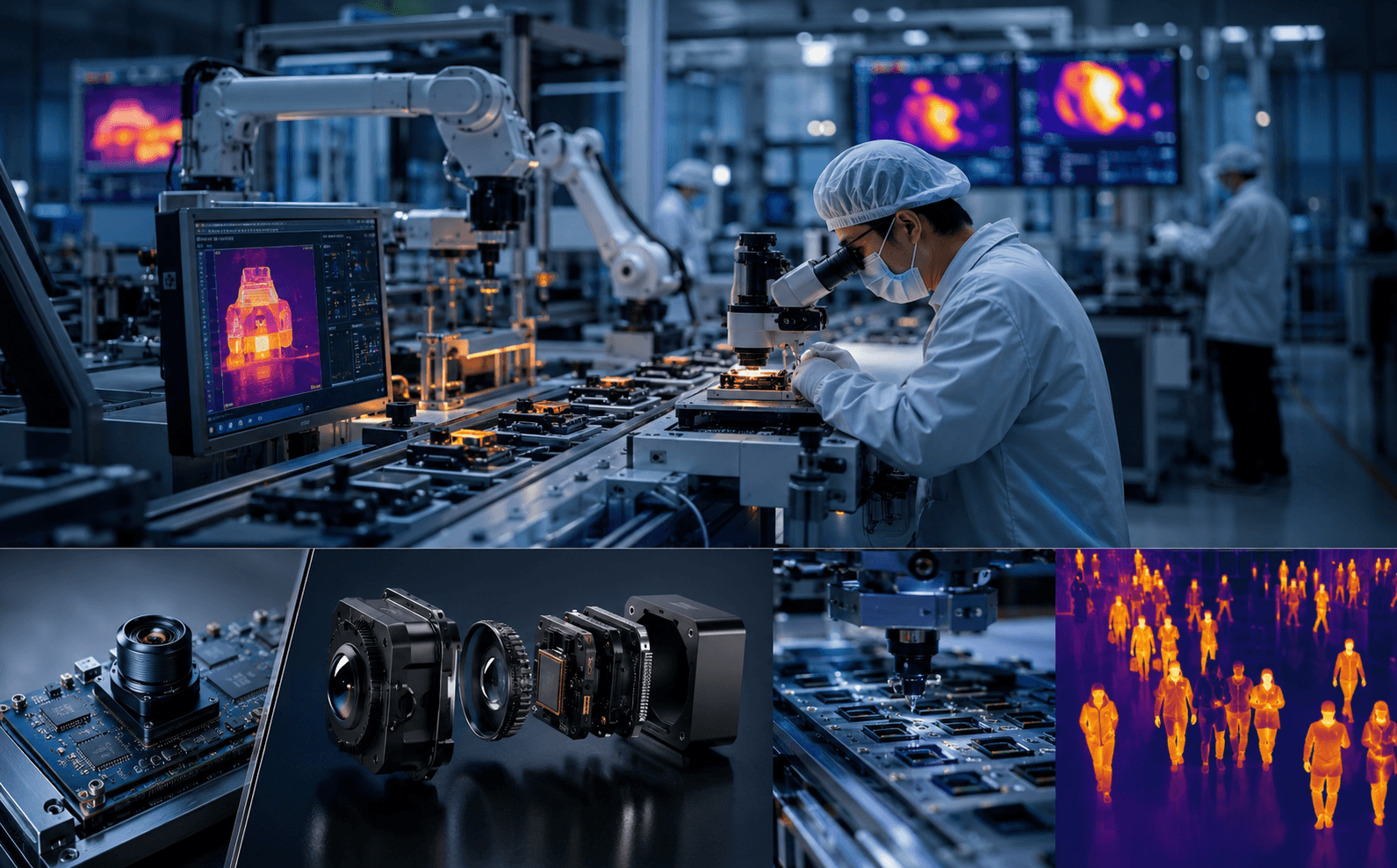
Nous ne sommes pas qu'un simple fournisseur de composants. Notre équipe d'ingénierie accompagne nos clients, du choix de la résolution et de l'optique jusqu'à la personnalisation et la fabrication complètes du système.




Détection de précision. Vision intelligente. Résultats concrets.
Forts de plusieurs années d'expérience dans le secteur de l'imagerie thermique infrarouge, nous développons de manière indépendante des puces d'imagerie et des technologies de détection complètes pour des applications exigeantes.
Notre travail associe la détection, le traitement d'image, la transmission, l'intégration et la validation d'applications.
Faire progresser la technologie d'imagerie thermique et créer des solutions de vision plus sûres et plus intelligentes.
Devenez un partenaire mondial de confiance en matière de technologie d'imagerie thermique.

Décrivez-nous votre application, la résolution requise, la portée de détection ou vos besoins d'intégration. Notre équipe d'ingénieurs vous aidera à identifier la solution adaptée.