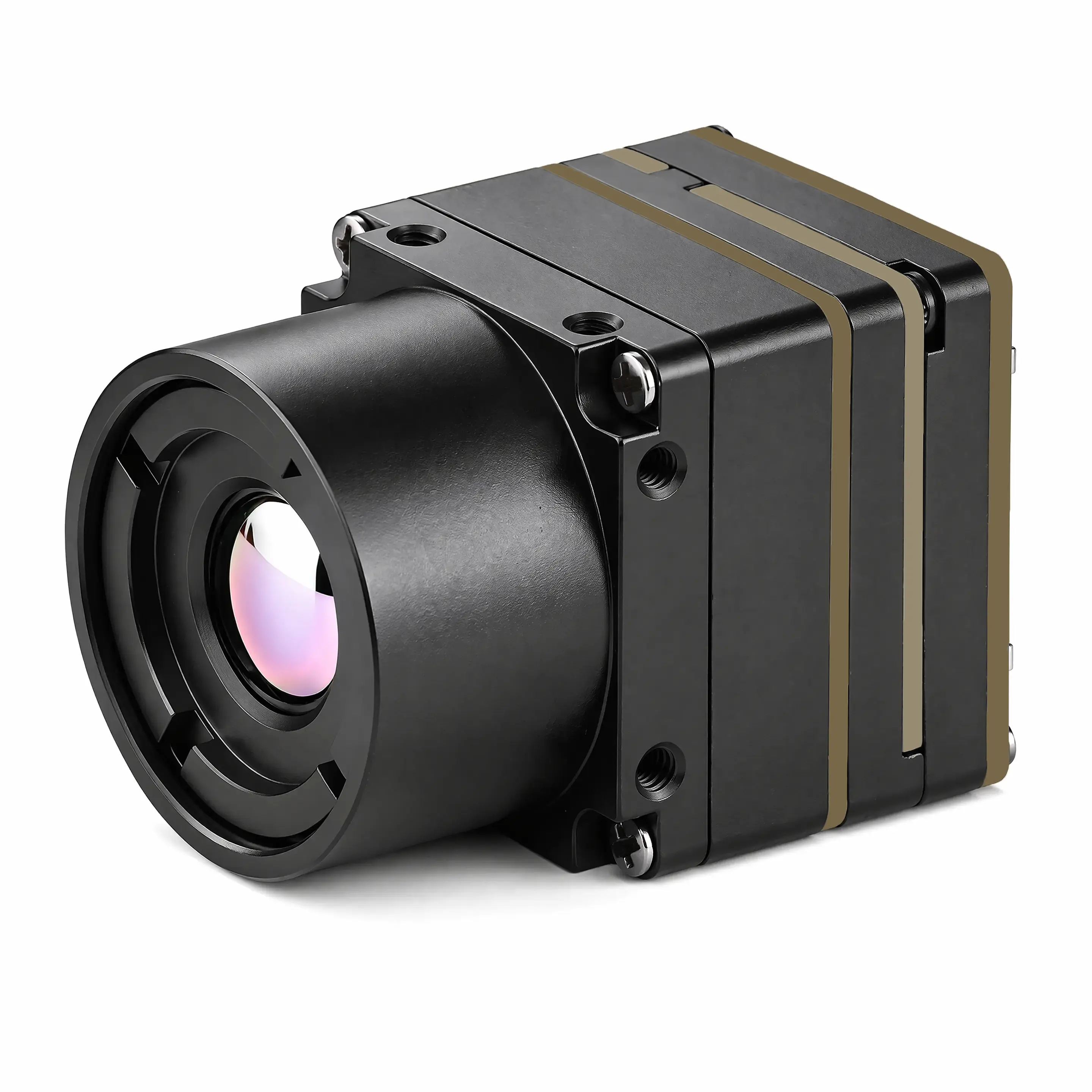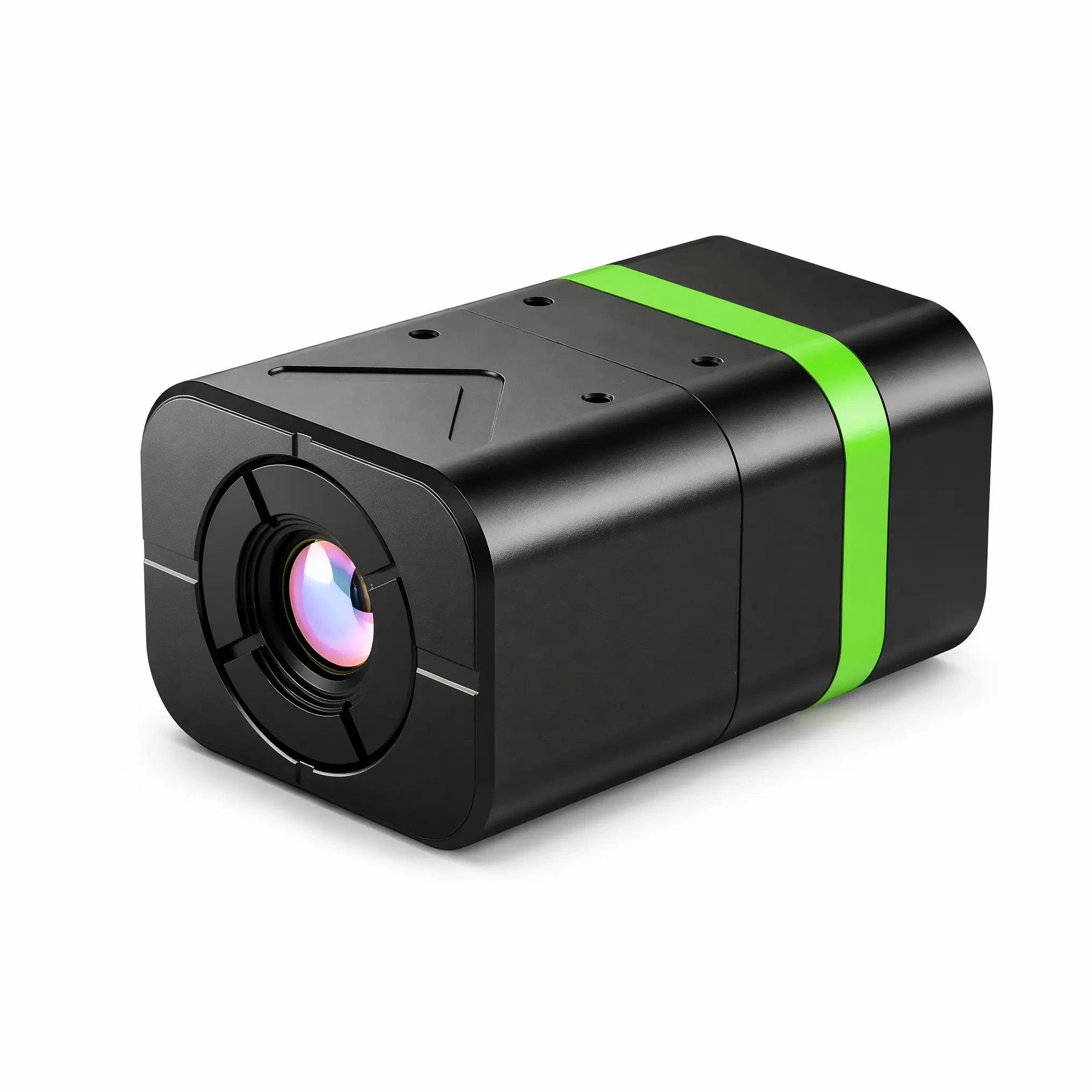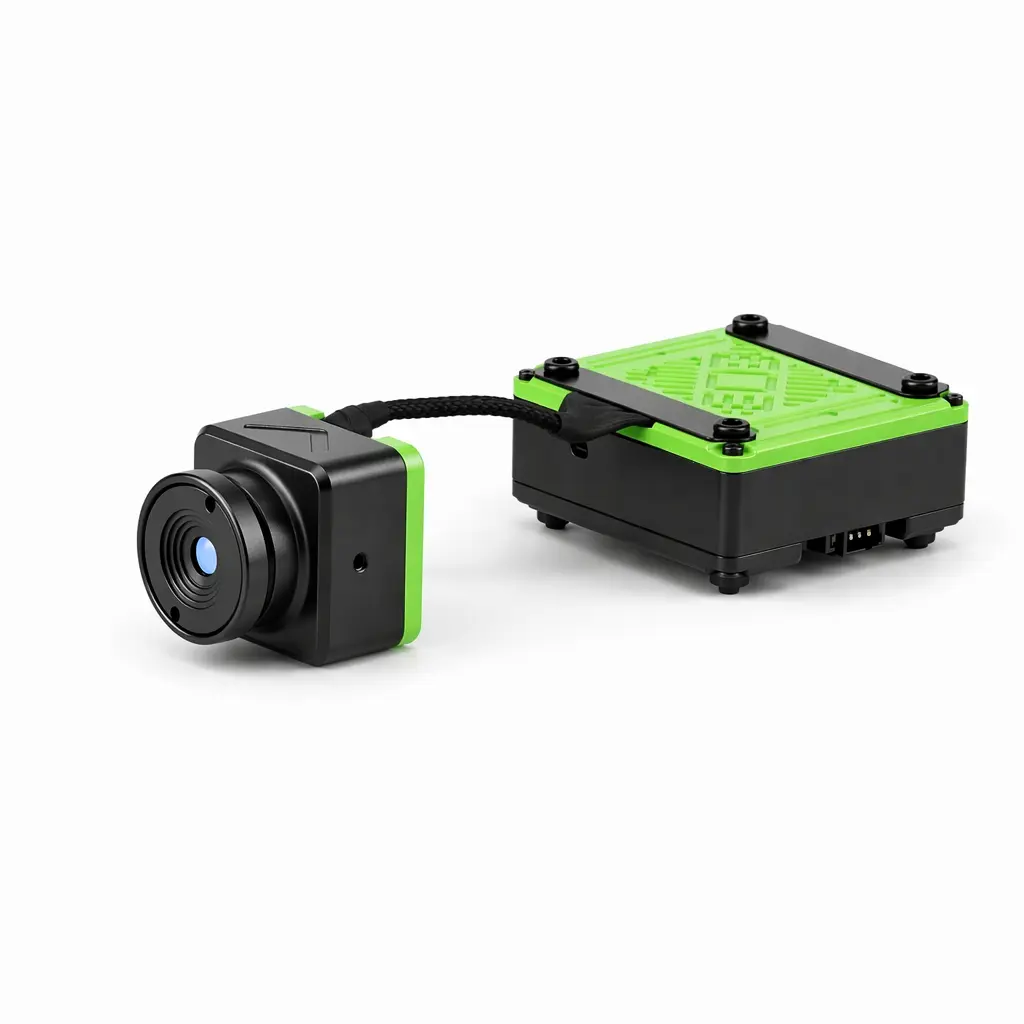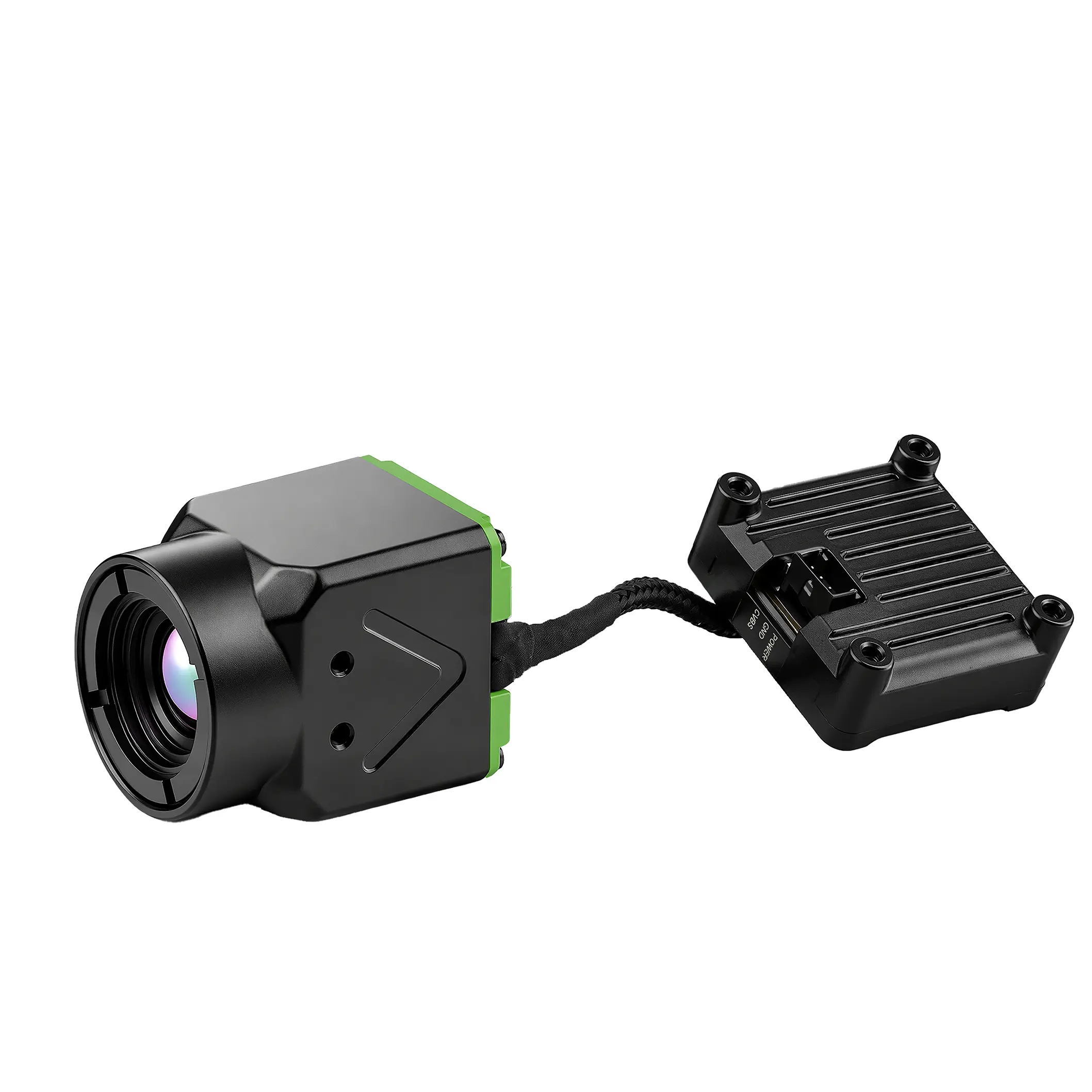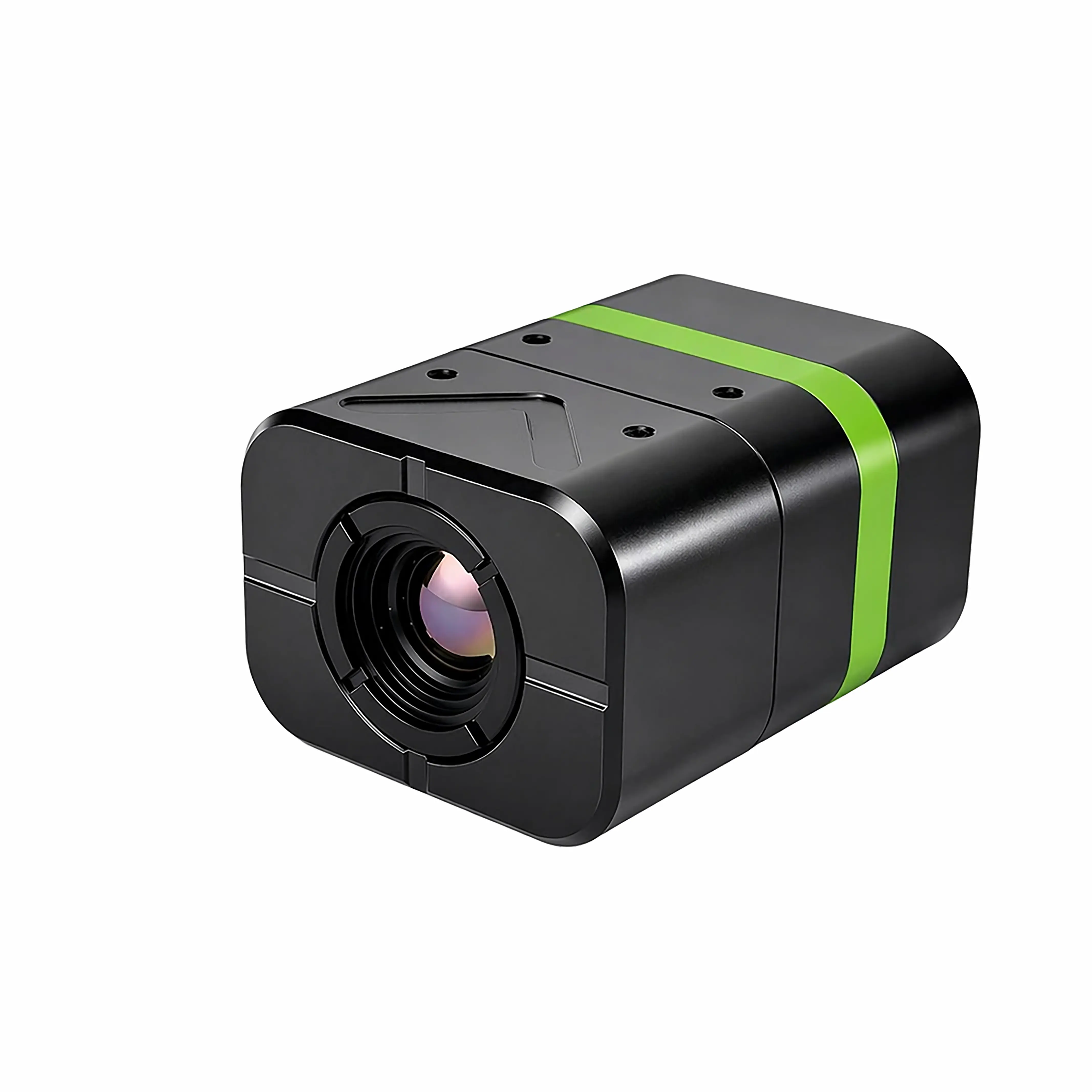


A drone thermal imaging system should be evaluated as a complete airborne sensing chain, not as a standalone camera.
Buying a thermal imaging payload for a drone is not simply a matter of choosing the highest detector resolution. The system must detect the right target at the required distance, fit the aircraft's payload and power limits, transmit usable images with low latency, integrate with the gimbal and ground station, and remain stable in the actual operating environment.
This guide gives procurement teams and system integrators a practical framework for evaluating a drone thermal imaging system for inspection, security, firefighting, search and rescue, forest monitoring, FPV, and robotic vision.
1. Define the mission before comparing models
Start with five questions before requesting quotations:
- What must the system find? A person, vehicle, fire source, photovoltaic hot spot, electrical connector, pipeline defect, or another target? Target size, temperature contrast, and background conditions directly affect the required detector and lens.
- At what distance must the operator detect, recognize, or inspect it? These are different performance levels. Seeing a hot object is not the same as identifying it, and neither guarantees that the system can make a reliable temperature measurement.
- Is the mission observational or radiometric? Security and rescue missions usually prioritize detection, smooth video, and low latency. Power, solar, charging-infrastructure, and industrial inspections require measurement accuracy, calibration, and usable temperature data.
- What can the aircraft carry? Confirm the allowable weight, dimensions, power, voltage, mounting space, and center-of-gravity limits. A lightweight core can become a much heavier payload after the lens, housing, gimbal, vibration isolation, cables, and video transmitter are included.
- How will the data be used? Live viewing by a pilot, remote command-center monitoring, onboard recording, and inspection-report generation require different video, software, and data interfaces.
2. Choosing between 256x192, 384x288, and 640x512
256x192: lightweight and cost-conscious projects
A 256x192 core can be a sensible choice for compact drones, short-range night observation, entry-level patrol, proof-of-concept builds, and high-volume applications with strict cost and payload limits. Its main risk is insufficient target pixels at the planned altitude. Ask the supplier to demonstrate the proposed lens at the real working distance.
384x288: a balanced general-purpose option
A 384x288 detector generally offers a useful balance of image detail, bandwidth, integration effort, and cost. It is well suited to general inspection, perimeter security, mobile platforms, and medium-range search tasks. For moving platforms, a frame rate around 50 Hz can provide smoother viewing and easier target tracking than low-frame-rate alternatives.
640x512: professional inspection and longer-range observation
A 640x512 detector provides more target detail and greater flexibility for electronic zoom. It is typically preferable for power-line and substation inspection, photovoltaic hot-spot detection, forest-fire monitoring, firefighting, professional search and rescue, and higher-end security payloads.
Resolution alone does not determine final image quality. Lens quality, focal length, detector sensitivity, image processing, focus, gimbal stability, and video compression can make a major difference. A high-resolution core paired with a poor lens or an over-compressed video link may produce disappointing field results.
3. Eight specifications that matter in real procurement
1. NETD and thermal sensitivity
Lower NETD generally helps the camera distinguish small temperature differences, especially in humid conditions, at dawn, in haze, or when the target temperature is close to the background. Ask for the test conditions behind the quoted value and verify performance with representative sample footage or a field test.
2. Frame rate and end-to-end latency
The referenced product range includes thermal cores operating at approximately 50 fps/50 Hz and a digital image-transmission system designed for 1080P/60fps FPV applications. Buyers should still measure complete end-to-end latency. Acquisition, processing, encoding, wireless transmission, decoding, and display all contribute to the delay seen by the operator.
3. Lens focal length and field of view
A wide-angle lens covers more area and is useful for search and close inspection. A longer focal length provides more pixels on a distant target but narrows the field of view and increases the demand on gimbal stability. Give the supplier the target size, flight altitude, horizontal distance, coverage width, and required detection level. Request field-of-view calculations and real test video instead of relying on a single maximum detection-distance claim.
4. Radiometric measurement
For electrical, solar, charging-station, and industrial inspection, confirm whether the core is radiometric. Check the temperature range, accuracy, point/line/area measurement, hot-spot tracking, full-frame temperature output, emissivity correction, reflected-temperature compensation, calibration certificate, and recalibration process. A camera that displays thermal contrast is not necessarily a calibrated measurement instrument.
5. Interfaces, protocols, and SDK
Integration problems often appear after the camera has already been selected. Confirm video output, control interface, communication protocol, supply voltage, peak current, supported operating systems, SDK availability, example code, and access to palette, zoom, capture, recording, measurement, and calibration controls. Clarify whether the SDK, future upgrades, and engineering support are included in the quotation.
6. Size, weight, power, and thermal design
Request separate figures for the bare core, lens, housing, connectors, and complete gimbal payload. Obtain both typical and peak power consumption. Also confirm heat-dissipation requirements, because temperature buildup in a compact airborne enclosure can affect image stability, measurement accuracy, and service life.
7. Video-link range, interference, and legal frequency use
The referenced HD digital transmission solution supports 1080P/60fps operation in the 5.5-5.9 GHz range and covers the chain from camera and transmitter to receiver and antenna. For procurement, verify the conditions behind the stated range, performance in urban or industrial interference, behavior under partial obstruction, diversity reception, link recovery, encryption, and frequency compliance in the destination market. An open-field maximum should never be treated as the guaranteed working range on site.
8. Environmental reliability
Airborne payloads face vibration, shock, wind, rain, dust, high and low temperatures, and rapid temperature changes. Review operating and storage temperature, ingress protection, vibration and shock testing, cold-start behavior, lens-window material, anti-fog measures, EMC results, and continuous-operation stability. For volume programs, also ask about batch consistency and component lifecycle.
4. Application-specific priorities
Power and photovoltaic inspection
Prioritize measurement accuracy, full-frame temperature data, suitable focal length, gimbal stability, and reporting software. A visible-plus-thermal dual-sensor payload can make it easier to connect an abnormal heat signature with the exact component.
Firefighting and forest-fire monitoring
Prioritize long-range heat-source detection, low NETD, an appropriate temperature range, hot-spot tracking, a stable long-focus lens, and a reliable video link. Test performance in smoke and complex backgrounds.
Search and rescue
Prioritize human detection, smooth 50 Hz-class imaging, low latency, electronic zoom, hot-spot tracking, recording, and rapid deployment. Evaluate the payload's effect on flight endurance.
Perimeter security and night patrol
Prioritize human and vehicle detection distance, tracking, visible/thermal fusion, stable transmission, location or heading overlays, and compatibility with the existing security platform.
Compact FPV and robotic vision
Prioritize size, weight, power, latency, and open interfaces. A 256x192 or 384x288 core may control cost and payload more effectively, while 640x512 becomes attractive when the mission requires longer range or more detail.
5. How to evaluate the supplier
- Complete system capability: Can the supplier support the thermal core, lens, processing, transmitter, receiver, antenna, software, and integration?
- Customization: Can it modify mechanics, interfaces, protocols, algorithms, or software? What are the MOQ, engineering charge, and lead time?
- Technical validation: Will it provide sample units, real flight footage, target-distance testing, and joint debugging?
- Volume delivery: Ask for prototype and production lead times, monthly capacity, critical-component availability, and product lifecycle plans.
- After-sales responsibility: Put warranty, repair turnaround, recalibration, firmware updates, SDK maintenance, and technical support into the agreement.
6. Costs that are often missing from the first quotation
The bare thermal core is only part of the total cost. Ask for an itemized scope covering the infrared lens, visible camera, fusion processor, gimbal, vibration isolation, housing, connectors, cables, transmitter, receiver, antennas, ground display, SDK, software license, custom development, calibration, tooling, spare parts, shipping, and support. Compare total cost of ownership, not only the module price.
7. Sample acceptance tests
- Imaging and distance: Test representative targets at the planned flight altitude and range during day, night, and low-contrast conditions.
- End-to-end latency: Measure the delay from target movement to the ground display at different distances and bit rates.
- Link stability: Record dropped frames, freezes, artifacts, disconnections, and recovery time in both open and interference-prone environments.
- Temperature measurement: For radiometric systems, use a traceable temperature source or blackbody at multiple set points and ambient conditions.
- Flight and gimbal behavior: Check vibration, drift, recovery after rapid movement, center of gravity, and endurance impact.
- Continuous operation: Observe temperature rise, crashes, image drift, noise changes, and stream interruptions.
- Software and integration: Verify the SDK, protocol, ground-station connection, capture, recording, palettes, zoom, and measurement functions against the supplied documentation.
8. Ten questions to include in the RFQ
- Which detector resolution and lens do you recommend for our target size, altitude, and working distance? Please provide field-of-view and target-pixel calculations.
- What are the complete dimensions, weight, typical power, and peak power of the core, lens, housing, and gimbal?
- What are the detector type, pixel pitch, spectral range, NETD, frame rate, and startup time?
- If radiometric, what are the measurement range, accuracy, calibration method, and full-frame temperature-data format?
- Which video and control interfaces, protocols, SDKs, sample programs, and operating systems are supported?
- What is the end-to-end video latency and stable operating range, and under what test conditions were they measured?
- Which temperature, ingress, vibration, shock, and EMC tests have been completed?
- Please separate prototype, pilot, and volume pricing and identify all lens, video-link, SDK, customization, and support charges.
- What are the MOQ, lead time, monthly capacity, product lifecycle, and replacement plan for critical components?
- What acceptance plan, warranty, repair turnaround, and technical support will be included?
Conclusion: buy the mission result, not the specification sheet
A drone thermal imaging system is a complete visual chain. Detector resolution is only the starting point; lens, NETD, frame rate, measurement capability, interfaces, video link, gimbal, software, and supplier engineering support jointly determine the field result.
For lightweight and price-sensitive projects, 256x192 can be a practical starting point. For general inspection and security, 384x288 often provides a balanced choice. For longer-range observation, professional inspection, and high-value missions, 640x512 offers more useful detail. The final decision should be verified with real targets, real distances, and real flight conditions before volume purchasing.