
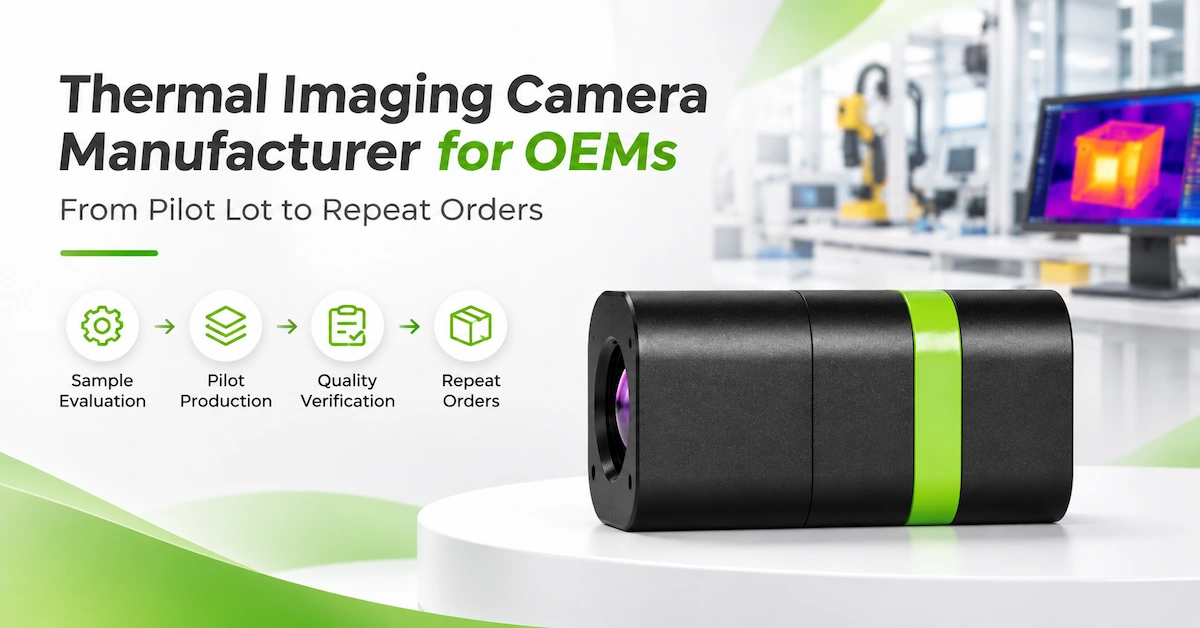
TL;DR: Selecting a thermal imaging camera manufacturer for OEM production requires more than approving an infrared camera sample. Buyers need a documented product configuration, verified image and electrical performance, repeatable pilot-lot acceptance criteria, and procedures for managing revisions. The most reliable approach is to qualify the thermal imaging core and the complete integration process before committing to repeat orders.
For industrial equipment manufacturers, robotics developers, and professional camera brands, a successful prototype is only the beginning. Variations in optical assemblies, firmware, connectors, or production processes can affect the performance of subsequent thermal imaging systems.
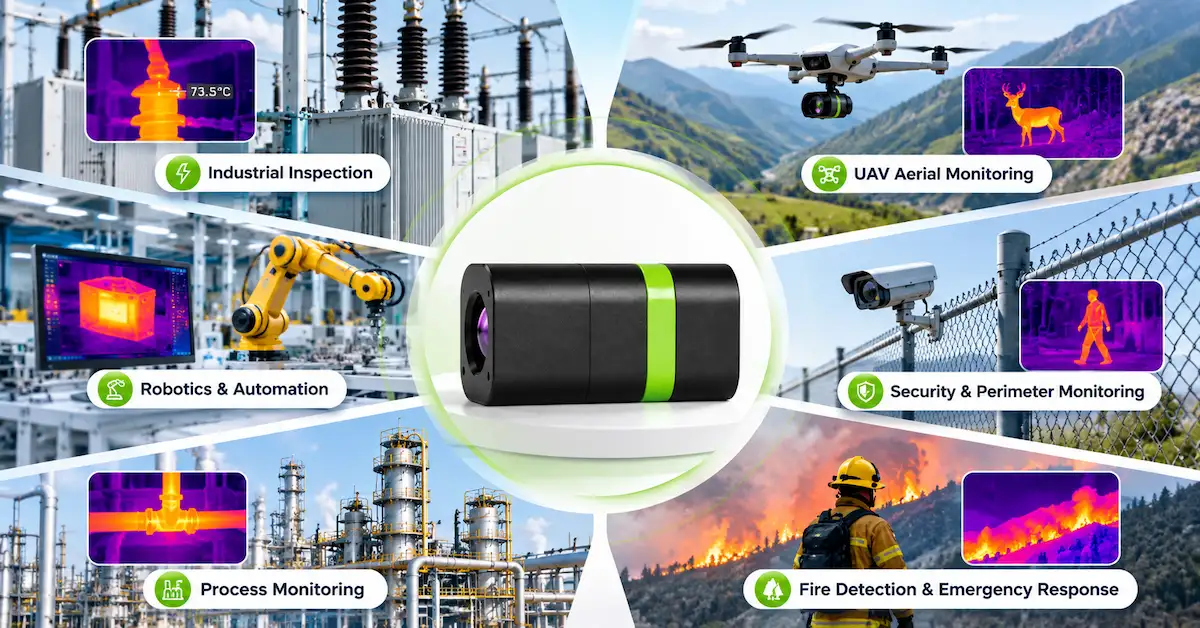
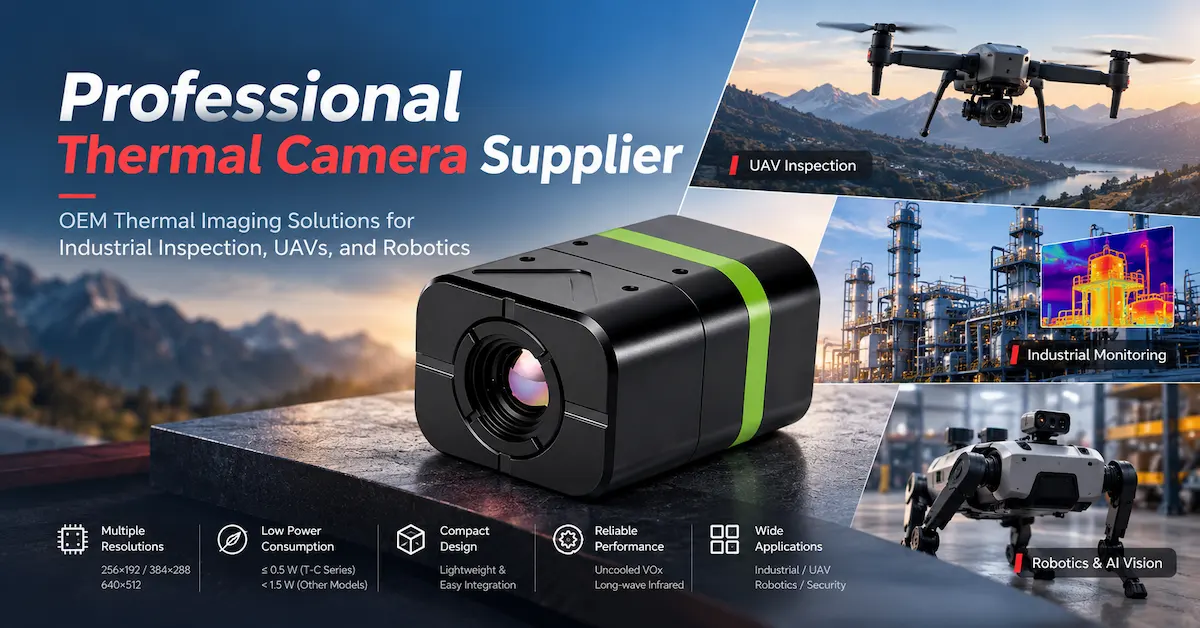
EAGLET provides uncooled LWIR thermal imaging cores in several resolution classes for OEM manufacturers and system integrators.
This engineering guide explains how to move from sample evaluation to pilot production, establish measurable quality requirements, and reduce purchasing risks across future orders.
1. Key Takeaways
-
Approve the complete configuration: Detector, lens, hardware, firmware, interfaces, and mechanical dimensions should be identified before pilot production.
-
Test repeatability, not just appearance: Attractive thermal images do not establish batch consistency or calibrated temperature measurement accuracy.
-
Separate engineering samples from production approval: First article inspection and pilot-lot evaluation serve different purposes.
-
Control technical changes: Changes affecting form, fit, function, or reliability should trigger documented review and potentially requalification.
-
Evaluate total procurement cost: Initial pricing, engineering changes, testing, supply continuity, and service requirements all influence long-term purchasing decisions.
2. Quick Reference: How Should OEM Buyers Approve Thermal Camera Production?
The following matrix provides a practical route from development samples to repeat purchasing.
| Production stage | Main engineering requirement | Required evidence | Recommended decision |
|---|---|---|---|
| Engineering samples | Confirm core and system compatibility | Datasheet, representative images, interface tests | Proceed if the configuration meets functional requirements |
| First Article Inspection | Verify the intended production configuration | Drawings, version records, inspection results | Approve or correct configuration differences |
| Pilot lot | Confirm repeatability across multiple units | Batch test records and nonconformance review | Release only against agreed acceptance criteria |
| Repeat production | Maintain approved performance and configuration | Traceability, change control, production inspection | Continue orders with defined revision management |
The key distinction: An engineering sample demonstrates technical feasibility. A pilot lot provides evidence about the repeatability of a proposed production process.
Neither stage guarantees future manufacturing performance without an appropriate control plan.
3. What Technical Evidence Supports This OEM Manufacturing Guide?
This guide combines EAGLET's published thermal imaging product specifications with established engineering principles for configuration management, product qualification, and supplier change control.
EAGLET publicly lists uncooled VOx infrared imaging modules, their resolution options, electrical requirements, video output, and mechanical configurations.
Two established references are relevant to the purchasing framework:
-
ISO 10007:2017 — Quality Management: Guidelines for Configuration Management. Addresses configuration identification, change control, status accounting, and configuration audits.
-
JEDEC/ECIA/IPC J-STD-046A:2025 — Customer Notification Standard for Product/Process Changes by Electronic Product Suppliers. Establishes requirements for communicating relevant changes to electronic products and associated processes.
These standards offer a basis for developing supplier qualification procedures.
Evidence limitation: EAGLET's public pages do not provide independently verified pilot-lot yield data, production defect rates, or model-specific repeat-order performance statistics. The acceptance framework and worked examples below are engineering recommendations, not claims about completed EAGLET customer projects or certifications.
4. What Should a Thermal Imaging Camera Manufacturer Control Before Pilot Production?
The first production requirement is a clearly defined product configuration.
A thermal camera's performance depends on more than its infrared detector. Optical components, imaging electronics, mechanical assembly, and software behavior can influence the finished equipment.
Configuration baseline
| Configuration element | Information to record | Risk if uncontrolled |
|---|---|---|
| Infrared detector | Technology, resolution, pixel pitch | Changes in imaging characteristics |
| Optical assembly | Lens version, verified FOV, focus | Different target coverage or image detail |
| Electronics | PCB and hardware revision | Electrical compatibility problems |
| Firmware | Software revision and settings | Differences in correction or output behavior |
| Video interface | Output format and signal definition | Host acquisition failure |
| Mechanical components | Dimensions, mounting, connector positions | Assembly interference |
| Acceptance tests | Test conditions and approved limits | Inconsistent pass/fail decisions |
Why the exact configuration matters
Suppose an industrial OEM validates a thermal imaging core with a specific lens and host electronics.
A later order uses the same core model name but a different optical assembly.
Even if the detector resolution remains unchanged, the camera's viewing angle or focus behavior may differ from the approved system.
The buyer may need to repeat optical and application tests.
Procurement recommendation: Approve and document the actual configuration—not only the product family name—before authorizing pilot production.
5. Which EAGLET Thermal Imaging Core Is Suitable for OEM Production?
Different thermal imaging cores provide different starting points for equipment development.
EAGLET's published product range includes uncooled vanadium oxide (VOx) detectors operating across the 8–14 μm long-wave infrared spectrum.
Thermal imaging core specifications
| EAGLET model | Resolution | Published NETD | Input voltage | Published power |
|---|---|---|---|---|
| T-C Series | 256×192 / 384×288 / 640×512 | ≤35 mK* | 4.5–18 V | ≤0.5 W* |
| T256-S | 256×192 | ≤50 mK | 9–24 V | <1.5 W |
| T384-I | 384×288 | ≤50 mK | 9–24 V | <1.5 W |
| T640-S | 640×512 | ≤50 mK | 9–24 V | <1.5 W |
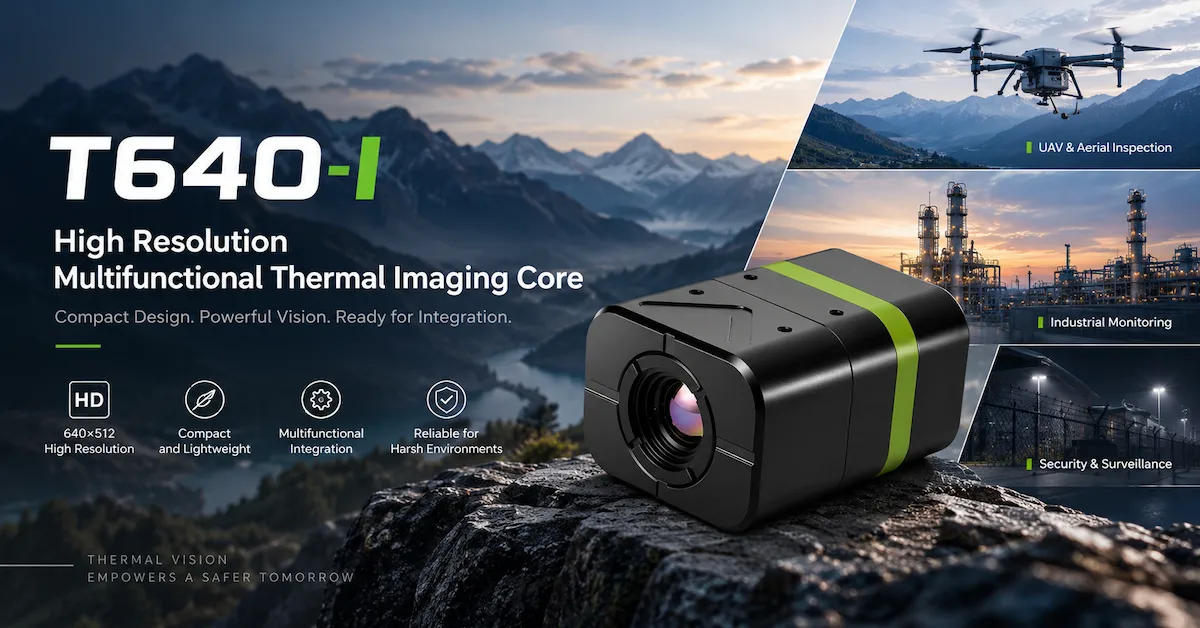
| T640-I | 640×512 | ≤50 mK | 9–24 V | <1.5 W |
The T-C values are published at series level. Confirm applicability to the exact variant. NETD values should be compared using equivalent test conditions.
Model selection matrix
| Product | Integration characteristic | Potential buyer fit |
|---|---|---|
| T-C Series | Multiple resolutions, compact configuration | Power-sensitive embedded equipment |
| T256-S | Compact 256×192 imaging with separate component dimensions | Portable and small-format devices |
| T384-I | Integrated 384×288 configuration | Industrial inspection and robotics |
| T640-S | Separately specified optical and controller components | 640×512 systems with layout constraints |
| T640-I | Integrated 640×512 configuration | Compact high-resolution equipment |
All five published product entries specify CVBS (PAL) video output. T-C Series additionally lists UART control.
This interface distinction matters because a 640×512 native detector does not automatically provide a full-resolution digital image stream or calibrated temperature data to the host.
How should engineers choose?
Start with the actual equipment requirement.
For compact inspection devices, consider the mechanical arrangement and power budget.
For industrial inspection, determine the required target detail and image coverage.
For robotics, verify the video interface, processing requirements, electrical behavior, and installation constraints.
The correct production model is the one that meets the complete approved design—not necessarily the highest-resolution option.
6. How Should First Article Inspection Prevent Optical and Electronic Defects?
First Article Inspection (FAI) is intended to verify that the initial production configuration meets the agreed design and engineering requirements.
For thermal imaging equipment, this should include more than a visual check of the module housing.
Optical and mechanical verification
Inspect the optical assembly, mounting dimensions, focus behavior, and relevant alignment features.
Where target visibility is a critical requirement, test the core at representative distances using an agreed optical configuration.
A change in lens focal length, field of view, or mounting position may require renewed optical validation.
Electrical and interface verification
Check:
-
Input voltage and operating current
-
Startup behavior
-
Video-output stability
-
Control-interface functionality, if applicable
-
Connector placement and electrical compatibility
-
Operation using the intended host acquisition hardware
The aim is to identify incompatibilities before they affect multiple finished products.
Image-quality verification
Use controlled reference conditions to assess thermal image quality.
Relevant checks may include image uniformity, visible artifacts, focus, frame behavior, and target visibility.
If the finished camera requires accurate temperature measurement, specify calibrated radiometric testing separately.
NETD is a thermal sensitivity parameter, not a guarantee of absolute temperature measurement accuracy.
7. How Can OEM Buyers Detect Batch-to-Batch Thermal Imaging Variation?
A successful pilot lot should provide evidence that multiple production units perform acceptably under repeatable conditions.
Without controlled tests, differences between thermal images may be caused by changing targets, ambient conditions, lens configurations, or acquisition settings rather than the modules themselves.
Recommended pilot-lot acceptance matrix
| Test item | Measurement method | Suggested acceptance principle | Action if failed |
|---|---|---|---|
| Image uniformity | Controlled reference scene | Meet agreed image-quality limits | Investigate sensor or correction behavior |
| Optical focus | Standardized target and distance | Meet approved optical criteria | Inspect optical alignment |
| Video stability | Host acquisition test | Meet signal and functional requirements | Review electronics and connections |
| Power consumption | Electrical measurement | Stay within approved specification | Investigate electrical differences |
| Mechanical fit | Drawing-based inspection | Meet required dimensions and tolerances | Review component or assembly variation |
| Control behavior | Defined command tests | Produce expected functions | Verify revision and configuration |
| Environmental behavior | Project-defined conditions | Meet agreed operational criteria | Review thermal or mechanical design |
The actual numerical acceptance limits should be established by the OEM and supplier based on application requirements.
How should the sampling plan work?
Not all tests need the same sampling strategy.
Critical interface or safety-related functions may require testing on every unit. Other characteristics may be evaluated using a justified sampling plan, provided the purchaser accepts the associated risk.
For a small pilot lot, extensive sample testing can be more informative than relying solely on statistical acceptance limits.
What should trigger a production hold?
An OEM should consider holding approval when critical functional tests fail, configuration records do not match the approved design, or unresolved deviations could affect intended operation.
The objective is to prevent an unqualified configuration from entering repeat production.
8. How Do Component and Firmware Changes Affect Repeat Orders?
A thermal imaging camera manufacturer's engineering changes can influence finished products even when their external appearance remains unchanged.
Changes may involve the detector, optics, electronic components, firmware, manufacturing processes, or connectors.
Change-impact decision matrix
| Proposed change | Possible effect | Recommended qualification activity |
|---|---|---|
| Infrared detector revision | Image behavior, sensitivity, correction | Compare imaging performance and relevant reliability data |
| Lens replacement | Focus, FOV, target detail | Repeat optical validation |
| PCB revision | Power, signal integrity, compatibility | Repeat electrical and host testing |
| Firmware update | Image processing or control behavior | Functional regression testing |
| Connector replacement | Mechanical fit or electrical connection | Review assembly and interface compatibility |
| Manufacturing process change | Product consistency | Evaluate affected quality characteristics |
The key principle is to determine whether a change affects form, fit, function, quality, or reliability.
ISO 10007:2017 provides guidance on configuration management. JEDEC/ECIA/IPC J-STD-046A:2025 provides a customer-notification framework relevant to electronic products.
These references do not establish that EAGLET has adopted a particular contractual notification period.
What should the purchasing agreement include?
Buyers should clarify which changes require advance notice, what qualification data must accompany the notice, and whether the OEM must approve the revised configuration before shipment.
This is particularly important when thermal imaging hardware is integrated into products with long service lives.
9. What Does Pilot Production Actually Cost?
The price of a thermal imaging core is only one part of the project investment.
The total cost can include sample evaluation, optical configuration, electronics integration, firmware work, tooling, testing, and production inspection.
A useful comparison is:
Total project cost = Non-recurring engineering cost + (Unit cost × Quantity) + Validation and logistics costs
Illustrative OEM cost calculation
Consider two hypothetical supplier proposals for the same approved product requirement.
| Cost element | Option A | Option B |
|---|---|---|
| Initial engineering and setup | $3,000 | $0 |
| Unit price | $90 | $110 |
| Cost at 50 units | $7,500 | $5,500 |
| Cost at 150 units | $16,500 | $16,500 |
| Cost at 500 units | $48,000 | $55,000 |
The break-even volume in this simplified comparison is:
Break-even quantity = $3,000 ÷ ($110 − $90) = 150 units
The figures are hypothetical, not EAGLET prices or measured supplier quotations. They exclude differences in testing, tooling changes, freight, warranty, and failure costs.
The purpose is to show why OEM buyers should evaluate expected purchasing volume before selecting a commercial arrangement.
When is a cheaper unit price not the better deal?
Lower pricing may provide little value if a product requires repeated redesign, lacks suitable documentation, or creates additional qualification work.
Compare the total cost of achieving and maintaining an approved configuration, not simply the initial sample price.
10. Engineering Example: Qualifying a Robotics Thermal Imaging Core
The following scenario is an illustrative qualification workflow, not a published EAGLET customer case study.
An OEM manufacturer is developing a robotic inspection device and selects a 384×288 thermal imaging configuration as a candidate.
The equipment must acquire a repeatable thermal video signal, fit within the available installation space, and operate using the robot's regulated power supply.
Initial engineering stage
The team evaluates the EAGLET T384-I as a potential imaging component.
The published model provides 384×288 resolution, CVBS (PAL) output, 9–24 V supply input, and an integrated module structure.
Engineers must verify optical coverage and interface compatibility in the actual robotic platform.
First article stage
The OEM records the approved model and hardware configuration, mounting dimensions, host acquisition settings, and image acceptance criteria.
The first production-intent units are evaluated against those requirements.
Pilot production stage
Multiple units are assembled using the intended production process.
The buyer compares video behavior, focus, electrical operation, and mechanical fit under consistent test conditions.
If a module differs from the approved configuration, its impact is assessed before release.
Repeat-order stage
The OEM maintains the configuration record and agrees with the supplier on how changes will be identified and reviewed.
Engineering takeaway: The objective is not merely to reproduce one successful camera image. It is to make the approved thermal imaging subsystem repeatable across future equipment builds.
11. What Documents Should Buyers Request From a Thermal Imaging Camera Manufacturer?
A production-ready quotation should identify both the selected product and the evidence required for approval.
| Document or information | Why it matters |
|---|---|
| Current product datasheet | Confirms technical characteristics |
| Optical configuration | Defines lens and field-of-view requirements |
| Mechanical drawings | Supports assembly compatibility |
| Electrical interface information | Supports hardware development |
| Hardware and firmware identification | Establishes configuration traceability |
| First article requirements | Defines initial approval |
| Pilot-lot acceptance plan | Establishes repeatability tests |
| Relevant inspection and test records | Provides quality evidence |
| Product change procedure | Helps manage future modifications |
| MOQ and delivery terms | Supports production planning |
| Replacement and service arrangements | Supports lifecycle management |
EAGLET's technical support resources describe assistance with model selection, integration requirements, and product-specific technical documentation.
The exact documents, customization scope, inspection commitments, and commercial conditions should be confirmed for each project.
12. How to Move From Pilot Approval to Repeat Orders
A long-term OEM supply relationship works best when technical and purchasing expectations are established before production release.
Step 1: Approve the product configuration
Confirm the imaging core, optics, hardware revision, interface, and relevant settings.
Step 2: Establish production acceptance criteria
Define how image quality, electrical performance, mechanical dimensions, and critical functions will be tested.
Step 3: Review the pilot-lot evidence
Evaluate deviations, corrective actions, and the suitability of the proposed production process.
Step 4: Confirm commercial requirements
Agree on MOQ, order forecasts, pricing, lead times, and relevant engineering costs.
Step 5: Establish revision and lifecycle controls
Clarify how component changes, documentation revisions, replacement parts, and discontinuation risks will be managed.
Request an OEM Thermal Imaging Production Quotation
Developing a thermal camera, industrial inspection device, or embedded infrared vision system?
EAGLET provides thermal imaging core options for OEM and system integration evaluation.
When submitting your inquiry, include:
-
Intended equipment and target application
-
Preferred model or required detector resolution
-
Optical, electrical, and mechanical requirements
-
Required video or measurement outputs
-
Engineering sample and pilot quantities
-
Expected annual purchasing volume
-
Quality documentation and change-control requirements
Contact EAGLET to discuss suitable thermal imaging core configurations, integration requirements, and project-specific commercial terms.
13. Frequently Asked Questions
1. What is the difference between a thermal imaging camera manufacturer and a thermal core supplier?
A thermal core supplier provides embedded infrared imaging components. A complete camera manufacturer may also supply housing, processing, controls, and finished-device functionality. OEM buyers should confirm the supplier's exact scope.
2. Why is pilot production important for OEM thermal cameras?
Pilot production helps buyers evaluate whether a proposed manufacturing configuration can repeatedly meet the agreed specifications before larger orders are approved.
3. What is First Article Inspection for thermal imaging equipment?
First Article Inspection verifies whether initial production-intent units match the approved design, dimensions, interfaces, and applicable technical requirements.
4. How can buyers compare thermal images across production batches?
Use consistent reference targets, optical configurations, acquisition settings, and environmental conditions. Compare the results against documented acceptance criteria.
5. Does a lower NETD mean a camera measures temperature more accurately?
No. NETD describes thermal sensitivity under specified conditions. Temperature measurement accuracy requires appropriate radiometric capability, calibration, and verification.
6. What is a golden sample in thermal camera manufacturing?
A golden sample is an approved reference unit used with drawings, specifications, and test records to help assess production consistency. It should not replace measurable acceptance requirements.
7. Which component changes require renewed qualification?
Changes affecting the detector, optics, firmware, connectors, electronics, or other critical characteristics may require review and testing. The necessary scope depends on their impact.
8. How should OEM buyers evaluate thermal camera pricing?
Compare total project cost, including unit price, engineering charges, integration, qualification, production inspection, and lifecycle risk.
9. Can EAGLET support customized thermal imaging equipment?
EAGLET publishes OEM integration and customized vision solution capabilities. Specific optical, electronic, mechanical, software, and commercial requirements should be discussed for each project.
10. What information should be included in a thermal camera bulk procurement RFQ?
Include the selected model, intended application, technical requirements, exact configuration, sample and pilot quantities, expected annual volume, acceptance criteria, documentation needs, and target purchasing schedule.
Conclusion
Selecting a thermal imaging camera manufacturer for OEM production requires more than comparing sample images or negotiating a low unit price.
A reliable production program depends on an approved technical configuration, measurable imaging and electrical requirements, first article verification, pilot-lot evaluation, and controlled handling of future changes.
For OEM manufacturers, the most important decision is whether the proposed imaging solution can be integrated into the finished product and supplied consistently over the intended product lifecycle.
EAGLET offers uncooled LWIR thermal imaging cores, including T-C Series, T256-S, T384-I, T640-S, and T640-I, for evaluation in embedded infrared equipment and professional vision systems.
A structured qualification process can help buyers reduce avoidable redesigns, clarify production responsibilities, and prepare for repeat purchasing.
Planning to move your thermal imaging product from prototype to pilot production? Contact EAGLET to discuss imaging core selection, integration documentation, pilot quantities, and a project-specific OEM quotation.