
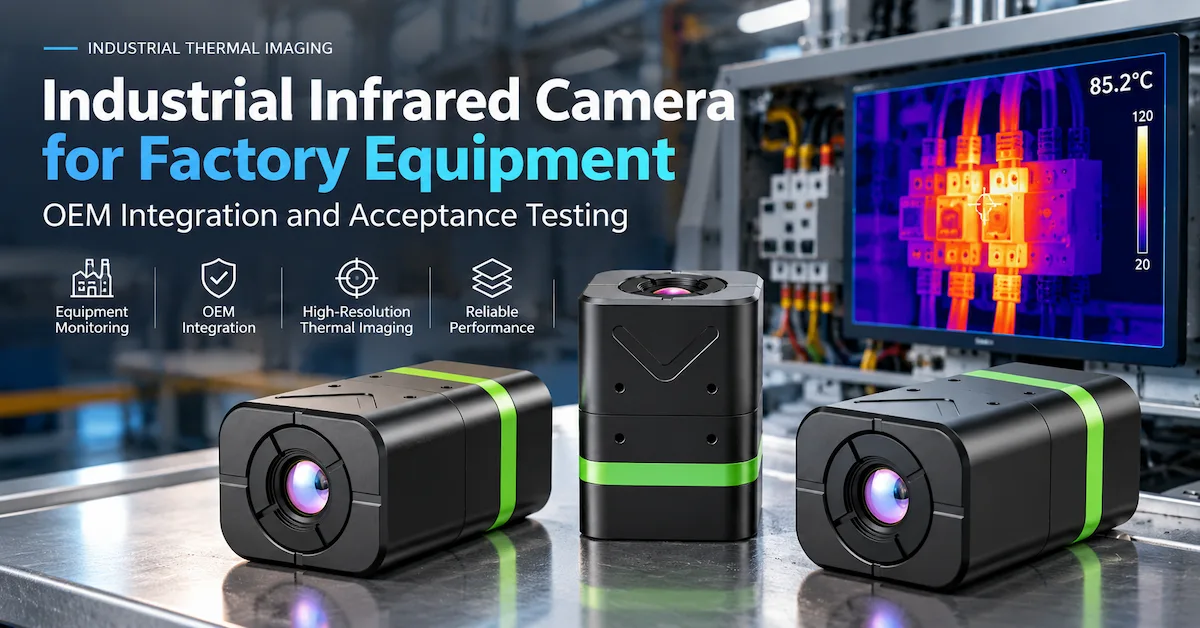
An industrial infrared camera for fixed factory monitoring should be selected around the smallest thermal feature that must be observed, the working distance, and the decisions the system needs to make. Detector resolution matters, but it cannot substitute for correct optics, reliable video acquisition, or a clearly defined inspection procedure.
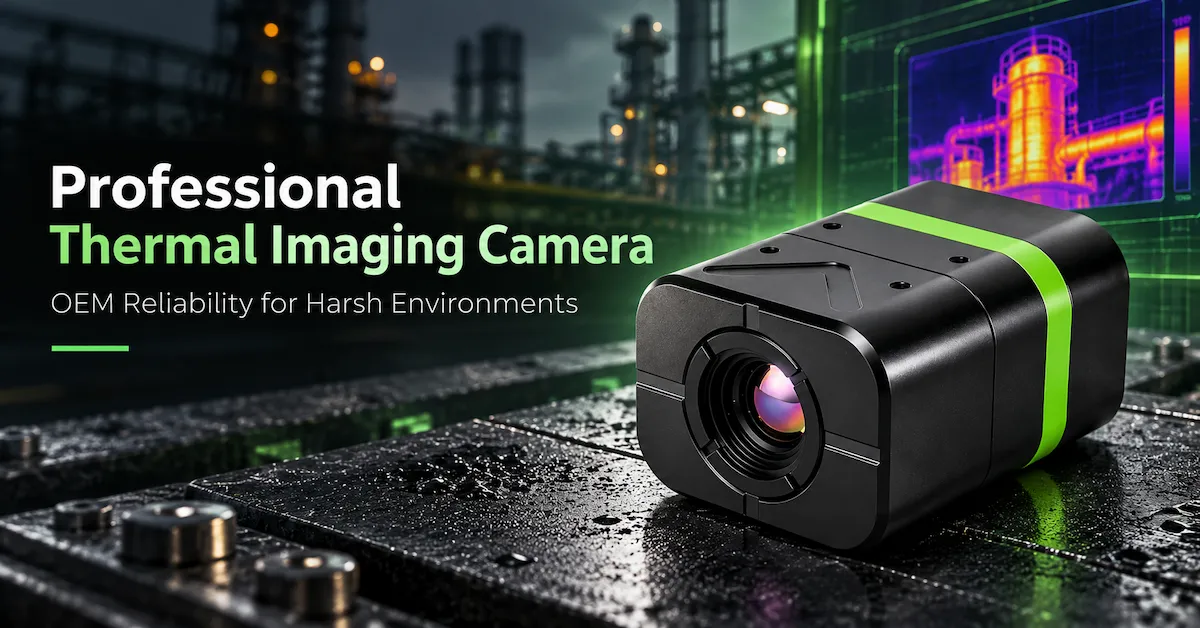
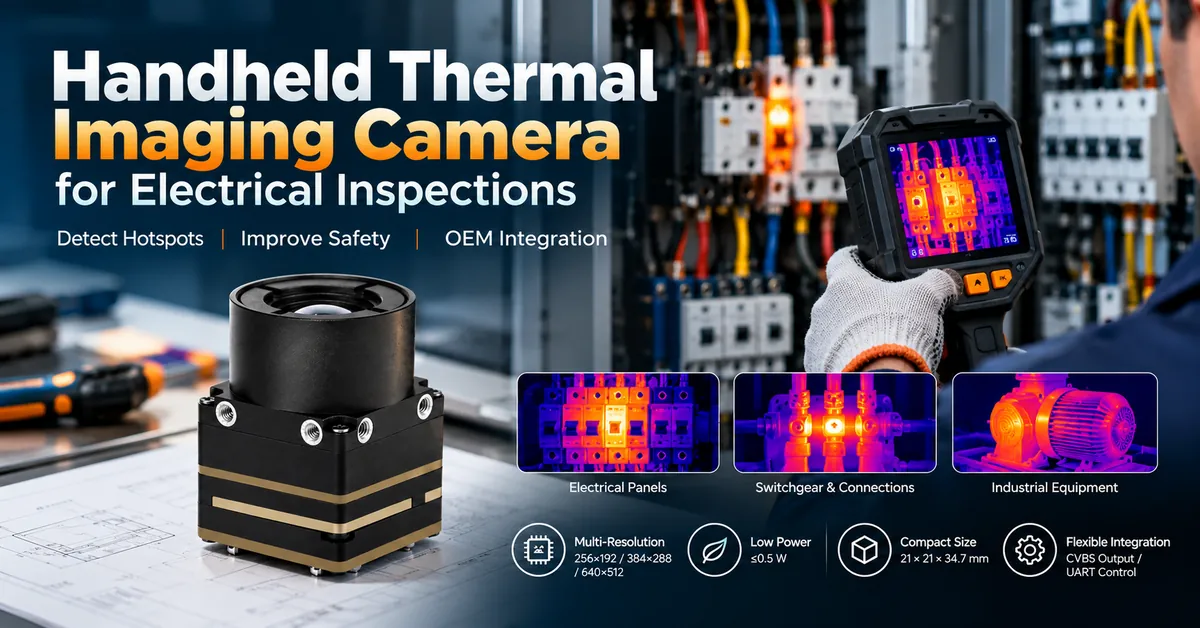
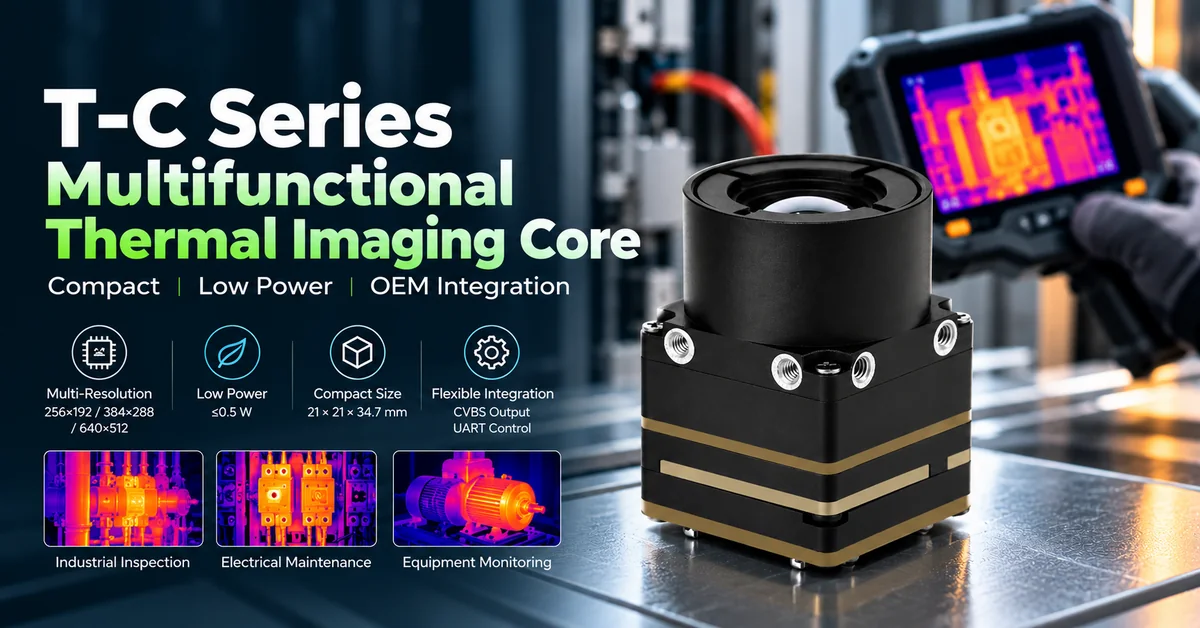
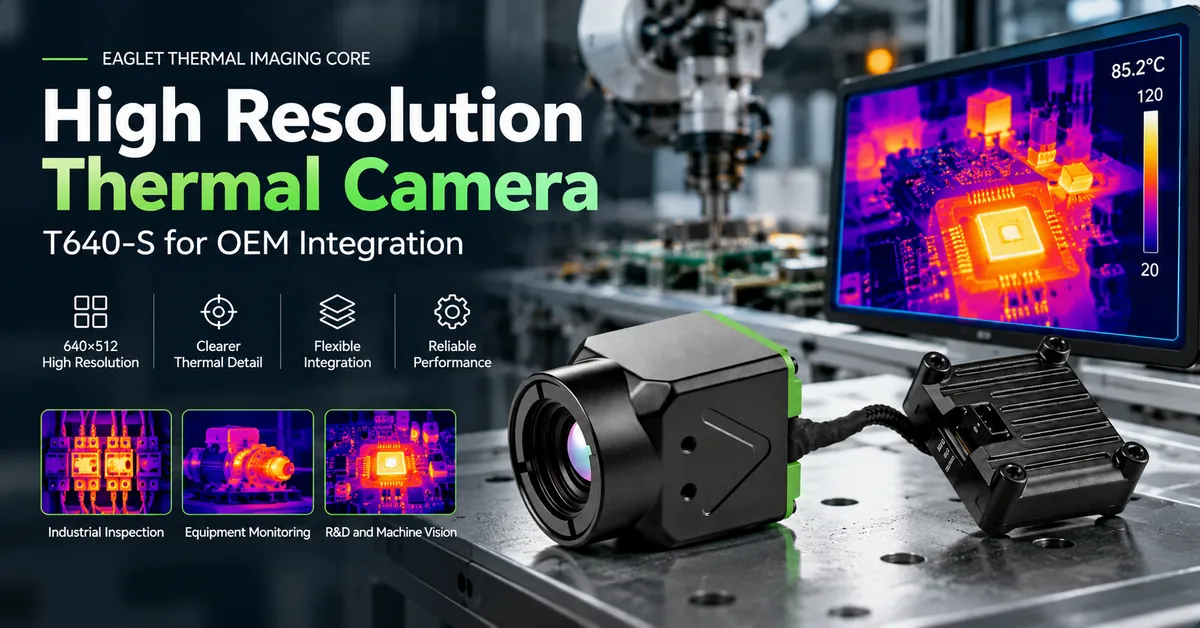
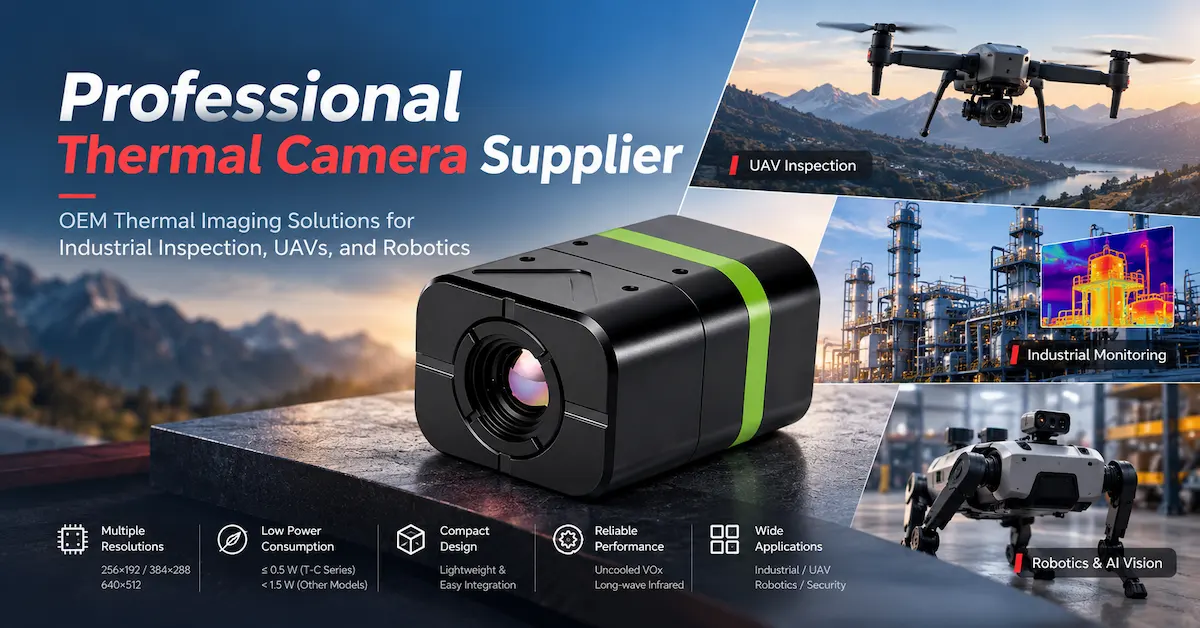
For OEM equipment manufacturers, an embedded infrared camera is often a subsystem rather than a ready-to-install inspection instrument. EAGLET supplies uncooled LWIR thermal imaging cores for equipment integration, with published 256×192, 384×288, and 640×512 configurations. Their suitability for an industrial project depends on the final camera, enclosure, software, and validation plan.
Quick selection answer: Define the inspection target and field of view first; distinguish qualitative heat-pattern monitoring from calibrated temperature measurement; then verify power, video interface, environmental protection, and sample acceptance criteria before approving an OEM design.
1. What Does an Industrial Infrared Camera Do in a Factory?
An industrial infrared camera converts infrared radiation from a scene into an image showing relative thermal patterns. In fixed installations, that information can help maintenance teams investigate abnormal heating around electrical connections, motors, pumps, and other operating equipment.
The buyer must distinguish three product categories:
| Product type | What it typically includes | Best buyer fit |
|---|---|---|
| Handheld thermal inspection camera | Imaging, display, battery, controls; sometimes calibrated thermometry | Maintenance teams needing a finished instrument |
| Embedded thermal imaging core | Infrared detector, optics, and supporting electronics with defined outputs | OEM manufacturers building their own equipment |
| Integrated monitoring system | Camera, protective housing, acquisition, software, alarms, and communications | Factory automation and condition-monitoring projects |
EAGLET's public product range is centered on embedded cores and customized imaging integration, not an assumed off-the-shelf Ethernet/PLC monitoring camera. Buyers seeking a complete IP-rated, radiometric instrument should verify those features at the system level before specifying a core.
2. Where Fixed Thermal Monitoring Creates Practical Value
An industrial infrared camera is useful when visual inspection alone cannot reveal an abnormal heat distribution. The objective is to flag a condition for further assessment, not to diagnose every defect from a single image.
| Factory application | What to observe | Integration priority |
|---|---|---|
| Electrical distribution cabinets | Connections, terminals, breakers, and load-dependent hot spots | Safe viewing location, optical access, radiometric requirement |
| Motor and pump monitoring | Bearing areas, housings, and changing heat patterns | Repeatable camera position and operational context |
| Conveyor and production machinery | Drives, gearboxes, and friction-related heating | Motion, frame rate, protection from dust and vibration |
| EV charging and power electronics | Connectors and power components subject to abnormal heating | Target distance, enclosure design, alarm interpretation |
EAGLET's industrial inspection solution emphasizes non-contact thermal visualization, high-resolution imaging, and system integration. The practical benefit depends on establishing a useful baseline, comparing similar loads, and investigating deviations with appropriate maintenance procedures.
Not every project needs continuous thermal imaging. If a single accessible component can be checked safely during scheduled maintenance, a portable camera may be more economical. Fixed integration is more attractive when repeatability, inaccessible mounting points, or an automated monitoring workflow justifies additional engineering.
3. Define Imaging Performance Before Choosing a Sensor
The most reliable way to specify an industrial infrared camera module is to work backward from a measurable inspection requirement.
| Parameter | Questions for the OEM specification |
|---|---|
| Detector resolution | How many pixels are needed across the smallest target? |
| Lens and horizontal FOV | How much equipment must fit within one image at the mounting distance? |
| NETD | Can the camera distinguish relevant thermal contrast under comparable test conditions? |
| Radiometric capability | Are calibrated surface-temperature values required, or only relative patterns? |
| Frame rate and latency | Is the subject moving, and how quickly must the host react? |
| Video/control interface | Can the host capture CVBS video and communicate with the selected module? |
| Electrical input | Are voltage tolerance, startup behavior, and power budget acceptable? |
| Operating environment | What temperature, dust, moisture, vibration, and optical-window conditions apply? |
A target-pixel example that changes the purchase decision
Suppose a camera must observe a 20 mm-wide connector within a 1,000 mm horizontal scene width at its installed distance. Under idealized geometry, and assuming the same field of view:
-
A 256-pixel-wide detector allocates about 5 pixels across the connector.
-
A 384-pixel-wide detector allocates about 8 pixels.
-
A 640-pixel-wide detector allocates about 13 pixels.
These figures are sampling estimates, not promised defect-detection performance. Focus, image noise, optical modulation, thermal contrast, and the size of the actual hot region still matter. A narrower FOV may improve target coverage, but it also reduces the area monitored. This is why the lens must be specified together with detector resolution.
NETD is not temperature accuracy
NETD, or noise-equivalent temperature difference, characterizes thermal sensitivity under stated test conditions. It does not establish absolute temperature measurement accuracy. If a purchasing specification requires an alarm at a particular surface temperature, confirm calibrated radiometric output, measurement range, emissivity adjustment, and the relevant uncertainty budget. A thermal-video-only module must not be treated as a calibrated thermometer without supporting documentation.
4. Understand the Imaging Core and Its Supporting Components
A practical embedded thermal system combines several elements:
-
Uncooled VOx microbolometer: senses long-wave infrared energy. EAGLET's published cores use an 8–14 μm spectral response and 12 μm pixel pitch.
-
LWIR-compatible optics: determines the scene coverage, target pixel count, and optical transmission.
-
Image-processing electronics: converts sensor signals into usable thermal video and may provide image modes or corrections, depending on the model.
-
Video and control electronics: connects the module to the host; listed EAGLET cores use CVBS (PAL) video output, while T-C publishes UART control.
-
Mechanical assembly and enclosure: maintains alignment, dissipates heat, protects electronics, and presents a suitable infrared-transmitting optical window.
Ordinary window glass is generally unsuitable as a transparent window for an 8–14 μm LWIR camera. An industrial enclosure needs an approved infrared-transmitting window and tested sealing rather than a conventional visible-light camera window.
5. Compare EAGLET Thermal Imaging Cores for OEM Monitoring
The following models provide different engineering starting points for an industrial infrared camera project. Figures are published product-page specifications, not a guarantee that every optical or electrical variant is identical.
| EAGLET core | Resolution | Published NETD | Published power | Integration consideration |
|---|---|---|---|---|
| T-C Series | 256×192 / 384×288 / 640×512 | ≤35 mK | ≤0.5 W | Multiple configurations; UART control listed |
| T256-S | 256×192 | ≤50 mK | <1.5 W | Compact optical and controller assemblies |
| T384-I | 384×288 | ≤50 mK | <1.5 W | Integrated 35×26×49 mm configuration |
| T640-S | 640×512 | ≤50 mK | <1.5 W | Separately specified optics and controller |
| T640-I | 640×512 | ≤50 mK | <1.5 W | Integrated 35×26×44 mm configuration |
The T-C Series lists a 4.5–18 V power range; the other four listed models specify 9–24 V. The T256-S, T384-I, T640-S, and T640-I list 50 fps or 50 Hz imaging, while the T-C family lists 50/60 Hz options. Confirm the current datasheet, frame-rate/output relationship, and exact variant before final design approval.
Which model should you shortlist? For a broad thermal overview of a nearby large component, a 256×192 configuration may be sufficient. For smaller features or greater scene coverage, evaluate 384×288 and 640×512 alternatives using the same target-and-lens test. For 640×512 projects, the S and I configurations present different mechanical layouts. None should be chosen solely on resolution or catalog NETD values; measurement conditions and published optical details require model-level confirmation.
6. Plan the Industrial Integration and Assembly Work
A thermal core is only one element of an OEM industrial monitoring device. Before enclosure tooling or electronics layout, review the complete imaging path.
Optical integration: Check the viewing aperture, standoff distance, focus, window transmission, potential reflections, and access for cleaning. A poorly placed window can eliminate the advantage of a higher-resolution detector.
Electrical and video integration: Verify regulated power, grounding, cable routing, CVBS video capture compatibility, and any separate control interface. CVBS does not automatically provide Ethernet, Modbus, measurement values, or a PLC alarm output; those functions require a suitable host and, where relevant, documented temperature data.
Mechanical workmanship: Define alignment tolerances, mounting rigidity, connector retention, strain relief, enclosure thermal behavior, and a repeatable assembly procedure. Dust, water ingress, vibration, and ambient heating must be addressed by the finished design. The published operating-temperature range of a bare module is not a complete-system IP rating.
7. Build a Meaningful Sample Acceptance and Quality-Control Plan
An industrial infrared camera should be approved against real operating tasks, not only a demonstration image. Agree on tests before placing a production order.
| Acceptance check | Practical evidence to request |
|---|---|
| Target visibility | Recorded images of the specified target at the actual mounting distance |
| Optical coverage | Confirmed field width and usable image region |
| Thermal contrast | Repeatable observation under defined operating loads and background conditions |
| Video integration | Stable host capture and verified frame/output behavior |
| Electrical performance | Startup, current draw, and operation across agreed supply conditions |
| Environmental suitability | Results for agreed temperature, vibration, and enclosure conditions |
| Measurement functionality | Calibration and accuracy evidence if radiometric output is required |
| Reproducibility | Sample-to-sample checks and documented acceptance limits |
Two relevant industry references are ISO 18434-1:2008, covering general thermography procedures for machine condition monitoring, and ASTM E1934-99a(2024), a guide for examining electrical and mechanical equipment using infrared thermography. They inform inspection planning and documentation; mentioning them does not certify any EAGLET product or installation.
For procurement, request the exact model revision, drawings, inspection records, applicable compliance documentation, and a written agreement on what constitutes a failed sample. Where electrical cabinets contain energized parts, inspection access and safety procedures must be designed by qualified personnel.
8. Evaluate Total Cost, Lead Time, and Supply Risk
The cheapest core is not necessarily the lowest-cost industrial solution. Total project cost may include optics, an infrared window, video acquisition hardware, enclosure tooling, processing software, integration engineering, validation, spare inventory, and field servicing.
Ask for a quotation broken down by sample quantity, optical option, customization scope, and forecast production volume. Clarify any non-recurring engineering charges, testing costs, packaging requirements, and responsibilities for system-level certification.
Also confirm the minimum order quantity, sample availability, lead time, volume capacity, revision-control process, and replacement policy in writing. These commercial details vary by project and are not established by the published core specifications. A credible quotation should distinguish verified standard features from engineering work still under evaluation.
9. OEM/ODM Support: Move From Imaging Requirement to Qualified Design
EAGLET describes support for resolution, lens, interface, housing, software, and thermal-system integration. For OEM buyers, the productive approach is a gated development sequence rather than assuming every requested modification is standard.
-
Define the task: smallest feature, viewing geometry, environment, and desired output.
-
Shortlist cores and optics: use the current product data and identify open questions.
-
Review host integration: confirm video acquisition, control, electrical, and mechanical interfaces.
-
Evaluate samples: test representative equipment and agree on pass/fail criteria.
-
Freeze the approved configuration: document model, optics, firmware, connectors, and acceptance records before volume ordering.
If you are planning a fixed factory inspection product, explore EAGLET's integration support and discuss feasibility before committing to enclosure or PCB tooling.
10. What to Include in an Industrial Infrared Camera RFQ
A useful engineering RFQ includes the target equipment, minimum hot-region size, working distance, scene width, required frame rate, ambient conditions, available power, host video interface, enclosure restrictions, measurement needs, expected sample quantity, and annual purchasing forecast.
Identify whether the intended output is thermal video, an operator-visible anomaly, a software-derived alert, or a calibrated temperature value. That single distinction can materially change the electronics, verification effort, and quotation.
Share these requirements through EAGLET's contact page. A dimensioned installation sketch and representative thermal/visible-light scene photographs can make technical discussion more efficient.
11. Frequently Asked Questions
1. Is an industrial infrared camera the same as a normal security camera?
No. A thermal camera detects infrared radiation and displays thermal patterns, while a typical visible-light security camera relies on reflected visible light. They serve different inspection purposes.
2. Can an embedded core be installed directly on a factory network?
Not necessarily. EAGLET's listed cores specify CVBS video output, not a native industrial Ethernet or PLC interface. A compatible acquisition and processing system is normally required.
3. Can thermal imaging identify a failing motor?
It can reveal an abnormal heat pattern that warrants investigation, but it cannot independently establish the cause. Compare loads, operating history, and other condition data before diagnosing a failure.
4. Does a low NETD value guarantee accurate temperature readings?
No. NETD describes thermal sensitivity under test conditions. Calibrated temperature measurements require separately verified radiometric functions and an appropriate measurement procedure.
5. Is 640×512 always better than 256×192 for factories?
No. Higher resolution can provide more target pixels for the same field of view, but cost, optical coverage, installation distance, and the smallest relevant feature determine whether it delivers useful value.
6. Can the camera see through ordinary glass or sealed cabinet doors?
Ordinary glass generally blocks the LWIR wavelengths used by these cores. Use a properly designed viewing opening or a suitable infrared-transmitting window, subject to electrical and enclosure safety requirements.
7. Can a thermal camera operate in total darkness?
Thermal imaging does not need visible illumination. However, rain, fog, obstructing materials, thermal contrast, and the installation environment can still reduce usable image information.
8. What should be tested before approving an OEM module?
Verify target visibility, optical coverage, host-video compatibility, power behavior, environmental suitability, and repeatability. Test radiometric accuracy separately if temperature measurements are part of the specification.
9. What are the MOQ, certifications, and lead time?
These must be confirmed for the exact model, market, configuration, and order volume. Do not assume a general product-family description establishes a particular certification, minimum order, or delivery commitment.
10. How should an OEM buyer request a quotation?
Provide an application summary, target dimensions, working distance, optical coverage, interface, supply voltage, environmental limits, sample plan, and estimated volume. Request an agreed datasheet revision and an explicit list of items requiring validation.
Conclusion
Choosing an industrial infrared camera for fixed factory equipment begins with a defined inspection decision, not the largest available detector. Specify the target and viewing geometry, confirm whether qualitative thermal imaging or calibrated temperature measurement is needed, select the appropriate core and optics, and approve the integrated system against repeatable acceptance tests.
EAGLET's uncooled LWIR core portfolio provides OEM developers with several resolution and mechanical options for evaluation. To discuss an industrial monitoring project, contact EAGLET with your equipment layout, performance requirements, and expected purchasing volume for a focused technical review and quotation discussion.