
Why the right infrared camera module supplier matters
Choosing an infrared camera module supplier is rarely just a purchasing exercise. For engineering teams, it is a decision about image quality, integration effort, thermal stability, and how much risk you are willing to carry into a product launch. A module that looks compact and straightforward on paper can still create problems if the optics are not well matched to the detector, if calibration is inconsistent, or if the housing is awkward to integrate into a larger system.
That matters most when the thermal function is not the product itself but a subsystem inside something else: an inspection unit, a security device, a drone payload, a robot, or a monitoring platform. In those cases, the buyer is not only asking whether the module sees heat. The real question is whether it can be embedded cleanly, perform consistently over time, and give the downstream team a manageable path to software and mechanical integration.
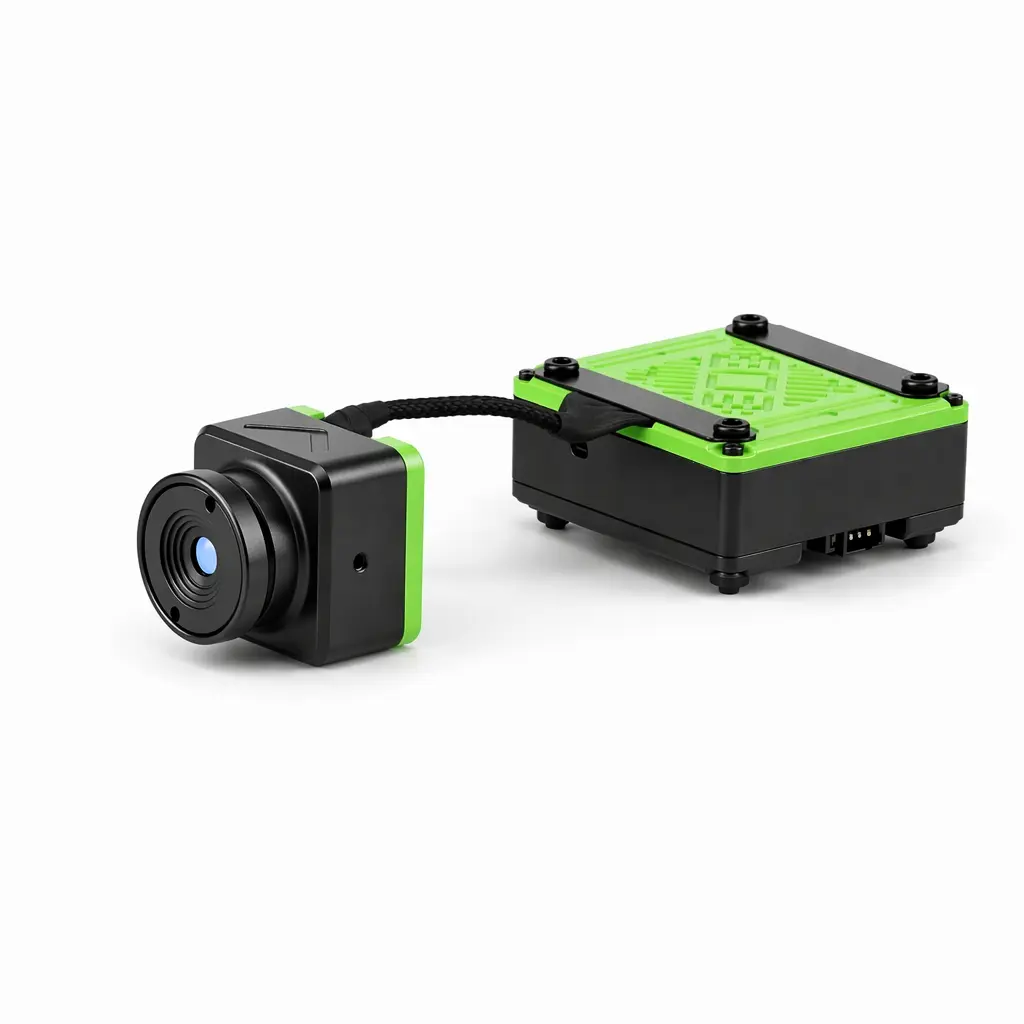
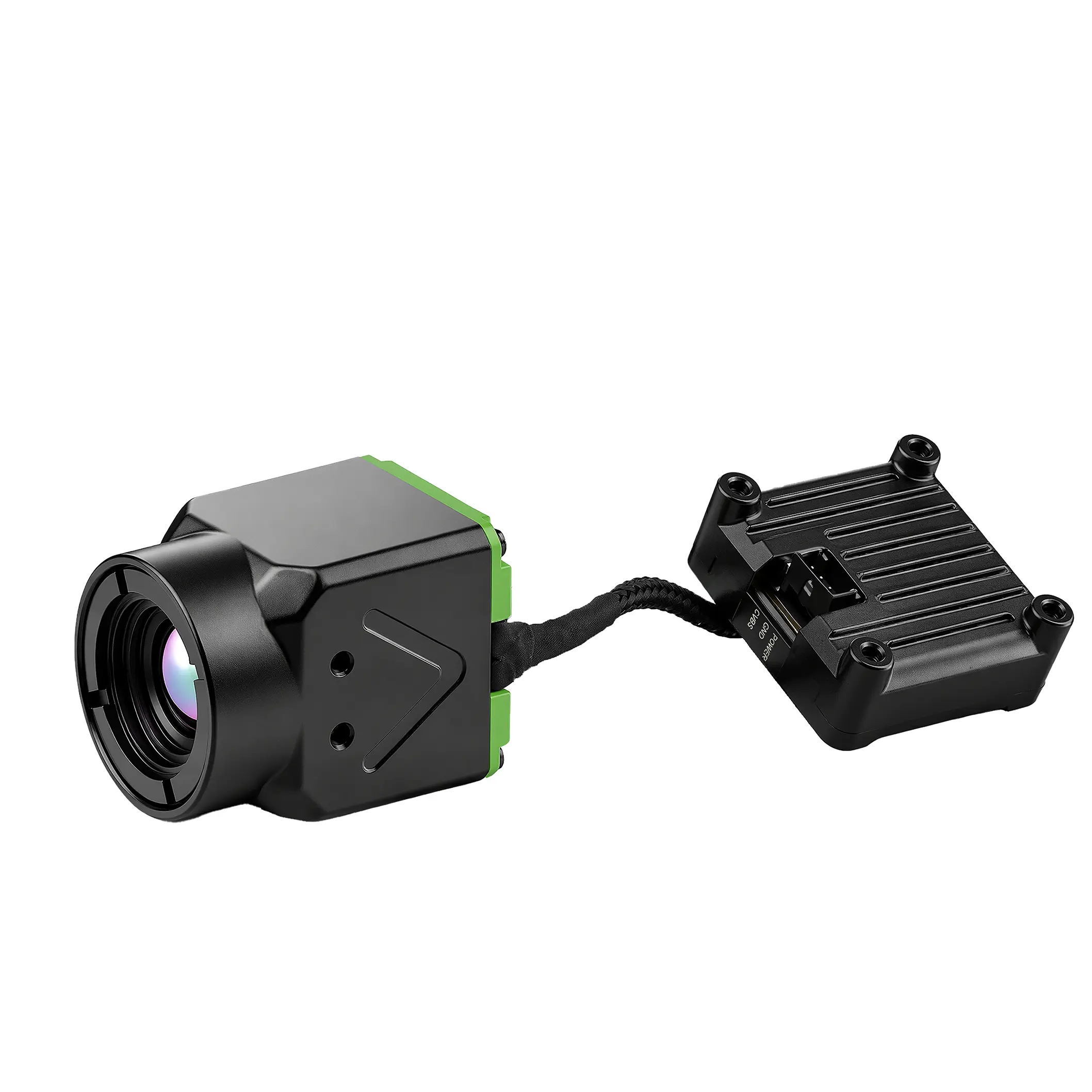
The supplied product notes point to a compact long-wave infrared module, likely built as an embedded sensing core rather than a finished handheld camera. That distinction is important. A core can be the right choice for OEMs that want tighter packaging, lower power use, and more control over the final system architecture. It can also be the wrong choice if the buyer expects a drop-in camera with mature accessories and minimal engineering work.
What a thermal imaging module is actually doing
A thermal imaging module captures infrared radiation in the long-wave band, commonly associated with 8–14 μm sensing in industrial and security applications. Instead of relying on visible light, it detects temperature-related radiation and converts that into a usable thermal image. That is why these modules are used for nighttime observation, hotspot detection, equipment inspection, firefighting support, and general machine vision where visible cameras fall short.
The product family described in the notes includes platform resolutions such as 256×192, 384×288, and 640×512. Those figures are not interchangeable in practice. They affect detail level, cost structure, processor load, and how much trust users can place in smaller thermal features on a scene. A sourcing manager may see them as simple resolution tiers; an engineer sees different trade-offs in lens selection, image processing, and final display performance.
Reading the module from the outside in
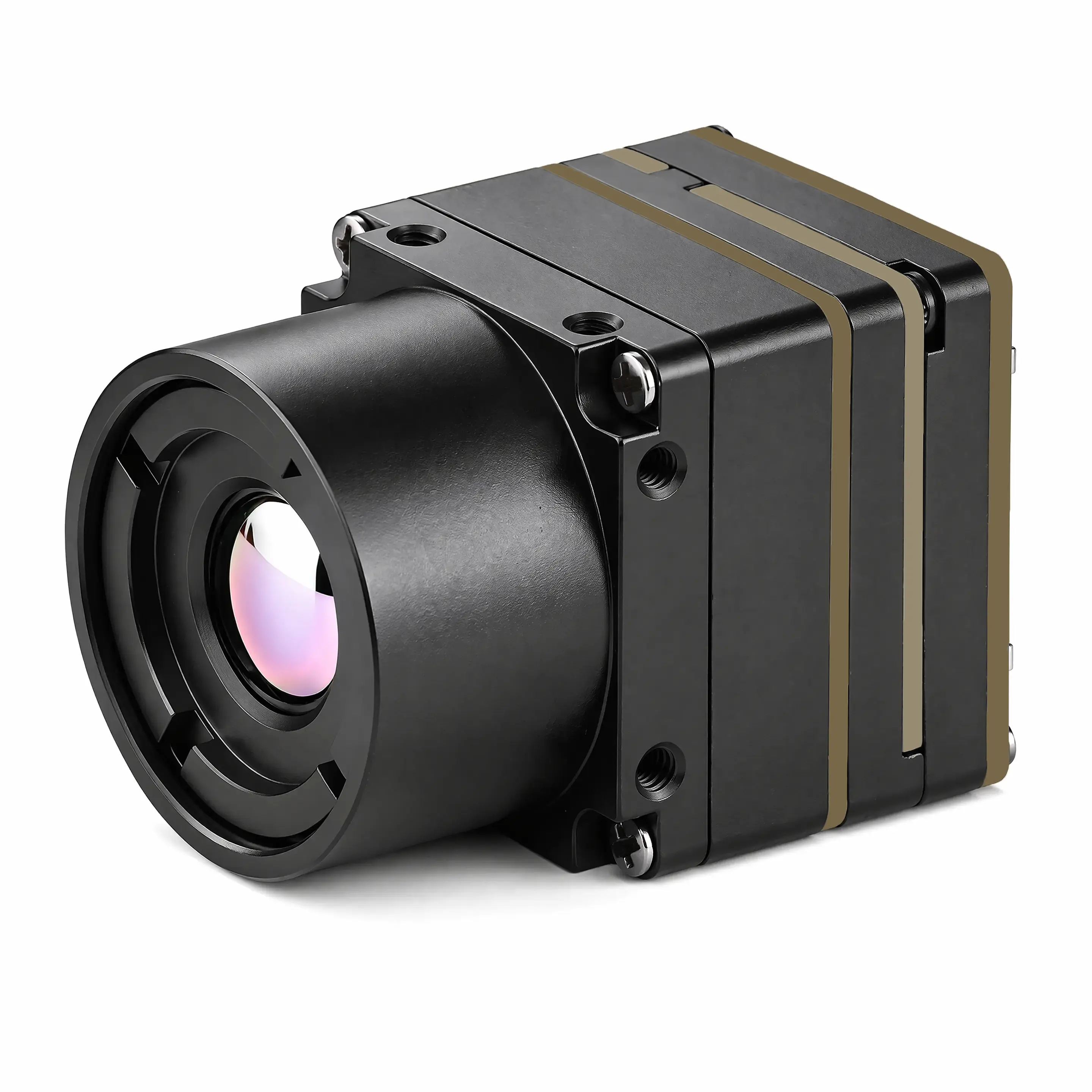
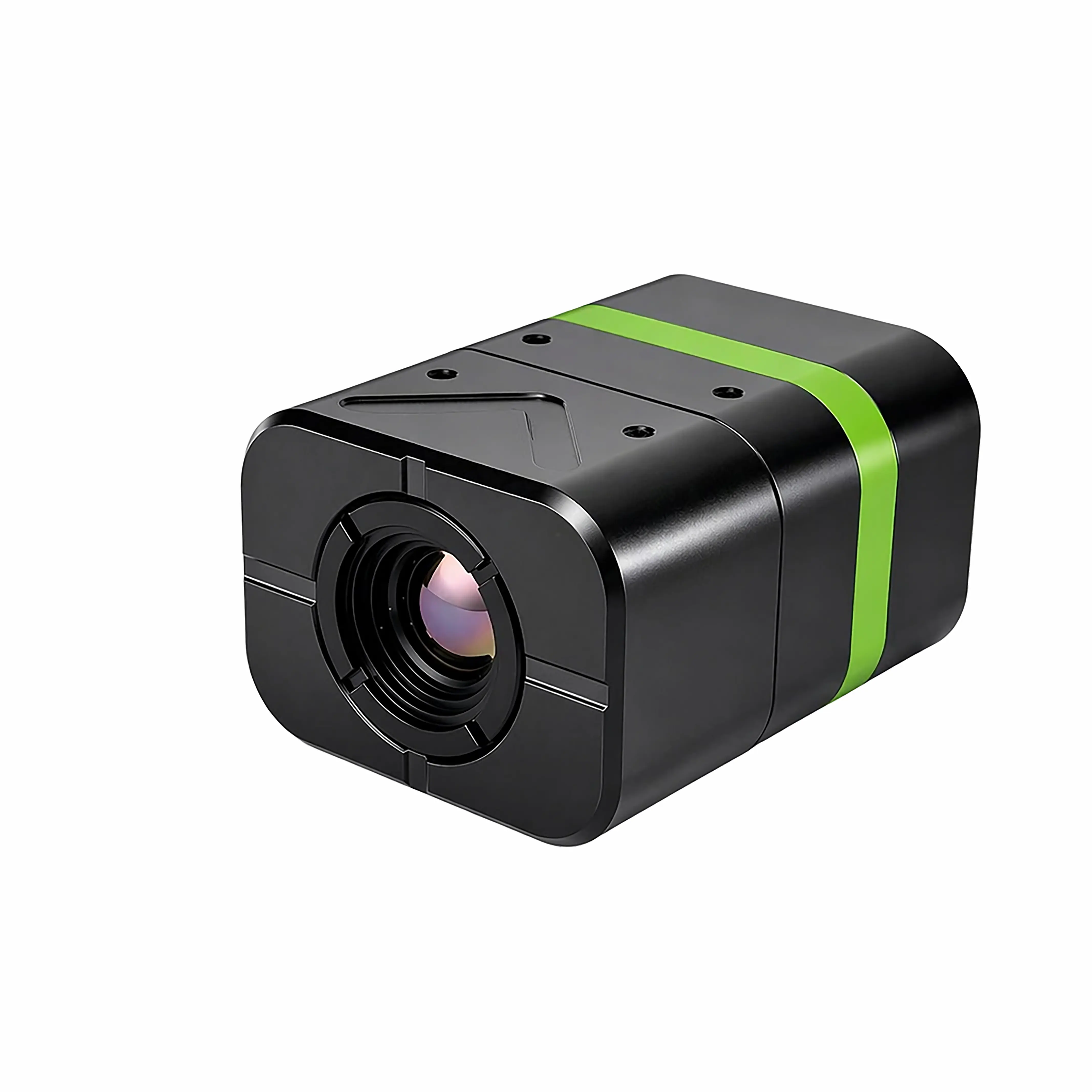
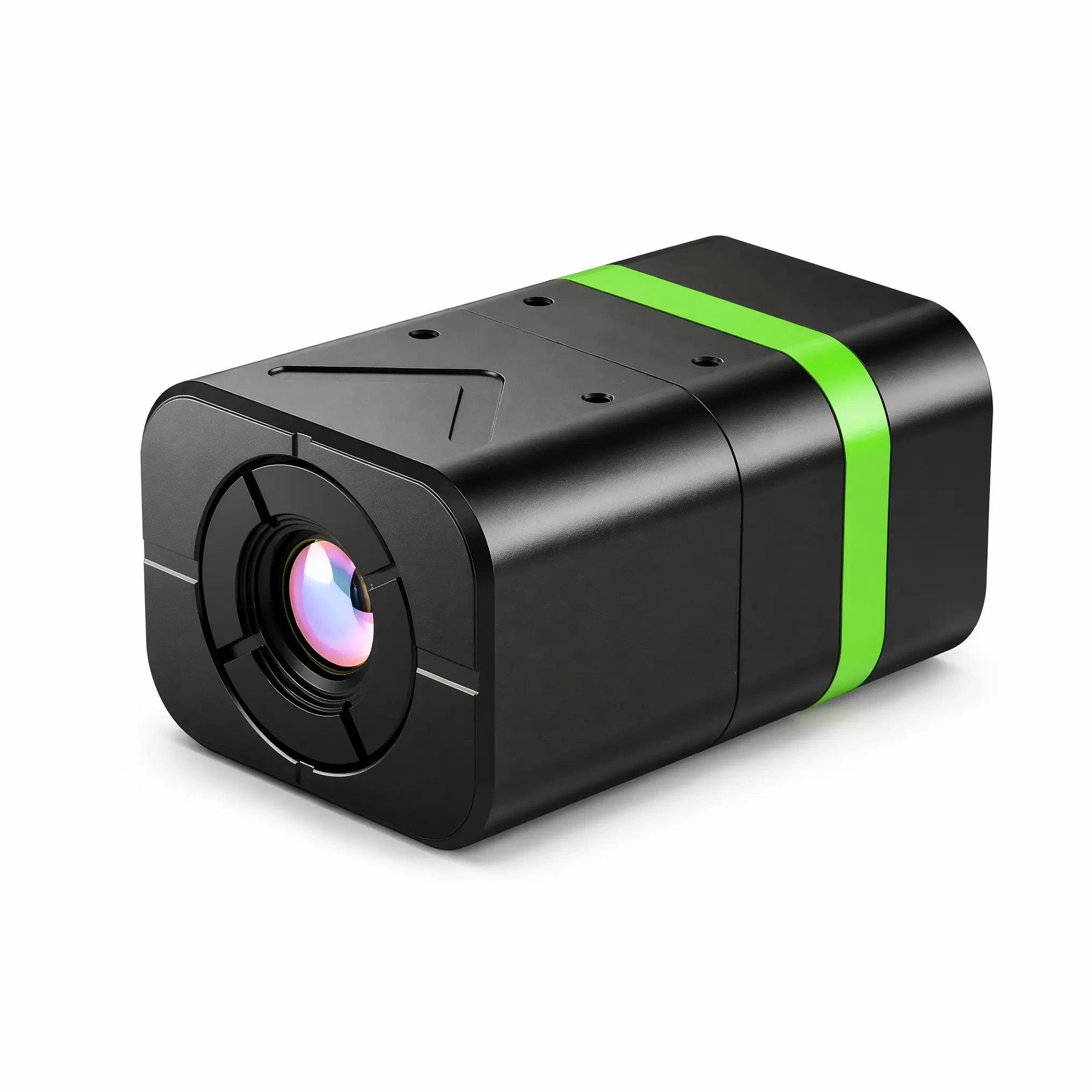
The visible form factor described is compact and rectangular, with a matte black housing, rounded edges, a front circular lens aperture, and a recessed multi-ring bezel. There is also a bright green identification band toward the rear section, plus mounting screw holes on the top face and a stepped seam that suggests a two-part enclosure.
That kind of construction usually tells you something about the intended role of the unit. It is built to be mounted, not handheld. The screw holes suggest the integration team may need a fixed position inside a larger device. The stepped seam implies serviceability or an assembly split, though that should not be overread without drawings. And the optical front, with its visible coated lens sheen, indicates that the front end is doing precision work rather than acting as a generic protective window.
For buyers, the practical takeaway is simple: ask how the housing supports integration. Does it help with alignment? Does it leave enough room for cabling? Is the lens position stable under vibration? A compact module can still become expensive if the mechanical interface is fussy.
Key selection criteria buyers should compare
When comparing suppliers, the obvious specifications are only part of the story. A thermal imaging sensor manufacturer may advertise resolution, wavelength range, and compact design, but an OEM should also look at how predictable the module is once it is inside a real product.
1. Resolution and image use case
The listed resolution families — 256×192, 384×288, and 640×512 — serve different market needs. Lower resolutions can be acceptable for presence detection, broader surveillance, or cost-sensitive devices. Higher resolutions generally support more confident identification, better inspection detail, and more usable images when the scene is cluttered or the target is small.
The point is not that higher is always better. A more demanding resolution can require stronger processing and can raise system cost. The right choice depends on whether the final product is meant to detect a temperature anomaly, monitor an area, or support detailed inspection work.
2. Power and system load
The supplied notes describe low power consumption and low latency. Those are good signs, especially for drone payloads, robotics, and portable inspection systems. But buyers should still ask how those claims are measured in the final build. Module-level power behavior can change with interfaces, firmware settings, and operating modes. A supplier that is vague here may create integration surprises later.
3. Calibration and stability
Stable imaging performance is easy to claim and harder to prove in a production environment. Temperature drift, mechanical shock, and manufacturing variation all matter. If your application depends on repeatable readings or reliable thermal contrast, calibration quality becomes as important as the detector itself.
This is one of those areas where a customized thermal imaging solution may be worth more than a standard catalog part. A good supplier will discuss calibration steps, firmware behavior, and the boundaries of what can be customized without compromising consistency.
4. Mechanical fit and optical integration
A compact housing is useful only if it fits the product architecture. Buyers should ask about mounting strategy, connector placement, optical alignment, and any constraints around lens protection or enclosure sealing. The notes do not confirm dimensions, interfaces, or ingress protection, so those details must be verified before committing to tooling.
Where these modules tend to fit best
The application list in the product notes is broad, but it is still useful to separate use cases by buying logic.
Industrial inspection teams usually care about repeatability, maintenance access, and how clearly the thermal image shows abnormal heating on equipment, panels, or moving parts. Security buyers look for reliable night performance and integration into broader surveillance systems. Drone and robotics teams are often the most sensitive to size, weight, and power. Firefighting and safety systems need a module that performs steadily in difficult environments, often while the rest of the system is under pressure.
That mix of users is why a single module platform can be attractive. It gives a supplier room to support multiple market segments while keeping the core sensing architecture familiar. For the buyer, the danger is assuming that one platform fit automatically means one configuration fit. It does not.
Common mistakes when sourcing thermal modules
One frequent mistake is treating all infrared modules as functionally equivalent because they share the same wavelength band. They do not. Lens design, detector quality, processing, and mechanical integration can change the end result dramatically.
Another mistake is buying on resolution alone. A higher pixel count will not rescue a poorly aligned optical path or a noisy image pipeline. Likewise, a low-latency claim is not enough unless the supplier can explain how the module behaves in real operating modes.
A quieter but costly error is skipping the integration conversation until late. By the time a team discovers that the module housing conflicts with another internal component, the sourcing decision may already be locked in. That leads to delays, adapter plates, and awkward compromises that should have been avoided at the RFQ stage.
Questions to ask an infrared camera module supplier before you commit
A serious supplier should be able to answer practical questions without turning the conversation into marketing language. Ask how the module is packaged, how calibration is handled, which interfaces are available, and what customization is realistic. If you need a thermal imaging sensor manufacturer for an OEM project, ask what parts of the design are fixed and what parts can be adapted for your application.
You should also ask for clarity on the exact resolution of the unit being quoted, not just the family range. The product notes mention several platform options, but the pictured unit is not tied to a confirmed model. That uncertainty is normal at the early stage, but it should be resolved before technical approval.
If your project is more specialized, a customized thermal imaging solution may be the safer route. That could mean housing changes, optical adjustments, firmware alignment, or support around system-level integration. The more the module is buried inside another product, the more valuable that support becomes.
Buyer-facing checklist for shortlisting suppliers
Before you compare pricing or samples, make sure you know the answers to a few basic questions:
Can the module support your intended application category without major redesign?
Does the supplier provide enough technical data for mechanical and electrical integration?
Are the resolution, wavelength range, and performance claims tied to the exact quoted part?
Is the thermal module meant for a finished product, or is it really a core that still needs substantial engineering?
Will your team need custom mounting, optical tuning, or software support?
Those questions sound simple, but they separate a workable supplier from a frustrating one.
A practical next step
If you are evaluating an infrared camera module for industrial inspection, security, drones, robotics, or another embedded system, start by asking for the exact module configuration and the documentation that goes with it. Match the part not only to your thermal requirement, but to your mechanical envelope, power budget, and image-processing stack.
The right supplier should help you narrow the gap between a compact core and a working product. If that conversation stays technical and specific, you are probably talking to the right kind of partner. If it stays vague, keep looking.