
Why an infrared camera module supplier matters more than the datasheet
If you are sourcing an infrared camera module supplier, you are rarely buying a simple off-the-shelf part. You are buying a thermal sensing subsystem that has to fit into a larger machine, vehicle, enclosure, or handheld device without creating heat, latency, integration headaches, or field failures. That is why the choice often turns on more than resolution or lens size. The real question is whether the supplier can deliver a stable module architecture, consistent assembly quality, and support for the application you actually have in mind.
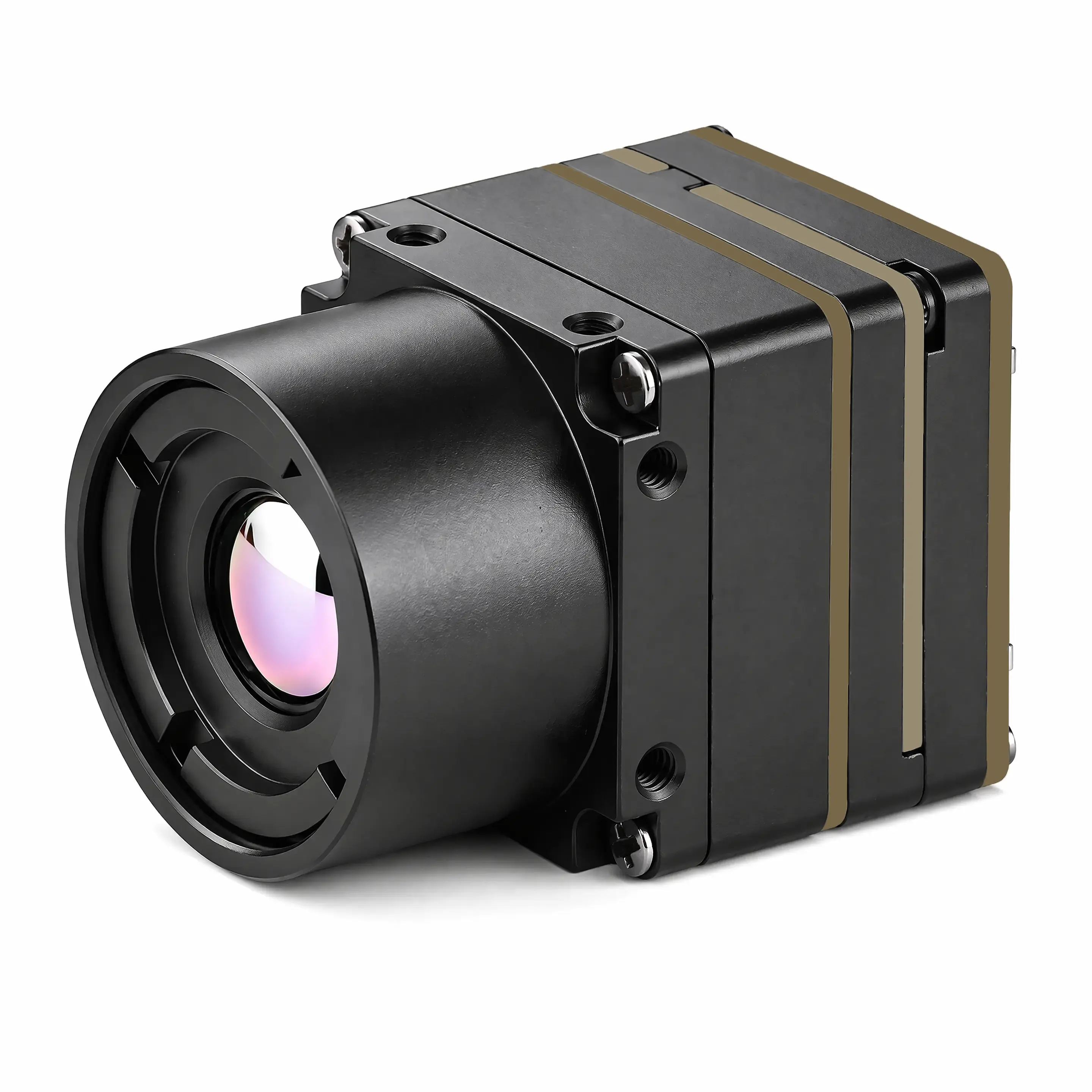
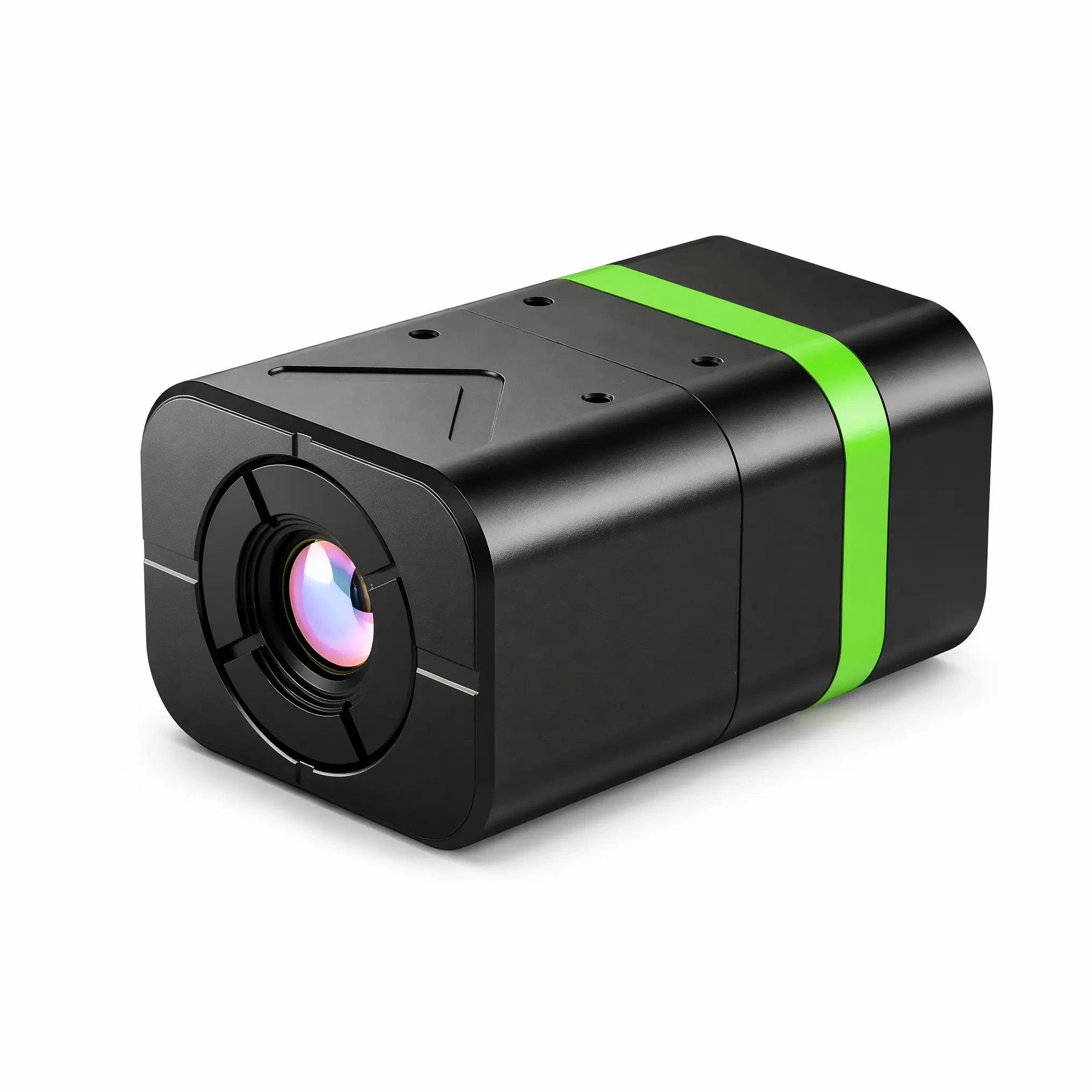
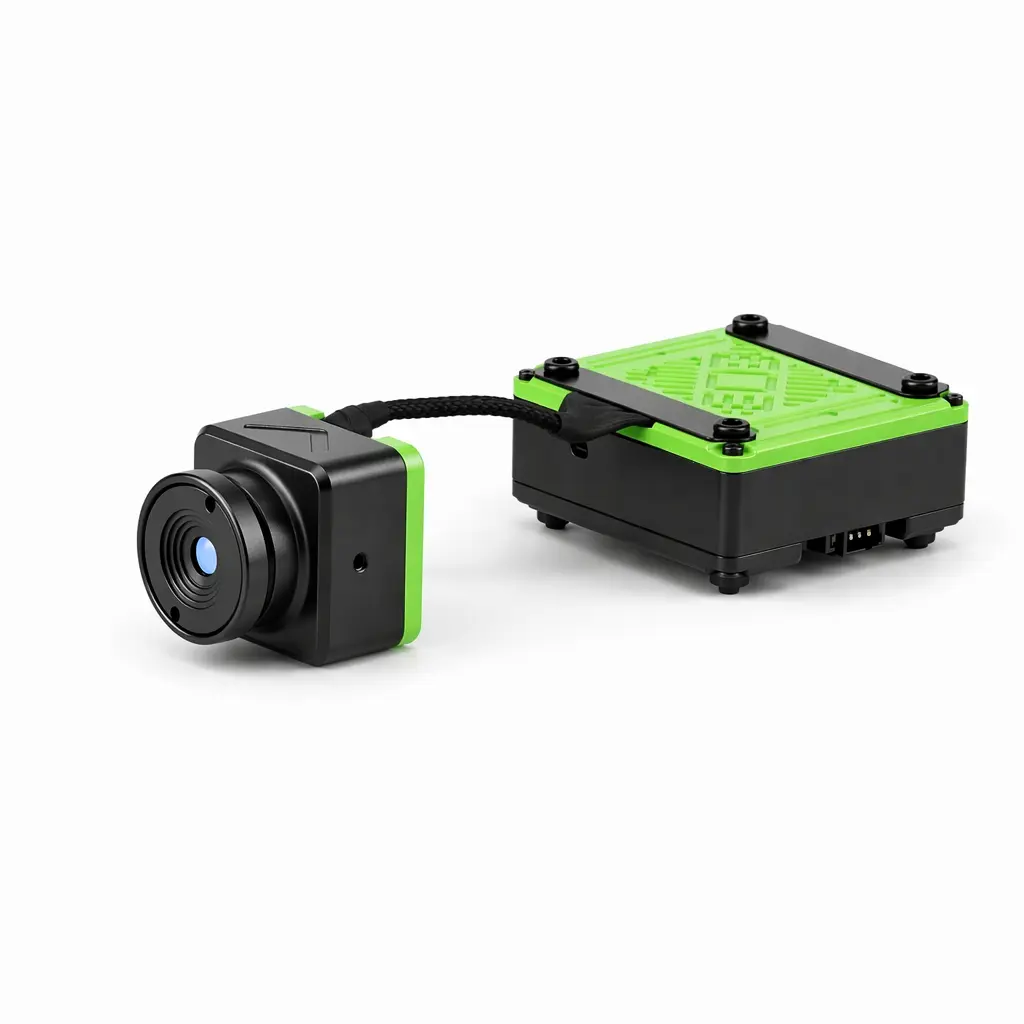
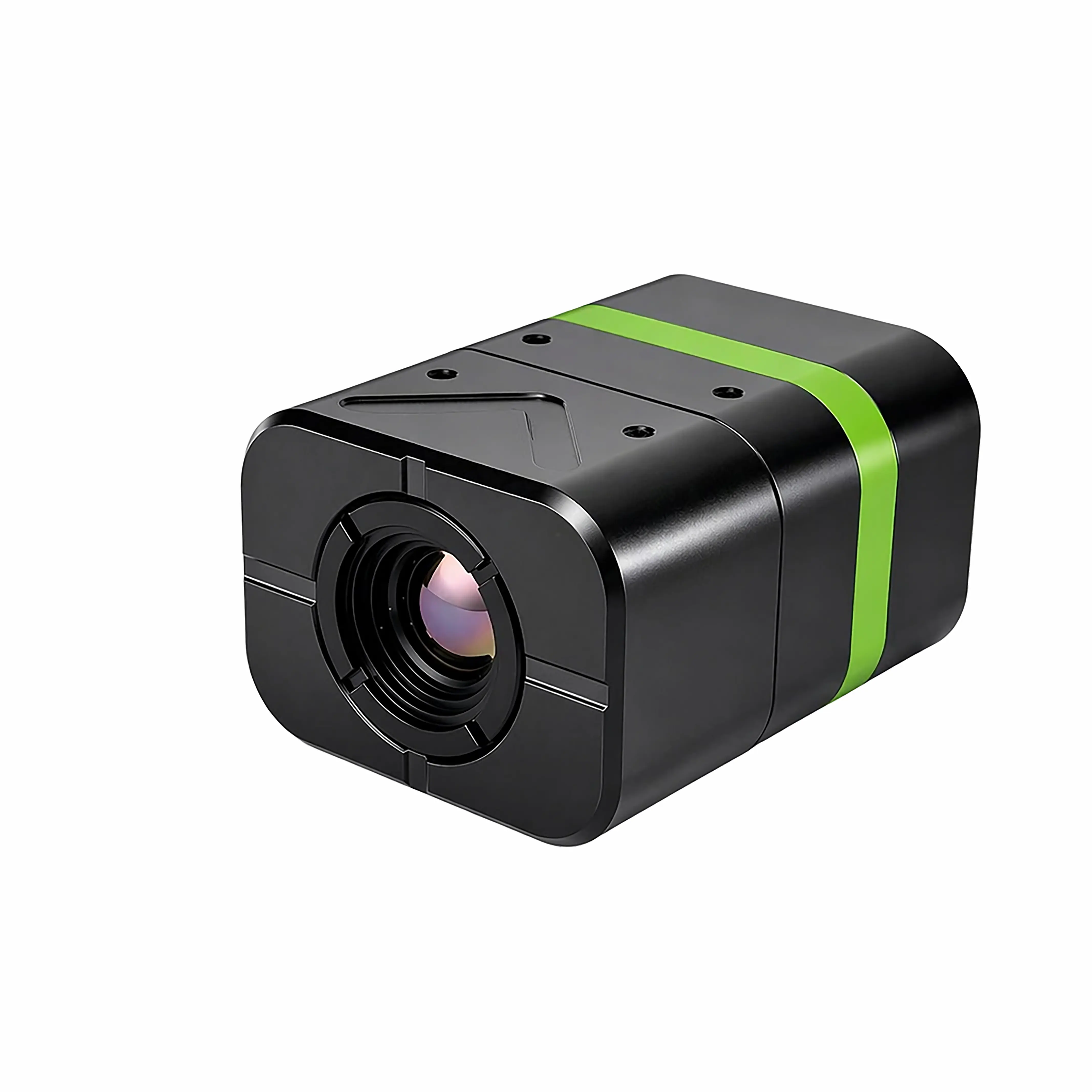
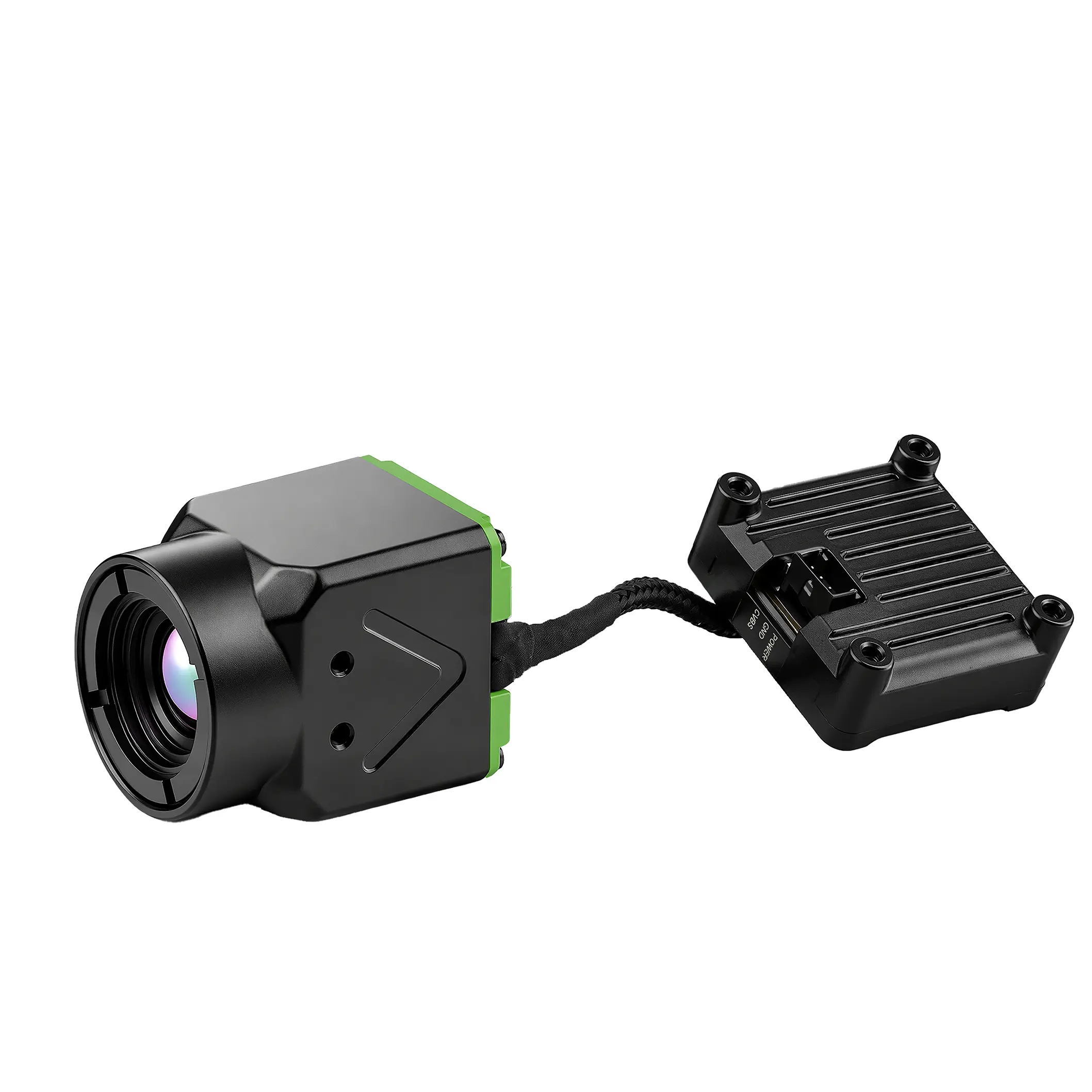
In the thermal imaging market, this distinction matters. A thermal imaging sensor manufacturer may sell detector technology, but a project team usually needs a complete module or core: optics, sensor package, PCB electronics, thermal management, mechanical housing, and cable interconnects working together as one unit. The supplied product family described here follows that pattern. It appears to be a compact infrared thermal imaging core/module with a separate lens head and rear electronics/interface section, built for non-contact temperature sensing, night observation, and machine vision tasks.
What this module architecture tells a buyer at a glance
The visible design is useful because it hints at how the module was engineered. The front section uses a cylindrical IR lens barrel with a matte black housing and a visible optical element. Behind it sits a compact black metal enclosure with angular geometry, likely chosen for rigidity and packaging efficiency. The rear section appears ribbed, which suggests attention to heat dissipation, and there are threaded mounting bosses or holes on the top corners for integration into a larger housing or platform. A braided cable harness links the optical section to the rear processing area, which is a practical layout when the optical head and electronics need to be separated for space, thermal, or mechanical reasons.
For engineers and sourcing teams, this layout usually signals a precision electromechanical assembly rather than a single monolithic board. In plain terms: optics, sensor, electronics, and enclosure all have to play nicely together. If one of those elements is poorly controlled, the result may be misalignment, thermal drift, or a module that is hard to mount in the final product.
Key takeaways for sourcing teams
Supplier notes indicate that this product family covers platform resolutions such as 256×192, 384×288, and 640×512. Those figures are supplier-provided family information, not image-confirmed specifications for the exact unit shown here, but they still matter because they define the likely performance range and cost structure of the platform.
Just as important are the stated design goals: low power consumption, low latency, compact size, and high sensitivity. Those are the features that usually separate a deployable thermal module from one that looks good in a brochure and struggles in a real enclosure. For a drone, robotics platform, or industrial diagnostic system, low latency can be the difference between usable thermal feedback and a sluggish image stream. Compact size matters when space is measured in millimeters. High sensitivity matters when the target has small temperature differences or low contrast.
How the module is likely built
Optical head and detector side
The front lens barrel suggests a sealed optical path for infrared imaging, most likely intended for long-wave infrared use in the 8–14 μm band, which is common in uncooled thermal systems. That kind of architecture is widely used because it supports passive thermal imaging without external illumination. In practice, it is the backbone for low-light observation, temperature monitoring, and many inspection workflows.
Electronics and interface section
The rear enclosure likely houses processing and interface electronics, though the exact functions are not stated and should not be assumed. It may handle image formatting, signal conditioning, data output, or power regulation. The ribbed structure implies that thermal dissipation is part of the design equation. That matters because heat inside the electronics housing can drift into the imaging chain and affect stability.
Mechanical housing and assembly
The visible housing looks like a machined or die-cast metal enclosure with a surface finish suited to industrial use. That is a sensible choice for a module that may be mounted in equipment exposed to vibration, handling, or outdoor environments. The green side or rear inserts around the housing interface appear to be structural or decorative accents, but their exact function is not clear from the image alone.
From a manufacturing perspective, this kind of product is usually a multi-step assembly: housing fabrication, finishing, optical alignment, electronics integration, cable assembly, and module-level verification. If a supplier cannot explain those steps clearly, buyers should be cautious. Thermal modules are not forgiving when alignment or thermal interface control is weak.
Where this kind of thermal module fits best
The application list is broad, but it is not generic. Industrial inspection and temperature monitoring are the obvious fits because thermal imaging helps identify abnormal heat before a machine fails. Security surveillance and night observation benefit from passive imaging when visible-light cameras lose effectiveness. Firefighting and search & rescue use thermal contrast to locate people or hotspots when smoke, darkness, or debris interfere with conventional vision.
There is also growing demand in drones, robotics, and autonomous platforms. In those systems, compact packaging and low power consumption are not optional. The same is true in renewable energy, charging infrastructure, and electrical fault detection, where thermal patterns can point to loose connections, overloads, or failing components before damage spreads. In these markets, a customized thermal imaging solution is often the difference between a useful product and an awkward prototype.
What to ask before choosing a supplier
A good infrared camera module supplier should be able to answer practical integration questions, not just list headline features. Start with resolution, lens options, interface protocol, power requirements, frame rate, and mechanical dimensions. Then move into the issues that tend to cause project delays: how the module is mounted, how heat is managed, what calibration approach is used, and whether the housing can be adapted to your enclosure.
If you are comparing offerings from a thermal imaging sensor manufacturer versus a module integrator, ask where the control boundary sits. Are you buying detector technology alone, or a finished module that includes optics, housing, and electronics? That distinction affects cost, qualification effort, and even your internal test plan. A procurement team can get tripped up here by assuming a supplier’s “core” and “module” are interchangeable. They are not.
You should also ask whether the supplier supports customized thermal imaging solution requests. For many industrial programs, customization is not about luxury features. It is about matching mounting geometry, cable routing, connector choice, software integration, or heat dissipation to the host platform. Those details save time later, and they are much cheaper to solve early.
Common mistakes buyers make
The first mistake is buying on resolution alone. A 640×512 module may not be the right choice if your system cannot handle the power, cost, or integration burden. The second mistake is ignoring physical packaging. A compact thermal module that cannot fit the product enclosure is not compact in any useful sense. The third mistake is underestimating thermal management. Ironically, thermal products can be sensitive to their own heat.
Another common issue is assuming the supplier can do only one thing well. Some vendors are strong on detector technology but weak on mechanical integration. Others can machine a decent housing but are not set up for optical alignment consistency. For a production program, you want balance. A reliable module is the result of coordination, not just component selection.
Quick buyer checklist
Before you issue an RFQ, confirm the answers to these questions:
Can the supplier provide the module resolution family, lens options, and interface details in writing?
Does the module design support your installation constraints, including size, mounting, and cable routing?
Is the enclosure suited to your environment, whether that means indoor industrial use, mobile equipment, or outdoor deployment?
Can the supplier explain how the module handles heat and why that matters for image stability?
Is a customized thermal imaging solution available if your application needs a modified housing, interface, or optical arrangement?
FAQ for procurement and engineering teams
Is a thermal module the same as a thermal sensor?
No. A sensor is one part of the system. A module usually combines the sensor with optics, housing, electronics, and mechanical features that make it usable in a product.
Why does the separate lens head matter?
A separated optical head and rear electronics unit can help with packaging, heat separation, and installation flexibility. It is often a practical choice when the final product has tight space or thermal constraints.
Should I focus on compact size or sensitivity?
Both matter, but the right balance depends on the application. For drones and portable devices, compact size may lead. For inspection or safety systems, sensitivity may matter more if small temperature differences need to be detected.
What is the safest way to evaluate a supplier?
Start with the technical boundaries: resolution family, interface, power, mechanical fit, and thermal behavior. Then ask for customization capability and assembly consistency. That tells you much more than a sales sheet does.
What a serious sourcing conversation should end with
If you are evaluating an infrared camera module supplier, the goal is not just to find a part that works on the bench. It is to find a module that survives integration, production, and field use. The supplied product family appears to be aimed at exactly those use cases: compact infrared thermal imaging for industrial inspection, surveillance, rescue work, and embedded platforms that cannot tolerate bulky or power-hungry hardware.
The next step is straightforward. Match your enclosure, power budget, interface needs, and thermal requirements against the supplier’s module family, then ask for the customization path before you commit. If the project has any real integration pressure, that conversation is worth having early. It is usually cheaper to adjust the module than to redesign the host product around it.