
What buyers really mean when they search for an infrared camera module supplier
When engineers or sourcing teams look for an infrared camera module supplier, they are usually not shopping for a single component. They are trying to solve a system problem: how to add thermal vision without inflating power draw, payload weight, integration time, or risk on the production side. That matters whether the end use is industrial inspection, security, a drone payload, or a compact device that needs non-contact temperature monitoring.
The market is crowded with terms like thermal imaging sensor manufacturer and customized thermal imaging solution, but those phrases often hide the practical questions buyers need answered. Can the module fit the enclosure? Does it separate the sensor head from the processor cleanly? Will the image stay stable when the platform vibrates or the temperature changes? And perhaps most important, can the supplier support the mechanical, optical, and electrical details that make integration go smoothly instead of painfully.
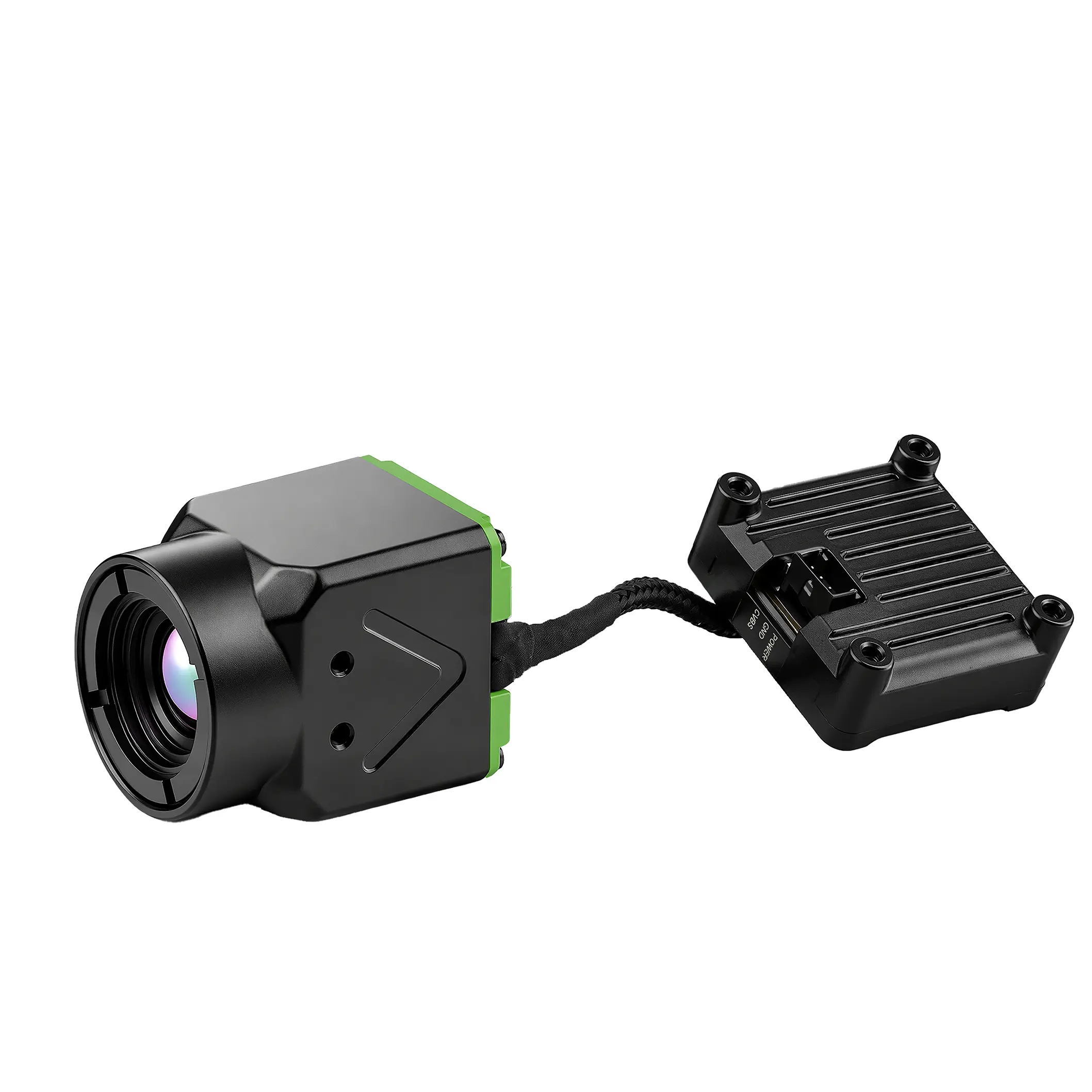
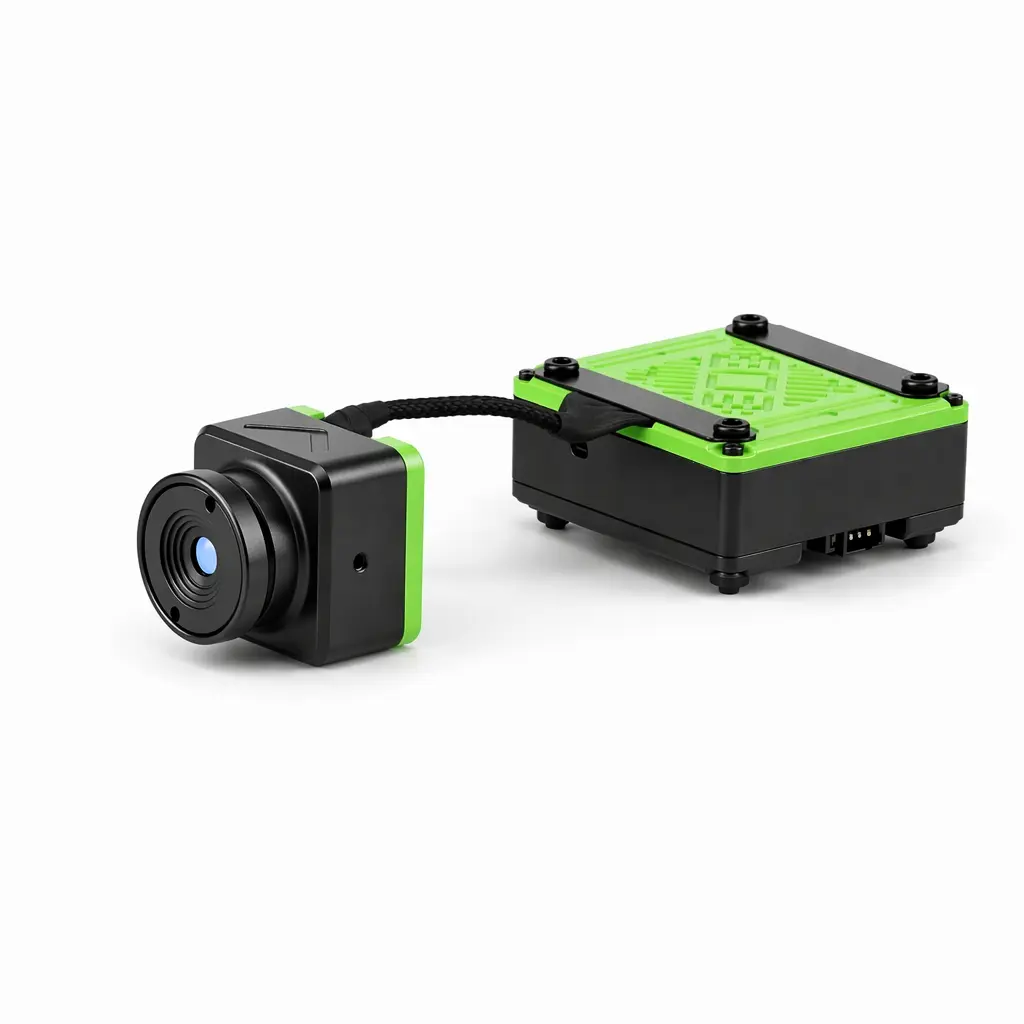
A thermal module is not just a lens and a detector. In the type of product described here, the architecture is split: a compact front sensor head with a lens aperture, connected by a braided cable to a separate processing or interface box. That arrangement is common in industrial electronics because it lets designers place the sensitive optics where they are needed while keeping electronics, connectors, and heat-generating components away from the front end. It is a small detail, but in practice it can decide whether a system is easy to integrate or a constant source of cable and mounting problems.
Why the split-module design is worth paying attention to
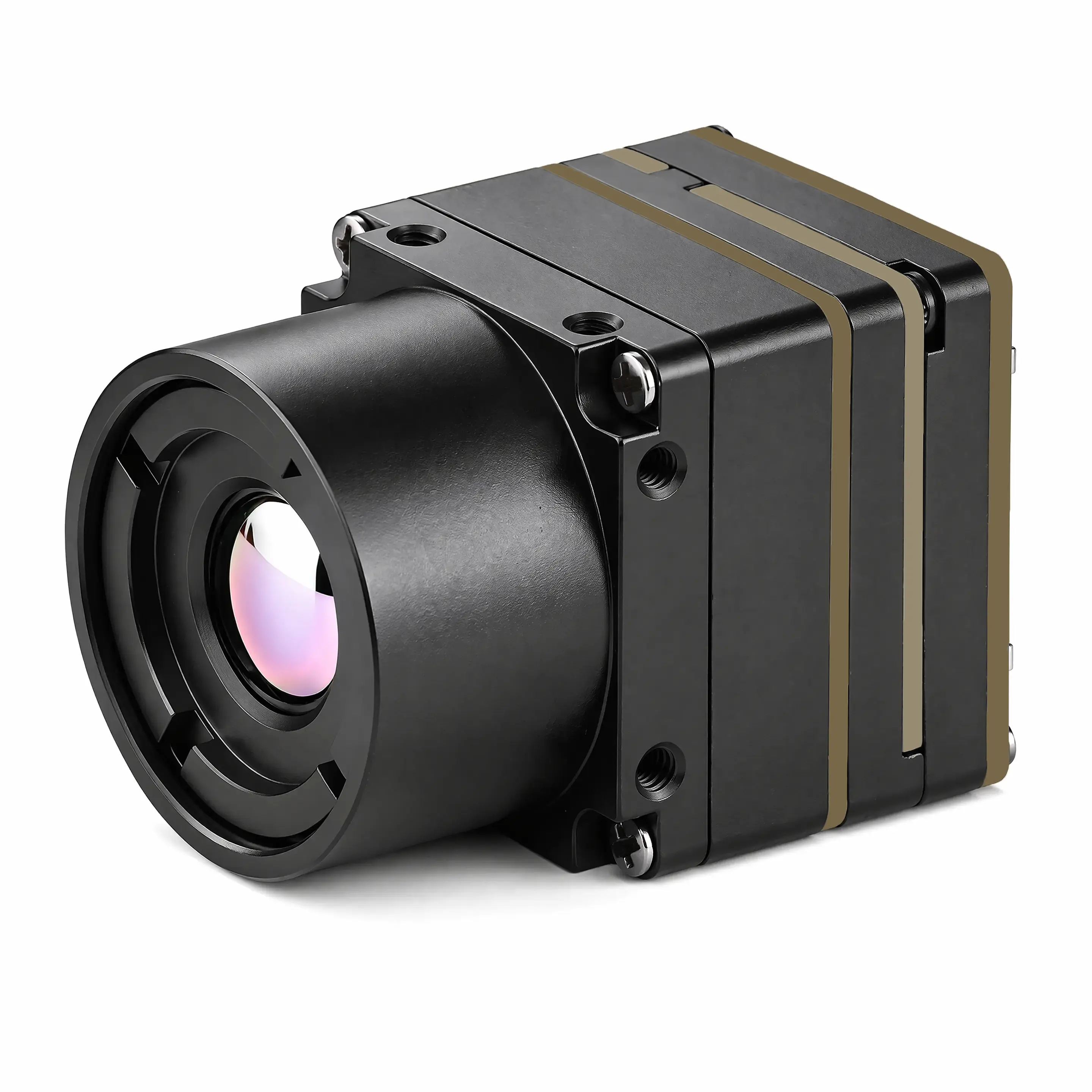
The visible structure of this kind of infrared thermal imaging camera module suggests a deliberate industrial design: a cube-like sensor housing, a protruding circular lens barrel, a side mounting hole, and a separate rectangular control enclosure with exposed connectors and fasteners. That is not aesthetic decoration. It signals a product built for installation, not casual handling.
For buyers, the split architecture offers a few practical advantages:
It reduces the space burden at the point of sensing, which is useful for narrow housings, gimbals, and drone bays.
It can improve thermal and electrical layout by moving processing elements away from the lens head.
It often gives system integrators more freedom with cable routing and enclosure design.
It can simplify replacement or servicing if the supplier provides the head and interface as a modular pair.
The caution, of course, is that modularity does not automatically mean simplicity. A separated sensor head and controller box can be easier to place but harder to qualify if the cable length, connector orientation, or grounding scheme is not clearly documented. This is where a capable supplier earns its keep.
What to compare before you choose a supplier
Buyers often start with image resolution, and that is fair enough. In thermal imaging, common platform resolutions include 256×192, 384×288, and 640×512, each serving a different balance of cost, clarity, and system ambition. But resolution alone is a blunt instrument. It does not tell you whether the module is suitable for a handheld inspection device, a fixed industrial monitor, or a UAV payload that needs low latency and compact size.
A better short list includes:
Mechanical fit
Check the module footprint, mounting points, cable exit direction, and clearance around the lens head. If the sensor head sits in a constrained opening, even a small change in housing geometry can create assembly headaches later.
Electrical integration
Ask how the module is powered, what interface it uses, and how the controller box communicates with the host system. Buyers sometimes focus on the sensor itself and forget that the real integration work often lives in the connector map and power budget.
Imaging behavior
Look for stable imaging, low latency, and sensitivity that matches the task. A module used for fault detection on electrical equipment may need different behavior than one used for perimeter security or search and rescue.
Customization support
If the project is not a catalog fit, the supplier’s ability to support a customized thermal imaging solution becomes critical. That can involve mechanical adjustments, interface changes, lens options, or system-level tuning. The key point is not whether customization exists in theory, but whether the supplier can handle it without turning every change into a new project.
How the product structure shapes application choice
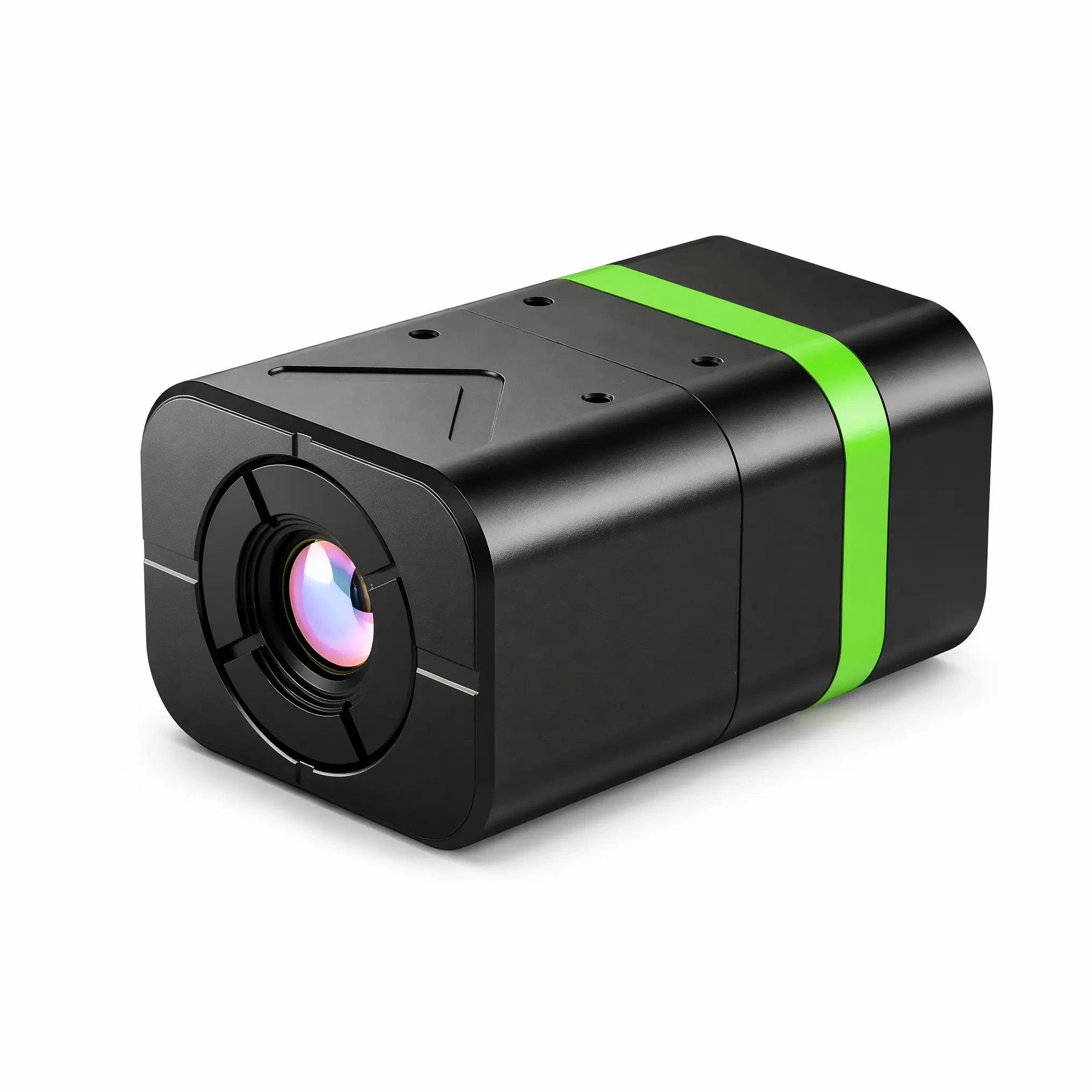
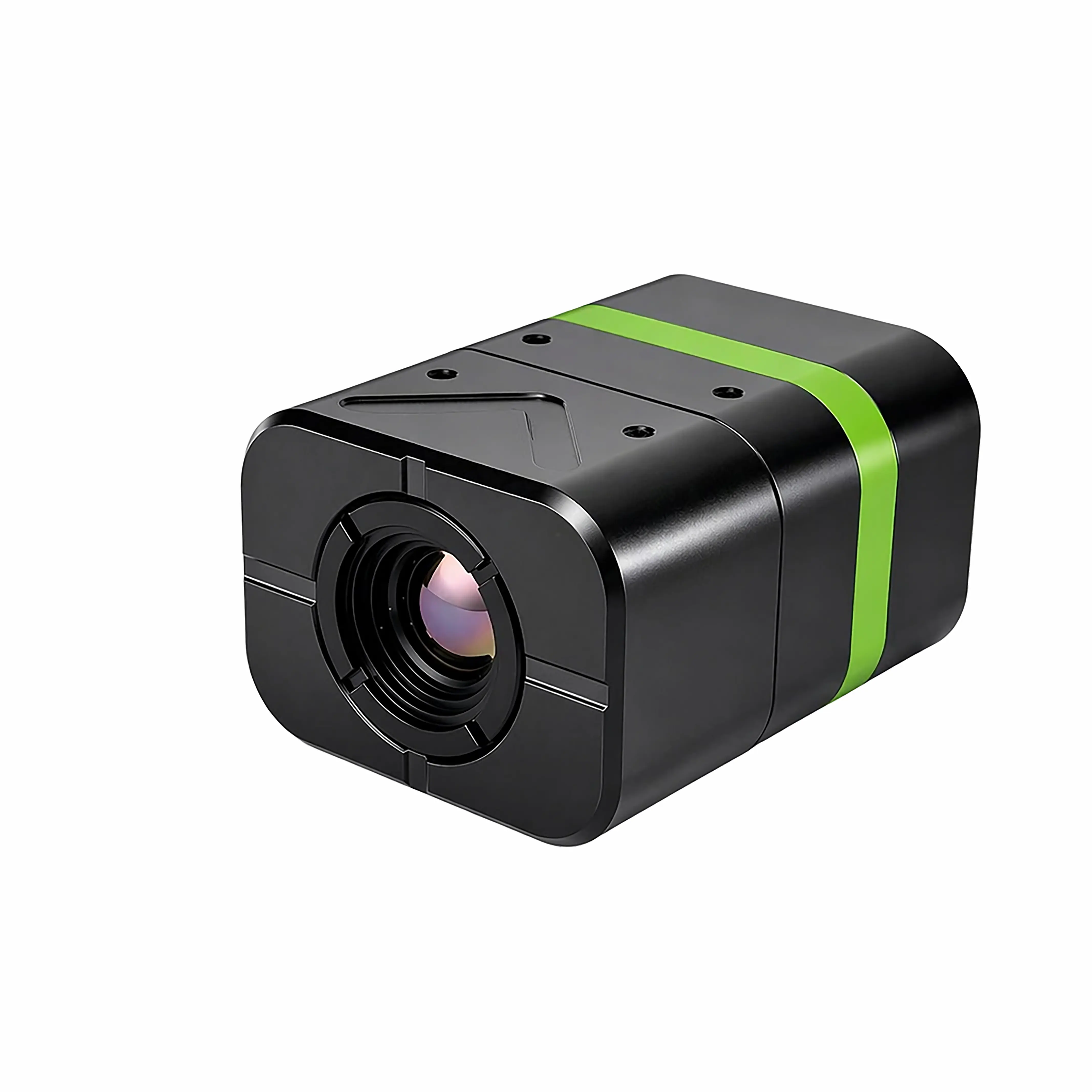
The product described here sits in the category of compact infrared thermal imaging camera modules or imaging cores with a remote processor/interface box. That makes it relevant to several very different markets, and the same hardware logic does not apply equally across all of them.
For industrial inspection, the buyer cares about repeatable detection and straightforward integration into a machine or workstation. Thermal monitoring must be reliable enough to support maintenance decisions, not just produce a visually interesting image.
For security surveillance, the question is often nighttime or low-visibility performance. The module must provide useful contrast and dependable operation in conditions where visible-light cameras struggle.
For drones and robotics, compact size and low power consumption matter as much as raw imaging performance. A heavyweight thermal package can work technically and still fail commercially because it shortens flight time or overloads the platform.
For firefighting, search and rescue, or outdoor monitoring, stable imaging and fast response are especially valuable. In those environments, the user wants a tool that behaves predictably when conditions are far from ideal.
This is why an experienced infrared camera module supplier should talk beyond the detector spec sheet. The better conversation is about the job the module has to do inside a full system.
Common mistakes buyers make with thermal module sourcing
One common mistake is overfocusing on the sensor resolution and underestimating the integration work. A 640×512 module is not automatically the best choice if the platform cannot support its power or processing needs.
Another mistake is assuming a small housing means an easy product. Compact thermal modules can still create issues around heat dissipation, cable strain relief, connector durability, and enclosure alignment. The visible braided cable on split designs is a reminder that real-world mechanical reliability matters.
A third mistake is treating customization as a late-stage request. If the buyer needs a different mounting scheme, interface box layout, or optical arrangement, that conversation should happen early. Thermal imaging products are sensitive to system context; late changes can affect not only form factor but also validation and production planning.
And one more practical warning: do not assume claims like ruggedness, waterproofing, or military-grade readiness unless they are documented. The housing may look sturdy, but appearance is not qualification.
Questions to ask before requesting samples or a quote
A serious sourcing team should ask a prospective supplier a few direct questions:
What are the supported resolutions and how do they differ in use case?
Is the module intended for fixed installations, portable devices, drones, or a mix of platforms?
How is the sensor head separated from the processor box, and what cable or connector options are available?
What kind of customization is actually supported: optical, mechanical, electrical, or software-level?
How does the supplier handle interface compatibility with the host system?
What documentation is available for integration and testing?
These questions are not bureaucratic. They reveal whether the supplier understands industrial buyers or simply sells hardware by description.
How to judge whether a supplier is worth developing
A good thermal imaging sensor manufacturer should be able to explain the product as a system, not just as a part number. That includes the module architecture, the likely application limits, and the tradeoffs between size, latency, power, and image quality. If the answers are vague, the risk usually appears later in integration.
By contrast, a capable supplier will usually be comfortable discussing modular design choices, practical mounting concerns, and the logic behind different resolution tiers. They should also be able to speak plainly about what is customizable and what is fixed. That matters because many buyers do not need a perfect one-off prototype; they need a stable, repeatable platform that can move into production without surprises.
FAQ for sourcing teams and engineers
Is every infrared camera module suitable for industrial use?
No. Industrial use depends on mechanical fit, electrical compatibility, imaging stability, and the actual operating environment. The form factor alone does not guarantee suitability.
Is a split camera head always better?
Not always. It is useful when space, weight distribution, or thermal layout matters, but it introduces cable and connector considerations. The design should match the platform, not the other way around.
Should buyers choose the highest resolution available?
Only if the application needs it. Higher resolution can help detail, but it may also increase system demands. The right choice depends on the task, not just the spec sheet.
What makes a customized thermal imaging solution valuable?
It reduces integration friction. If a supplier can adapt the module to the host product instead of forcing the host product to adapt around the module, the program usually moves faster and with fewer revisions.
What to do next
If you are evaluating an infrared camera module supplier, start by defining the application in plain terms: what the device must detect, where it will live, how much space it has, and what system constraints matter most. Then compare suppliers on integration support, not only on detector numbers.
That is usually the difference between buying a thermal module and buying a workable thermal subsystem. For engineering teams, that distinction saves time. For sourcing teams, it reduces risk. And for product teams, it often decides whether the launch stays on schedule.