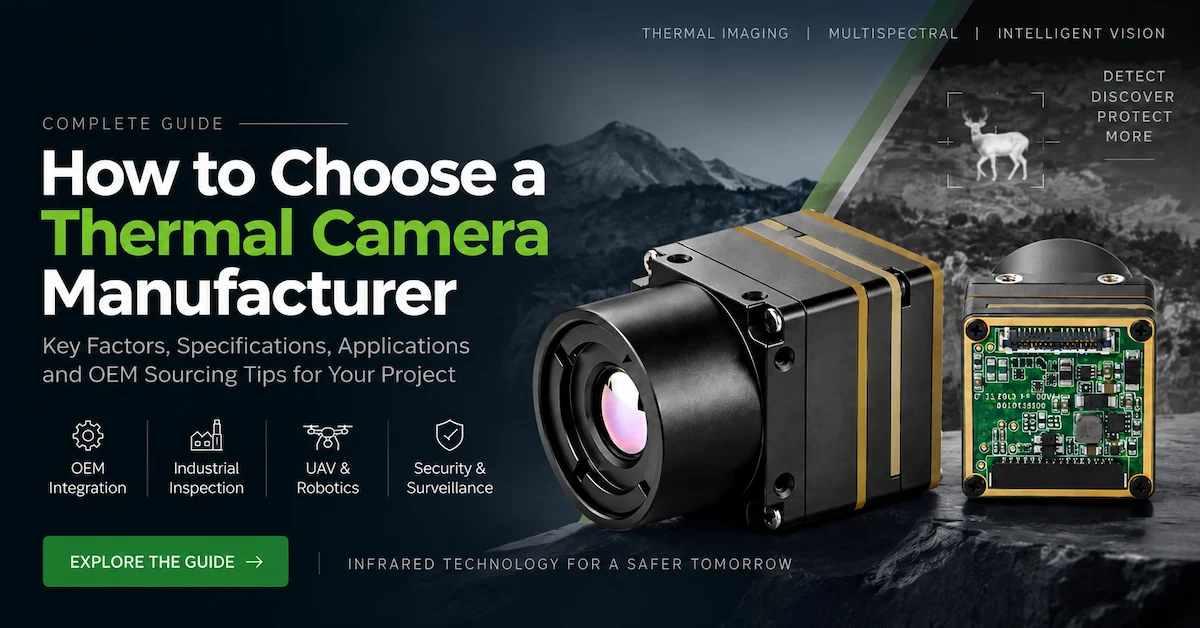

TL;DR: The right thermal imaging camera supplier for a multi-site integration project should help buyers identify suitable infrared imaging cores, confirm electrical and video compatibility, document approved configurations, and clarify procurement and replacement requirements. Standardizing technical specifications before purchasing can reduce interface problems, unnecessary inventory variation, and delays during equipment deployment.
For industrial system integrators, purchasing thermal imaging equipment for one prototype is different from sourcing components for multiple factories, inspection robots, or distributed monitoring systems.
A module that works in one installation may not be appropriate for another. Different operating distances, power supplies, host computers, optical requirements, and environmental conditions can create compatibility challenges.
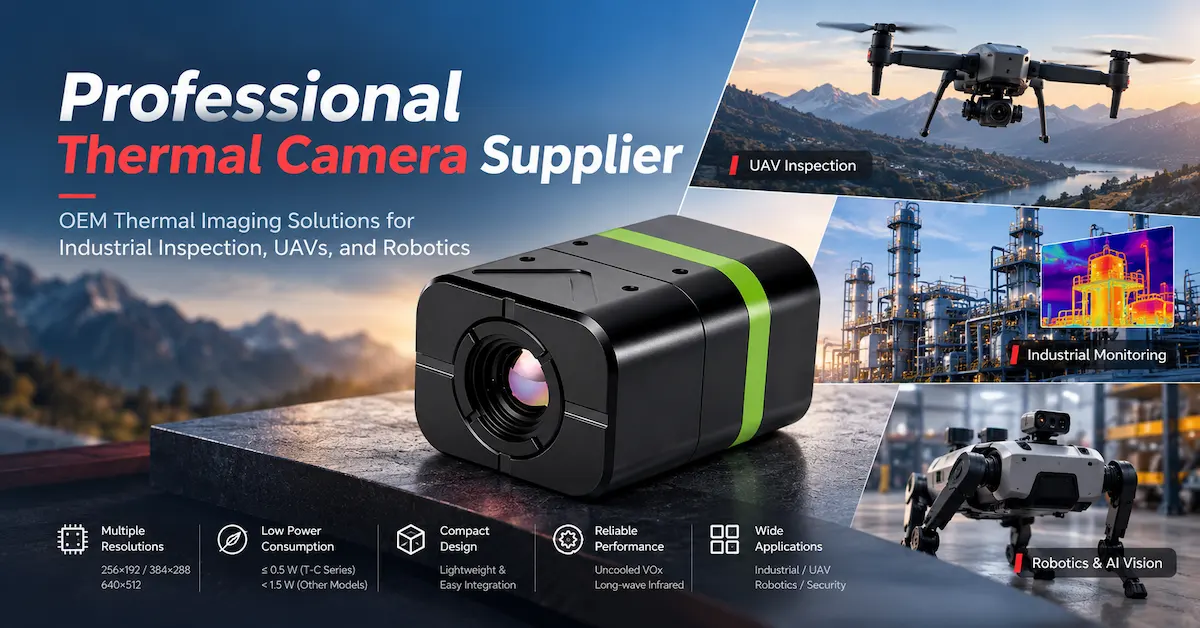
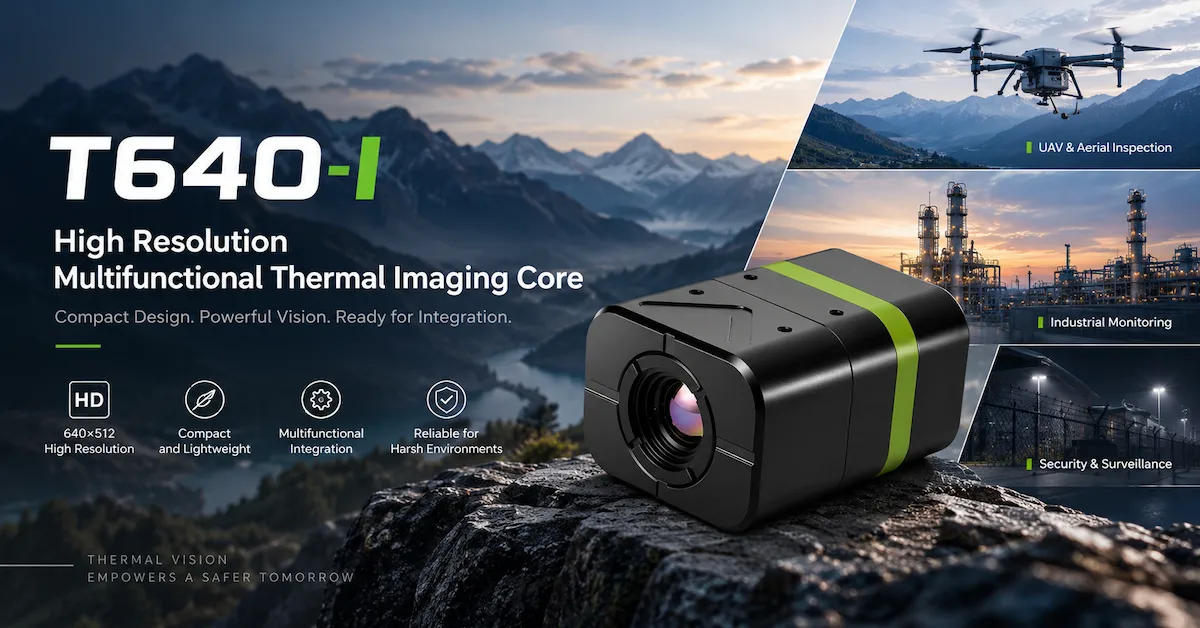
EAGLET supplies uncooled LWIR thermal imaging cores, including 256×192, 384×288, and 640×512 configurations for OEM equipment development and system integration.
This guide explains how procurement teams can establish a practical multi-project sourcing strategy, select suitable thermal camera modules, and prepare technical requirements that support more effective supplier discussions.
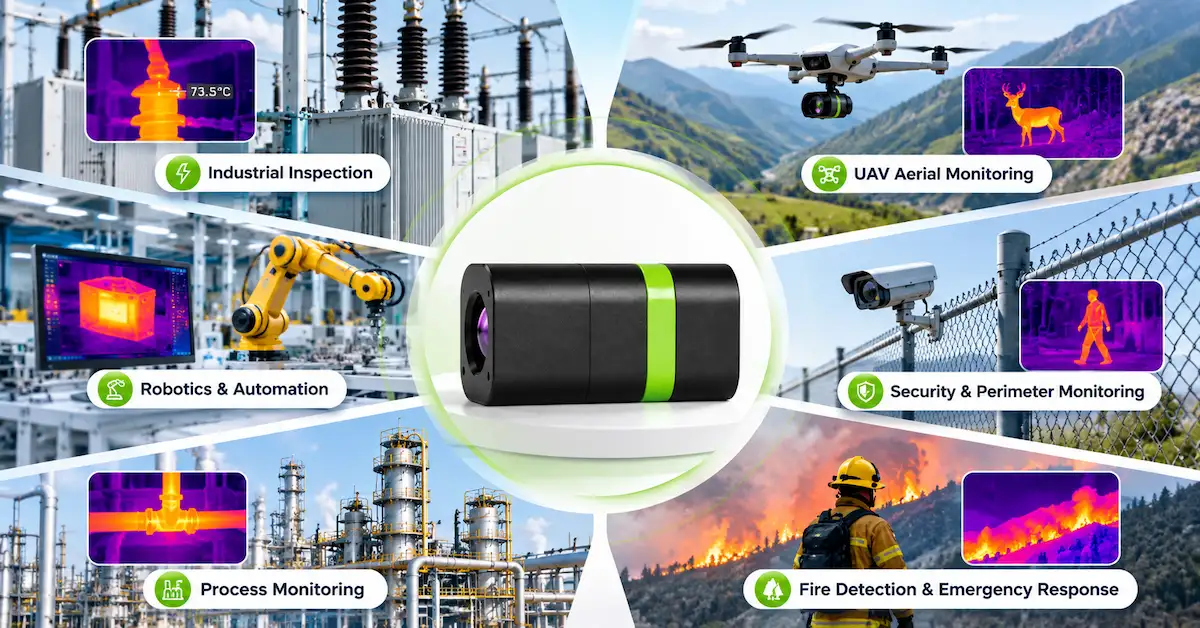
1. Key Takeaways for Thermal Imaging Camera Procurement
-
Standardize requirements before models: Define applications, optics, electrical interfaces, and measurement needs for every deployment.
-
Do not assume module interchangeability: Similar detector resolutions or CVBS video outputs do not guarantee identical connectors, voltages, dimensions, or software behavior.
-
Separate standard and project-specific configurations: Reduce unnecessary product variations while retaining options for specialized applications.
-
Plan spare parts and replacement compatibility: A deployment strategy should include maintenance requirements, revision records, and replacement-unit qualification.
-
Clarify international purchasing terms: MOQ, lead time, warranty, shipping responsibilities, and technical documentation should be confirmed in the quotation.
A suitable supplier relationship is built around repeatable equipment integration and clear commercial requirements rather than unit price alone.
2. Quick Comparison: Which Thermal Imaging Solution Fits Your Project?
System integrators frequently support different equipment platforms within a single customer portfolio.
The appropriate product depends on the system being developed.
| Project type | Primary requirements | Candidate EAGLET core | Main purchasing concern |
|---|---|---|---|
| Compact inspection robot | Size, power, mounting, video output | T-C Series / T256-S | Electrical and mechanical integration |
| Factory equipment monitoring | Target detail, optical coverage, continuous imaging | T384-I / T640-I | Host compatibility and installation design |
| Professional infrared equipment | Native resolution, image quality, mechanical layout | T640-S / T640-I | Optical configuration and processing requirements |
| Space-constrained OEM device | Compact architecture, available supply voltage | T-C Series | Exact model and power compatibility |
| Distributed industrial installations | Repeatable module specifications and replacements | Application-dependent | Standardized BOM and spare units |
These are preliminary evaluation directions, not guarantees that any listed module is suitable for every application.
Recommended sourcing principle: Choose the smallest number of module configurations that satisfy the actual technical requirements of your equipment portfolio.
3. Who Needs a Thermal Imaging Camera Supplier for Multi-Site Projects?
A professional thermal imaging camera supplier can serve several B2B purchasing groups, but their requirements differ.
Industrial system integrators
These companies develop or install monitoring and inspection systems for industrial customers.
Their procurement challenges include system compatibility, consistent hardware configurations, deployment schedules, and replacement-component management.
Robotics and automation manufacturers
Robotics OEMs may integrate thermal imaging into mobile inspection platforms or industrial automation equipment.
They must account for power, mechanical dimensions, image processing, and host interface requirements.
Industrial equipment distributors
Technical distributors may supply different thermal imaging configurations to customers operating in several industries.
They need clear model differentiation, product documentation, purchasing terms, and after-sales arrangements.
OEM camera manufacturers
Professional equipment manufacturers may purchase thermal cores for integration into their own products.
They typically require validated specifications, engineering documentation, and predictable component availability.
When is this sourcing approach unnecessary?
A buyer purchasing a small number of complete handheld thermal cameras for immediate use may not need a customized embedded-camera sourcing program.
For multi-project procurement, however, standardizing module selection and integration requirements can provide meaningful operational benefits.
4. What Specifications Should Buyers Compare Before Selecting a Supplier?
Technical compatibility begins with the detector, optics, video output, and operating requirements.
EAGLET's main thermal imaging core family uses uncooled vanadium oxide (VOx) infrared detectors operating in the 8–14 μm long-wave infrared spectrum.
EAGLET thermal imaging core specifications
| Product model | Native resolution | Published NETD | Input voltage | Published power |
|---|---|---|---|---|
| T-C Series | 256×192 / 384×288 / 640×512 | ≤35 mK* | 4.5–18 V | ≤0.5 W* |
| T256-S | 256×192 | ≤50 mK | 9–24 V | <1.5 W |
| T384-I | 384×288 | ≤50 mK | 9–24 V | <1.5 W |
| T640-S | 640×512 | ≤50 mK | 9–24 V | <1.5 W |
| T640-I | 640×512 | ≤50 mK | 9–24 V | <1.5 W |
The T-C specifications are published at the series level. Buyers should confirm their applicability to the exact configuration. NETD comparisons require equivalent test conditions.
The listed products use CVBS (PAL) video output, while T-C Series also specifies UART control.
Why optical specifications matter
Two thermal cores with the same detector resolution may provide different useful detail when their lenses have different fields of view.
For an inspection task, specify:
-
Smallest relevant target
-
Expected viewing distance
-
Required scene width
-
Optical field of view
-
Focus requirements
-
Environmental operating conditions
Some published model-level focal length, FOV, and IFOV combinations require technical confirmation. Request the latest verified optical data before defining target detection distances.
Thermal imaging is not automatically temperature measurement
NETD characterizes thermal sensitivity, not absolute temperature measurement accuracy.
If an industrial monitoring system requires calibrated temperature values, confirm radiometric data availability, measurement range, calibration requirements, and uncertainty before purchasing.
5. Why Similar Thermal Imaging Modules May Not Be Interchangeable
One of the largest integration risks is assuming that two infrared modules can be substituted because they share a resolution class or video format.
Electrical compatibility
EAGLET's T-C Series lists a 4.5–18 V input range, while T256-S, T384-I, T640-S, and T640-I list 9–24 V.
A host power supply designed for one configuration may therefore be unsuitable for another.
Voltage compatibility must also be evaluated alongside startup behavior, power regulation, connectors, and electrical noise.
Video and data interfaces
Although the published core products use CVBS video, equivalent output categories do not establish pin-to-pin compatibility or identical control behavior.
The integrator should confirm:
| Interface item | Required verification |
|---|---|
| Video format | Exact signal and host acquisition compatibility |
| Connector | Physical type and pin assignment |
| Control interface | Supported protocol and commands |
| Power | Supply range and current requirements |
| Video timing | Frame/output characteristics |
| Data requirements | Whether calibrated or full-resolution digital data is available |
Important: CVBS video output should not be treated as proof of full-resolution digital thermal data, Ethernet connectivity, or calibrated temperature measurements.
Mechanical compatibility
A small difference in dimensions, mounting positions, or connector orientation can affect enclosure and cable-harness design.
For example, EAGLET publishes integrated configurations for T384-I and T640-I, while T640-S provides separately specified optical and controller assemblies.
This difference may influence whether an existing equipment design can accept a replacement module.
For procurement teams, interchangeability must be demonstrated rather than assumed.
6. How to Standardize Thermal Camera Procurement Across Projects
A multi-site sourcing program should maintain a controlled list of approved module configurations.
The objective is to prevent every deployment team from selecting slightly different hardware without considering service and procurement consequences.
Create an approved module matrix
| Configuration tier | Intended use | Main decision criterion |
|---|---|---|
| Compact imaging | Small equipment and mobile platforms | Module size, power, interface |
| Mid-resolution imaging | General industrial and robotic systems | Target coverage and installation fit |
| High-resolution imaging | Detail-oriented professional equipment | Spatial information and processing needs |
For EAGLET-based systems, these tiers may initially be evaluated through T256-S or T-C, T384-I, and T640-I or T640-S respectively.
Standardize the bill of materials
An approved bill of materials (BOM) should identify:
-
Exact thermal core model and revision
-
Lens and optical configuration
-
Mounting components
-
Host acquisition hardware
-
Relevant control or firmware version
-
Cable and connector specifications
-
Required protective components
-
Replacement-unit identification
ISO 10007:2017, Quality Management — Guidelines for Configuration Management, provides relevant guidance for controlling product configuration information throughout its lifecycle.
It does not establish that a particular EAGLET product or supplier process is certified.
The practical benefit of configuration control is that engineering, procurement, installation, and maintenance teams can work from the same approved specifications.
7. How Should OEM Buyers Plan Spare Thermal Imaging Modules?
Spare-parts planning is particularly important when equipment is deployed across several customer sites.
A replacement module may need to match not only detector resolution but also optical configuration, electrical interfaces, mechanical dimensions, and approved revision information.
Illustrative multi-site purchasing example
Suppose a system integrator plans the following hypothetical deployment:
| Site | Candidate core | Installed units | Planning spares |
|---|---|---|---|
| Factory monitoring site | T384-I | 24 | 2 |
| Mobile inspection site | T256-S | 12 | 2 |
| High-detail observation site | T640-I | 8 | 1 |
| Total | 44 | 5 |
The example produces an initial planning quantity of 49 modules, including five spare units.
These numbers are illustrative, not an EAGLET customer project, a recommended universal spare ratio, or a statement of product failure rates.
What determines the correct spare quantity?
Spare requirements depend on equipment criticality, installed population, replacement lead time, repair arrangements, supplier availability, and the customer's acceptable downtime.
Buyers should also decide where spare modules will be stored and who is responsible for maintaining configuration records.
Are spare modules ready to install?
Not necessarily.
A replacement may require compatible optics, approved firmware, host settings, mechanical accessories, or requalification procedures.
Procurement recommendation: Request confirmation of replacement-unit compatibility and availability before assuming that any product with the same model name can serve as a field spare.
8. Quality Control and Acceptance Requirements for Distributed Installations
When purchasing from a thermal imaging camera supplier, buyers should separate component acceptance from final installation acceptance.
A thermal imaging core may pass its functional inspection but still perform poorly when integrated into an unsuitable enclosure or host system.
Supplier-side verification
Relevant requirements may include documented image quality, electrical functionality, optical configuration, mechanical inspection, and revision identification.
The actual inspection scope must be agreed with the supplier.
Integrator-side verification
After installation, confirm the complete imaging path.
| Verification area | What the integrator should check |
|---|---|
| Image capture | Host can acquire a stable thermal image |
| Optical coverage | Intended targets are visible at the installed distance |
| Power | Supply remains within approved requirements |
| Mechanical fit | Mounting and cable installation are correct |
| Processing | Required imaging functions work as intended |
| Environment | Housing and installation meet project conditions |
| Documentation | Installed model and revision are recorded |
For quantitative inspection systems, calibrated measurement performance requires separate verification.
The objective is to establish a consistent installation procedure across customer locations.
9. OEM/ODM Integration and Technical Support Requirements
EAGLET describes thermal imaging core integration and customized vision solutions for equipment manufacturers and system integrators.
Its technical support page provides guidance on model selection, application requirements, and requests for version-specific documentation.
For a multi-site project, buyers should define the requested engineering scope clearly.
Potential customization requirements
Depending on feasibility, an OEM project may need evaluation of:
-
Optical configuration
-
Mechanical mounting arrangement
-
Interface compatibility
-
Electrical power requirements
-
Host video acquisition
-
Processing and control integration
These are project requirements to discuss, not guaranteed modifications available for every model.
Documentation and integration handover
Request the datasheet and documentation applicable to the exact approved product revision.
Where relevant, integration documentation may include mechanical drawings, pin assignments, interface descriptions, operating requirements, and installation guidance.
A project should also define which organization is responsible for final-system software, environmental protection, calibration, and regulatory compliance.
This is especially important when the product is supplied as an embedded core rather than a complete thermal camera.
10. International Sourcing: MOQ, Lead Time, and Delivery Planning
Cross-border procurement adds commercial and logistical requirements to technical product selection.
For multi-site projects, separate the forecast into engineering samples, initial deployment quantities, replacement inventory, and potential future orders.
What should the quotation clarify?
| Commercial requirement | Question to ask |
|---|---|
| MOQ | What minimum order applies to each model and configuration? |
| Unit pricing | How do price tiers vary by quantity? |
| Sample availability | Which exact configurations can be evaluated? |
| Production lead time | What lead time applies after configuration approval? |
| Packaging | How are optical and electronic components protected during shipment? |
| Shipping terms | Which party handles freight, customs, insurance, and delivery risk? |
| Warranty | What coverage, exclusions, and claim procedures apply? |
| Technical support | What documentation and response arrangements are available? |
| Replacements | How are compatible spare units ordered and identified? |
Clarify international delivery responsibilities
ICC Incoterms® 2020 provide internationally recognized trade rules used to define delivery responsibilities, costs, and risk allocation between buyers and sellers.
The appropriate term should be stated clearly in the commercial agreement, together with the named destination or delivery point.
Incoterms do not replace agreements on product quality, warranty, regulatory compliance, or engineering support.
Plan for market-specific requirements
Thermal imaging equipment and related technologies may be subject to destination-specific import, export-control, and end-use requirements.
Classification and supporting documentation should be checked for the actual product, destination, and transaction.
EAGLET's public product pages do not establish universal MOQ, guaranteed delivery times, regional inventory availability, or specific international shipping arrangements. These details require project-specific confirmation.
11. How to Compare Total Procurement Cost Across Multiple Sites
The lowest unit price does not necessarily produce the lowest total project cost.
A practical purchasing evaluation should include:
Total procurement cost = Module purchases + Integration + Validation + Spare inventory + Logistics + Lifecycle support
A system integrator may find that using a standardized module configuration reduces the number of spare variants and technical procedures it needs to manage.
However, standardization should not compromise necessary optical or functional performance.
Single-model vs. multi-model sourcing
| Strategy | Potential advantage | Main tradeoff |
|---|---|---|
| One standard core for all sites | Simpler documentation and spare inventory | May overspecify some applications or fail others |
| Multiple optimized core models | Better matching of imaging and mechanical requirements | More configurations to manage |
| Standard core with selected variants | Balances reuse and application flexibility | Requires documented configuration control |
The best strategy depends on the number of installations, application differences, equipment lifecycle, and expected maintenance requirements.
For procurement teams, the objective should be minimum practical lifecycle cost at the required performance level, not simply minimizing the number of product models.
12. What Should You Include in a Thermal Imaging Camera Supplier RFQ?
A detailed request for quotation helps suppliers distinguish standard product requirements from customized integration needs.
For multi-site projects, include the following information.
| RFQ field | Information to provide |
|---|---|
| Buyer type | OEM manufacturer, system integrator, distributor |
| Application | Industrial inspection, robotics, embedded equipment |
| Deployment scope | Number of sites and planned equipment quantities |
| Preferred models | T-C, T256-S, T384-I, T640-S, T640-I, or required alternatives |
| Imaging requirements | Resolution, target dimensions, working distance, FOV |
| Electrical requirements | Input voltage, available power, interface |
| Mechanical constraints | Space, weight, mounting and connector requirements |
| Data requirements | Thermal video, digital data, or calibrated temperature output |
| Environmental requirements | Operating conditions and finished-system protection |
| Spare requirements | Replacement quantity, version compatibility |
| Documentation | Datasheets, drawings, applicable test reports |
| Commercial requirements | MOQ, forecast volume, delivery locations, schedule |
Discuss Your Thermal Imaging Procurement Project with EAGLET
Planning thermal imaging integration across industrial equipment, robotic platforms, or multiple project locations?
Explore EAGLET's thermal imaging core products to compare available resolution and mechanical configurations.
For application-specific requirements, review EAGLET's industrial inspection solutions.
Then contact EAGLET for a technical and commercial quotation.
Provide your target models, installation requirements, expected quantities, and preferred procurement schedule so that product suitability and commercial conditions can be discussed before ordering.
13. Frequently Asked Questions
1. What does a thermal imaging camera supplier provide?
Depending on its business model, a supplier may offer infrared imaging cores, camera modules, complete instruments, or customized imaging solutions. Buyers should confirm the exact product and engineering scope.
2. How should system integrators choose a thermal camera supplier?
Evaluate product specifications, interface compatibility, available technical documentation, customization feasibility, commercial terms, and replacement requirements against the intended equipment portfolio.
3. Are EAGLET thermal imaging cores complete infrared cameras?
No. The listed T-C, T256-S, T384-I, T640-S, and T640-I products are embedded thermal imaging cores. A finished device may require additional housing, electronics, software, and environmental protection.
4. Can different thermal imaging cores use the same host system?
Possibly, but compatibility must be verified. Similar video-output formats do not guarantee identical power inputs, connectors, controls, mechanical dimensions, or processing behavior.
5. Which thermal resolution is best for industrial integration?
The required resolution depends on target dimensions, viewing distance, optical coverage, and the application. A higher-resolution detector is not automatically the best choice for every project.
6. What is the difference between NETD and temperature accuracy?
NETD describes thermal sensitivity under specified conditions. Accurate temperature measurement requires separate radiometric functions, calibration, and suitable measurement procedures.
7. How many spare thermal imaging modules should buyers purchase?
There is no universal quantity. Spare planning should consider installed units, equipment criticality, supplier lead time, repair arrangements, and acceptable downtime.
8. What determines thermal camera MOQ and delivery time?
MOQ and lead time depend on the exact model, configuration, quantity, availability, customization, and purchasing conditions. They must be confirmed through an individual quotation.
9. Can EAGLET discuss OEM/ODM integration requirements?
EAGLET publishes thermal imaging core integration and customized vision solution capabilities. Buyers should submit application details to confirm the available technical and commercial scope.
10. How do I request bulk thermal imaging camera pricing?
Provide the preferred models, technical requirements, quantities by configuration, deployment locations, expected order schedule, and spare-parts needs. Request an itemized quotation and confirm the applicable delivery and support terms.
Conclusion
Selecting a thermal imaging camera supplier for multi-site OEM and industrial integration projects requires a combination of technical compatibility, standardized sourcing, practical spare-parts planning, and clearly defined commercial arrangements.
For system integrators, purchasing success depends on more than the initial imaging performance of a sample. The selected thermal cores must also fit the intended host systems, optical requirements, electrical architecture, and long-term equipment maintenance strategy.
EAGLET provides uncooled LWIR thermal imaging cores, including T-C Series, T256-S, T384-I, T640-S, and T640-I, for evaluation in industrial and embedded thermal vision applications.
A structured sourcing approach helps buyers compare configurations, avoid unnecessary variations, organize replacement inventory, and prepare clearer purchase requirements.
Looking for a thermal imaging camera supplier for your next OEM or system integration project? Contact EAGLET to discuss product compatibility, application requirements, expected order quantities, and a project-specific quotation.